


White and yellow flowers bring a bright, cheerful look to any garden. Their soft color combination can make flower beds, borders, containers, and landscapes feel fresh and welcoming. Some blooms feature white petals around golden centers, while others combine pale and warm shades in unique patterns. You can find these flowers as small annuals, colorful perennials, flowering shrubs, and even tropical trees. Many yellow and white flowers also attract bees, butterflies, and other helpful pollinators.
Whether you have a sunny backyard or a small patio, there are plenty of choices to explore. In this guide, you’ll discover beautiful garden flowers, small plants, shrubs, trees, and colorful combinations for creating an attractive outdoor space.
20 Beautiful White and Yellow Flowers for Your Garden
1. Shasta Daisy
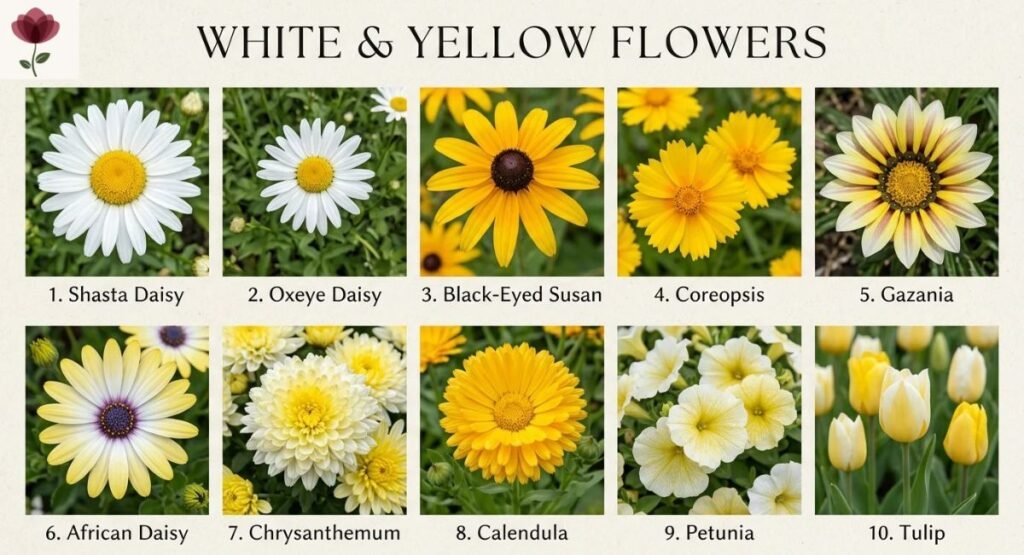
Shasta daisy is one of the easiest choices when you want classic white flowers with yellow centers. Its clean petals surround a bright yellow disc, creating a simple look that fits almost any garden. The plants usually grow as clumps and can add a cheerful touch to borders, cottage gardens, and perennial beds.
Shasta daisies prefer plenty of sunlight and well-drained soil. They can bloom for a long season when you remove faded flowers regularly. Their upright stems also make them useful as cut flowers. Plant several together for a fuller display rather than placing one plant alone.
2. Oxeye Daisy
Oxeye daisy produces white petals around a yellow center, making it another familiar example of this color combination. It has a natural, meadow-like appearance and can bring a relaxed feel to informal landscapes. The flowers usually appear during the warmer months and attract various insects.
Although attractive, oxeye daisy can spread aggressively in some regions. Gardeners should check local recommendations before planting it. It works better in controlled areas where its growth can be managed. Its simple flowers also pair nicely with grasses and other summer-blooming plants.
3. Black-Eyed Susan
Black-Eyed Susan is famous for its golden-yellow petals and dark brown center. It isn’t a true white and yellow flower, but it can complement white blooms beautifully. Its strong color provides contrast when planted beside daisies, white coneflowers, or other pale flowers.
These hardy plants enjoy sunlight and can tolerate periods of dry weather after becoming established. They are especially useful for natural-looking gardens because their flowers attract bees and butterflies. Their long blooming period also makes them valuable for gardeners who want summer color.
4. Coreopsis
Coreopsis comes in many shades, including yellow, cream, and combinations that can work well with white flowers. Its small daisy-like blooms appear on slender stems and create a light, airy appearance. Some varieties are especially useful for borders because they remain relatively compact.
Coreopsis generally prefers full sun and soil that drains well. It doesn’t need constant attention once established. Removing spent flowers can encourage additional blooms. Combine yellow coreopsis with white daisies or white alyssum for a soft yellow and white garden border.
5. Gazania
Gazania is a colorful flowering plant that produces daisy-like blooms in bright shades. Some varieties have yellow petals with darker markings, while others feature pale or white areas. These patterns make gazanias useful when designing a garden around contrasting flower colors.
This plant loves sunlight and performs especially well in warm conditions. It can handle relatively dry soil once established. Gazania works well in containers, rock gardens, edging, and sunny beds. Its bold flowers can create a striking display without requiring complicated maintenance.
6. African Daisy
African daisies are known for their bright, daisy-like flowers and wide range of colors. Some varieties feature white petals with yellow or dark centers, while others combine several shades. Their clean flower shape makes them attractive for modern gardens as well as informal planting areas.
They prefer full sun and well-drained soil. In suitable climates, they can provide repeated blooms during the growing season. African daisies also work well in pots because their flowers sit above compact foliage. Use them with other sun-loving flowers for a colorful container display.
7. Chrysanthemum
Chrysanthemums come in an enormous range of flower shapes and colors. White and yellow varieties are particularly useful for creating a bright autumn garden. Some blooms are completely white with yellow centers while others have soft cream or yellow petals.
Chrysanthemums prefer a sunny position and fertile soil with good drainage. Pinching young plants can encourage bushier growth and more flowers. They are also popular for containers and seasonal displays. Their wide variety makes it easy to match chrysanthemums with other fall flowers.
8. Calendula
Calendula is better known for yellow and orange flowers, but some cultivars can produce creamy or pale blooms. These softer varieties can fit nicely into a garden featuring white and yellow flowers. Calendula has a cheerful daisy-like form and works well in informal beds.
The plant generally prefers sunlight and moderately fertile soil. Regularly removing faded flowers can keep the plant looking tidy. Calendula can also attract pollinating insects. Because it grows fairly easily, it is a useful option for gardeners who want low-maintenance flowers.
9. Petunia
Petunias are available in many colors, including white, yellow, cream, and patterned combinations. Their trumpet-shaped flowers create a soft and colorful display. White petunias can be paired with yellow flowers to produce a clean garden theme.
Petunias are especially useful for containers, hanging baskets, window boxes, and patio planters. They prefer sunlight and regular watering during hot weather. Removing old flowers can help maintain a fresh appearance. Their trailing growth also makes them useful for small garden spaces.
10. Tulip
Tulips offer a simple way to introduce white and yellow shades into spring gardens. Some varieties are completely white or yellow, while others show contrasting edges and patterns. Planting both colors together can create a neat seasonal display.
Tulips grow from bulbs and usually prefer a sunny location with well-drained soil. They look especially attractive when planted in groups. White and yellow tulips can line pathways, fill flower beds, or grow among spring perennials. Their short blooming season makes them ideal for spring garden color.
11. Frangipani (Plumeria)
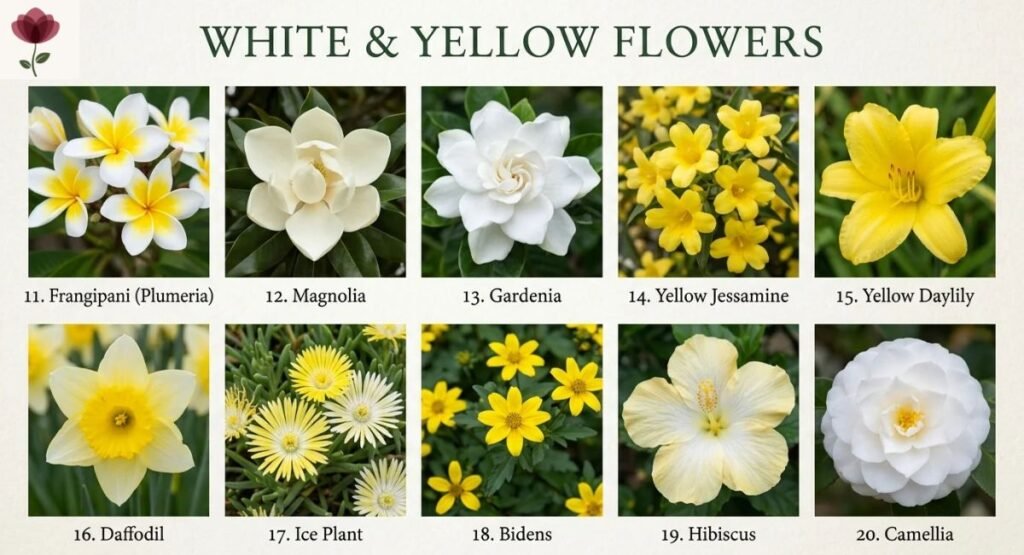
White plumeria, especially Plumeria alba, can have beautiful white petals surrounding a yellow center. The flowers have a tropical appearance and are strongly associated with warm climates. Their rounded petals and gentle color transition create an elegant flower display.
Plumeria needs warmth, sunlight, and well-drained soil. It can grow as a small tree in suitable climates and works well in tropical landscapes. Gardeners in colder regions can grow some types in containers and protect them during winter. The flowers are also valued for their fragrant blooms.
12. Magnolia
Magnolias are large flowering trees and shrubs that can transform a landscape when they bloom. Many magnolias produce white flowers while certain species and cultivars offer yellow blooms. However, not every magnolia produces a true white-and-yellow flower.
Their large blossoms create an impressive focal point in spring or summer, depending on the species. Magnolias generally need enough room for their mature size. Choose a variety according to your climate and available space. Their broad foliage also adds strong landscape structure after flowering.
13. Gardenia
Gardenias are famous for their white, highly fragrant flowers. The blossoms often open with a creamy appearance and can show a yellow center as they mature. Their glossy green leaves provide an attractive background for the pale flowers.
Gardenias prefer bright light, warm conditions, and acidic, well-drained soil. They can be grown as shrubs or in containers in suitable climates. Because they can be sensitive to environmental changes, consistent moisture is helpful. Their fragrance makes them especially appealing near patios and outdoor seating areas.
14. Yellow Jessamine
Yellow jessamine is a climbing vine that produces bright yellow trumpet-shaped flowers. It isn’t a true white and yellow flower, but it fits well into broader garden combinations involving white and yellow plants. Its flowers can create strong vertical interest when trained on a support.
This southeastern native prefers sunlight and moist, well-drained soil. It can climb fences, trellises, and other structures. However, all parts of the plant are poisonous if eaten. Gardeners should choose its location carefully, particularly where children or pets may have access.
15. Yellow Daylily
Yellow daylilies are reliable perennial plants that can brighten garden beds with trumpet-shaped flowers. While they aren’t white and yellow themselves, they work beautifully beside white flowers. Their long, narrow leaves also provide texture between flowering plants.
Daylilies are adaptable and can grow in many garden conditions. They generally perform best with good sunlight and reasonably well-drained soil. Once established, they require relatively little care. Plant yellow daylilies beside white daisies to create a simple white and yellow flower combination.
16. Daffodil
Daffodils are classic spring bulbs with cheerful yellow or white flowers. Some varieties combine white petals with yellow trumpets, making them excellent examples of the color pairing. Their upright flowers bring an immediate sense of spring to garden beds.
Daffodils grow best in well-drained soil and suitable sunlight. Plant bulbs in groups for a stronger visual effect. They can grow beside shrubs, under trees, or along pathways. Their ability to return year after year makes them a valuable choice for spring landscapes.
17. Ice Plant
Ice plants are low-growing succulents that produce colorful daisy-like flowers. Although many varieties bloom in pink, purple, or red, some produce yellow or pale flowers that can work with white plantings. Their spreading growth makes them useful for sunny borders and rock gardens.
Ice plants prefer bright sunlight and sharply draining soil. They are especially useful in dry landscapes where many traditional flowers struggle. Avoid keeping their roots constantly wet. Their succulent foliage can add an interesting texture beside taller white flowering plants.
18. Bidens
Bidens are useful flowering plants for containers and sunny garden beds. Many varieties produce small yellow flowers that resemble little daisies. They may not provide a true white-and-yellow bloom, but their yellow flowers combine naturally with white companion plants.
Bidens usually grow quickly when given enough sunlight and moisture. Some types have trailing habits, making them useful for hanging baskets and planters. Their small flowers can create a dense display when planted in groups. They are especially useful when you want long-lasting garden color.
19. Hibiscus
Hibiscus plants are known for large, dramatic flowers and tropical-looking foliage. Some varieties produce yellow or white blooms, while others show contrasting centers or veins. They can become impressive focal plants when placed in warm, sunny locations.
Hibiscus generally needs plenty of sunlight and regular moisture during active growth. Some types can grow into large shrubs while others remain more compact. Choose a variety suited to your climate. Their large flowers can attract attention even when surrounded by simpler garden flowers.
20. Camellia
Camellias are evergreen shrubs valued for their elegant flowers and glossy foliage. White camellias are common while yellow-flowering camellias are much less common. Therefore, gardeners should check the exact cultivar before expecting a yellow-and-white flower.
Camellias generally prefer partial shade and acidic, well-drained soil. They can make excellent foundation plants, hedges, or specimen shrubs. Their dark green foliage remains attractive outside the flowering season. Choose the cultivar carefully if your goal is a specific white and yellow color scheme.
Small Yellow and White Flowers for Garden Borders
Small Flowers With White Petals and Yellow Centers
Small flowers with white petals and yellow centers can make garden borders look fresh without overwhelming nearby plants. Shasta daisies and oxeye daisies are classic examples. Their simple flower shapes also combine well with grasses, herbs, and other low-growing plants.
These flowers are particularly useful along pathways and mixed borders. Planting several together creates a stronger visual effect than scattering single plants throughout the garden. Choose species that match your sunlight, soil, and climate conditions.
Small Yellow and White Flowers for Containers
Containers give you more control over soil, moisture, and plant placement. White petunias, yellow bidens, small daisies, and compact chrysanthemums can create attractive combinations. You can also add trailing plants around the edges to soften the container’s shape.
Choose containers with drainage holes and avoid overcrowding the roots. Plants in pots usually dry out faster than plants in the ground. Check moisture regularly during hot weather. A balanced container can provide seasonal flower color even in a small outdoor space.
Best Low-Growing Plants With Yellow and White Flowers
Low-growing plants work especially well around stepping stones, borders, rock gardens, and the front of flower beds. Ice plants, compact daisies, petunias, and some coreopsis varieties can provide useful ground-level color.
The best choice depends on your growing conditions. Sunny areas can support drought-tolerant plants while partly shaded spaces need different species. Consider mature height as well as flower color. This prevents taller plants from blocking smaller flowers.
Flowering Trees With White and Yellow Flowers
Trees With White Flowers and Yellow Centers
Some flowering trees produce white blossoms with visible yellow centers or stamens. White plumeria is a strong example in warm climates. Certain ornamental trees can also create similar effects, although the exact color combination depends on the species and cultivar.
When choosing a flowering tree, don’t focus only on flower color. Consider mature height, root growth, sunlight, and climate. A tree that fits the space properly will provide beauty for years without becoming difficult to manage.
Tropical Trees With White and Yellow Flowers
Tropical gardens offer many possibilities for white and yellow color schemes. Plumeria is especially useful because some white flowers have yellow centers. Other tropical plants can provide yellow flowers beside white-flowering trees rather than combining both colors in one blossom.
Warm temperatures, good drainage, and sunlight are important for most tropical plants. Gardeners in colder areas can grow suitable species in containers. Move sensitive plants indoors or protect them during cold periods.
Trees With Large Yellow and White Flowers
Large flowers can become the main focal point of a landscape. Magnolias, plumerias, and other large-flowered plants can provide this effect. However, flower colors vary widely between species and cultivars.
Before buying a tree, check photographs and mature specifications for the exact cultivar. Nursery labels can sometimes use broad color descriptions. Knowing the precise variety helps you avoid choosing a plant that doesn’t match your intended garden design.
Shrubs and Plants With White and Yellow Flowers
Shrubs With White and Yellow Flowers
Gardenias are excellent shrubs for a white-focused garden because of their fragrant white flowers and dark foliage. Other shrubs can provide yellow flowers beside them, creating the same color theme without requiring both shades on one plant.
Shrubs also add height and structure to flower beds. Place taller shrubs behind shorter flowers and ground covers. This layered approach gives the garden more depth and keeps individual plants visible.
Plants With Green and White Leaves and Yellow Flowers
Variegated plants can add another dimension to a yellow and white garden. Green-and-white foliage provides a light background while yellow flowers add warmth. This combination can look attractive even when few plants are blooming.
Use variegated foliage carefully because too many patterns can make a garden feel busy. Pair one or two foliage plants with simpler flowers. The result will feel more balanced and intentional.
Plants With White Flowers and Yellow Centers
Plants with white petals and yellow centers create one of the cleanest garden color combinations. Shasta daisy is a familiar example. Oxeye daisy can also produce this classic appearance, although its growth habits require consideration.
These flowers work especially well with green foliage because the leaves make the white petals appear brighter. You can repeat the same color combination throughout different beds to create a connected landscape design.
Climbing Plants With White, Yellow, and Red Flowers
Climbing plants can bring several colors into a garden by growing upward along trellises, fences, and pergolas. Yellow jessamine provides yellow flowers while nearby white and red flowering vines can create a three-color arrangement.
Choose climbing plants according to their mature size and growth habit. Fast-growing vines can quickly cover small structures. Strong supports are important for vigorous climbers because mature vines can become surprisingly heavy.
Other Beautiful Color Combinations
Purple, Yellow, and White Flowers
Purple, yellow, and white create a lively combination with strong contrast. Purple provides depth while yellow adds warmth and white keeps the arrangement bright. This palette works especially well in mixed borders and cottage-style gardens.
You can combine purple flowers with yellow daylilies and white daisies. Repeating each color several times creates balance. Avoid using too many unrelated flower shapes because the colors already provide plenty of visual interest.
Blue, White, and Yellow Flowers
Blue, white, and yellow flowers create a fresh garden palette. Blue provides a cool background while yellow brings warmth and white connects the two colors. This combination can work well around patios, pathways, and entry gardens.
Use blue flowers in groups rather than scattering single plants. Add white flowers between them and use yellow blooms as accents. This simple arrangement can make even a small garden feel carefully designed.
Pink, White, and Yellow Flowers
Pink, white, and yellow create a softer and more romantic combination. Pink adds warmth without the strong contrast of red while white keeps the arrangement light. Yellow flowers can act as cheerful highlights.
This palette works especially well in cottage gardens and mixed perennial beds. You can also use it for containers and small bouquets. Choose flowers with different heights to create a fuller and more natural appearance.
Red, White, and Yellow Flowers for a Colorful Garden
Flowers With Red, Yellow, and White Color Combinations
Red, white, and yellow create a bold and energetic garden palette. Finding all three colors on a single flower is less common, so gardeners often combine separate plants. This approach provides greater control over the overall design.
Use white flowers as the visual bridge between strong red and yellow blooms. Planting repeated groups can make the colors look intentional rather than random. This combination works particularly well in large borders.
Climbing Plants With White, Yellow, and Red Flowers
Climbing plants can help introduce red, white, and yellow shades at different heights. A yellow-flowering vine can grow beside red or white flowering climbers. This creates a layered display on fences and trellises.
Make sure each plant has enough space to grow. Avoid planting aggressive vines beside delicate climbers. Regular pruning can also prevent one species from taking over the entire support.
Flowering Bushes With Red and Yellow Flowers
Flowering bushes with red and yellow blooms can create a warm focal point. You don’t need both colors on the same shrub. Combining separate plants often provides a more reliable result.
Place red flowers behind yellow ones when possible. The darker shade can create depth while yellow flowers remain visually bright. Add white flowers around the edges to soften the overall arrangement.
Garden Combinations With Red, Yellow, and White Flowers
A successful three-color garden needs repetition. Instead of planting one red flower, one yellow flower, and one white flower, repeat each color in several areas. This makes the garden feel connected.
You can use red as an accent, yellow as the main warm color, and white as the balancing shade. This approach works for borders, containers, entryways, and larger landscape beds.
How to Grow White and Yellow Flowers Successfully
Choose the Right Location and Sunlight
Start by checking how much sunlight your garden receives. Many flowering plants need full sun for strong blooming. Others, including gardenias and camellias, can prefer partial shade depending on the climate.
Observe the garden throughout the day before planting. Morning sun and afternoon shade can create very different conditions. Matching the plant to the location reduces stress and usually leads to better flowering.
Prepare Suitable Soil
Good soil helps flowers develop strong roots and healthy foliage. Most flowering plants dislike constantly waterlogged conditions. Improve heavy soil with organic matter when appropriate and ensure excess water can drain away.
Different plants have different soil preferences. Gardenias and camellias prefer acidic conditions while many drought-tolerant plants need sharper drainage. Check each plant’s requirements before placing it in the same bed.
Water and Fertilize Regularly
Newly planted flowers usually need consistent moisture while their roots become established. Once established, watering needs vary greatly between species. Avoid creating constantly wet soil because this can encourage root problems.
Fertilizer should match the plant and soil conditions. Too much fertilizer can encourage leaves instead of flowers. Follow the product directions and focus on steady growth rather than forcing rapid blooming.
Prune and Remove Faded Flowers
Removing spent flowers can improve the appearance of many garden plants. Some species may also produce additional blooms after old flowers are removed. Pruning can help maintain shape and prevent plants from becoming overcrowded.
However, not every plant needs heavy pruning. Research the growth habit before cutting branches. Some shrubs flower on older wood and can lose future blooms if pruned at the wrong time.
How to Choose the Best White and Yellow Flowers for Your Garden
Best Flowers for Full Sun
Shasta daisies, coreopsis, gazania, bidens, and many daylilies can perform well in sunny locations. Full sun usually means around six or more hours of direct sunlight daily.
Sunny gardens can dry out quickly, especially during hot summers. Choose plants that match your local climate and water availability. Mulching can also help reduce moisture loss around the roots.
Best Flowers for Partial Shade
Gardenias and camellias can be useful choices for areas with partial shade. Some flowers may also tolerate morning sun followed by afternoon shade, especially in hot climates.
Avoid assuming that every white flower needs the same conditions. Shade tolerance differs significantly between species. Check the plant’s mature requirements before planting it beneath trees or near buildings.
Best Flowers for Small Gardens and Containers
Petunias, bidens, compact chrysanthemums, and small daisies can work well in containers. Their manageable size makes them easier to place around patios, balconies, and entrances.
Containers also allow you to move plants when conditions change. Use pots with drainage holes and choose a potting mix designed for containers. Larger plants may eventually require deeper or wider pots.
Best Flowering Shrubs and Trees for Landscaping
Gardenias, camellias, magnolias, and plumerias can provide stronger landscape structure. Shrubs can define borders while trees can become focal points.
Always consider the plant’s mature size before planting. A small nursery plant can become much larger over time. Give it enough room to grow without crowding buildings, paths, or other plants.
Best White and Yellow Flowers for Pollinators
Many flowering plants can provide food for bees, butterflies, and other insects. Daisies, coreopsis, black-eyed Susan, and other open flowers can be useful additions to pollinator-friendly gardens.
Avoid relying on one flower species. Plant several types that bloom during different periods. This can provide a more consistent food supply throughout the growing season.
Conclusion
White and yellow flowers can bring brightness and warmth to almost any garden. From simple daisies and spring bulbs to fragrant gardenias and tropical plumerias, many options can create this cheerful color theme. You can also combine separate white and yellow plants when one flower doesn’t naturally produce both shades.
Choose plants according to your sunlight, soil, climate, and available space. Small flowers work well for borders and containers while shrubs and trees provide height and structure. With thoughtful combinations, white and yellow flowers can create a garden that feels fresh, balanced, and inviting throughout the growing season.
FAQs
What are the most popular white and yellow flowers?
Shasta daisies, daffodils, white plumeria, gardenias, and some chrysanthemums are popular choices. Many gardeners also combine separate white and yellow flowers to create a coordinated garden palette.
What flowers have white petals and yellow centers?
Shasta daisies and oxeye daisies are classic examples. Some white plumeria flowers can also have yellow centers. Flower color can vary between species and cultivars, so check the exact plant before purchasing.
What are some small yellow and white flowers?
Small daisies, compact coreopsis, bidens, petunias, and some chrysanthemums can work well in small spaces. Some produce both colors while others create the combination when planted together.
Which trees have white and yellow flowers?
White plumeria can produce white flowers with yellow centers. Magnolias can produce white or yellow flowers depending on the species and cultivar. Always check the exact variety because color combinations aren’t universal.
Are there tropical trees with white and yellow flowers?
Yes. Plumeria is one of the best-known examples. Some white plumeria flowers have yellow centers. Tropical gardens can also combine separate white and yellow flowering plants for a stronger display.
What shrubs produce white and yellow flowers?
Gardenia is a popular white-flowering shrub. Yellow-flowering shrubs can be planted nearby to create the same overall color theme. True shrubs with both white and yellow flowers on one plant are less common.
Which white and yellow flowers bloom all summer?
Petunias, some daisies, coreopsis, bidens, and certain chrysanthemums can provide long-lasting seasonal color. Blooming depends on the variety, climate, sunlight, and care.
Can you grow white and yellow flowers in pots?
Yes. Petunias, bidens, chrysanthemums, daisies, and other compact flowers can grow successfully in containers. Use suitable potting soil, provide drainage, and water more often during hot weather.
What flowers combine purple, yellow, and white colors?
You can create this combination by planting separate purple, yellow, and white flowers together. Purple flowers provide depth while yellow and white flowers keep the arrangement bright and balanced.
What are the best white and yellow flowers for a garden?
Shasta daisies, daffodils, white plumeria, gardenias, chrysanthemums, and suitable petunias are excellent choices. The best plant depends on your climate, sunlight, soil, available space, and preferred maintenance level.

Welcome to PetalNexa! I’m Anam Sattar, an AI-powered SEO Specialist and Content Writer with over 4 years of experience in creating high-quality, search-optimized content. I help businesses improve their search engine rankings, increase organic traffic, and build beautiful, user-friendly websites. My mission is to make SEO, content creation, and web design simple, effective, and accessible for everyone. Let’s grow your online presence and achieve success together!
1 thought on “20 White and Yellow Flowers: Small, Plants, Shrubs, and Trees for Your Garden”