


Pink and white flowers bring elegance, charm, and a refreshing look to any garden. Their soft colors create beautiful displays in flower beds, borders, containers, and landscapes. From delicate perennial flowers to colorful annuals, you can find many varieties for different growing conditions. Some plants produce two-tone petals, while others offer separate pink or white blooms.
You can also grow flowering trees, attractive shrubs, and climbing plants to add height and texture. Whether you prefer a cottage garden or a modern outdoor space, these flowers offer plenty of choices. Explore these beautiful varieties and discover the best plants for your garden.
20 Beautiful Pink and White Flowers for Your Garden
The best pink and white garden flowers come in many shapes, sizes, and growing habits. Some thrive in sunny beds while others prefer shade, cool weather, or containers. You can combine annuals and perennials to enjoy flowers across several seasons.
Remember that flower colors vary by species and cultivar. Some plants naturally produce two-tone petals, while others need a carefully selected variety. The table below gives you a quick starting point before exploring each flower in more detail.
| Flower | Main garden use | Typical growing preference |
| Amore Petunia | Pots and hanging baskets | Full sun |
| Ballade Tulip | Spring beds and borders | Full sun |
| Bleeding Heart | Shaded borders | Partial shade |
| Cinderella Rose | Beds and cut flowers | Full sun |
| Clematis | Trellises and fences | Sun with cool roots |
| Grand Crinum Lily | Warm-climate gardens | Sun to partial shade |
| Cyclamen | Pots and cool-season displays | Bright shade |
| Forget-Me-Not | Borders and woodland gardens | Partial shade |
| Fringed Tulip | Spring flower beds | Full sun |
| Fuchsia | Hanging baskets | Partial shade |
| Cattleya Orchid | Indoor and tropical displays | Bright, indirect light |
| Peony | Perennial beds and bouquets | Full sun |
| Carnation | Borders and cut flowers | Full sun |
| Dahlia | Summer and fall beds | Full sun |
| Camellia | Shrub borders | Partial shade |
| Azalea | Foundation beds | Partial shade |
| Phlox | Borders and ground cover | Sun to partial shade |
| Hydrangea | Shrub borders | Morning sun, afternoon shade |
| Sweet Pea | Trellises and cutting gardens | Cool, sunny conditions |
| Lisianthus | Beds and bouquets | Full sun |
1. Amore Petunia
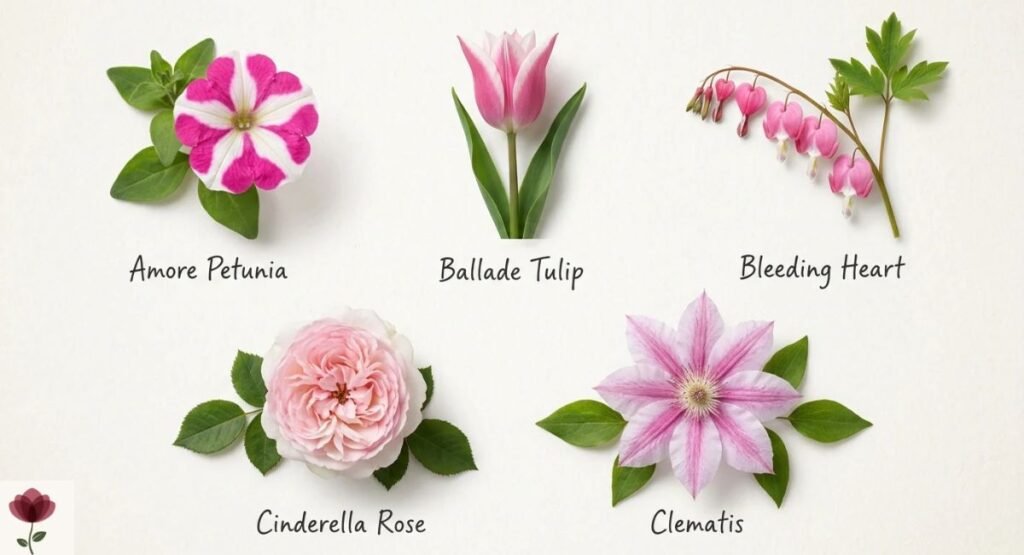
Amore Petunia is a striking choice for containers, window boxes, and sunny garden beds. Its patterned, trumpet-shaped flowers create a lively display. Look for a cultivar with the exact pink-and-white pattern you prefer because petunia colors vary. Give it full sun and well-drained potting mix.
2. Ballade Tulip
Ballade Tulip belongs to the lily-flowered tulip group. Its pointed petals give spring borders a graceful appearance. Check the bulb packaging for its actual flower color before purchasing. Plant tulip bulbs in fall, usually about two to three times as deep as the bulb is tall.
3. Bleeding Heart
Bleeding Heart (Lamprocapnos spectabilis) produces delicate, heart-shaped flowers along arching stems. Traditional varieties often have pink outer petals and white inner tips. This perennial prefers partial shade and moist, well-drained soil. It is especially attractive in woodland gardens and shaded borders.
4. Cinderella Rose
Cinderella Rose adds a romantic look to cottage gardens and rose beds. Its soft blooms can complement white flowers and green foliage in mixed planting schemes. Confirm the exact variety before buying because rose names and colors can differ. Give roses good sunlight, airflow, and regular watering.
5. Clematis
Clematis is a climbing plant with large, star-shaped flowers. Pink-and-white cultivars can cover fences, trellises, and garden arches. Most clematis varieties need sunlight on their leaves and cooler conditions around their roots. Check the pruning group before cutting because different varieties flower on different growth.
6. Grand Crinum Lily
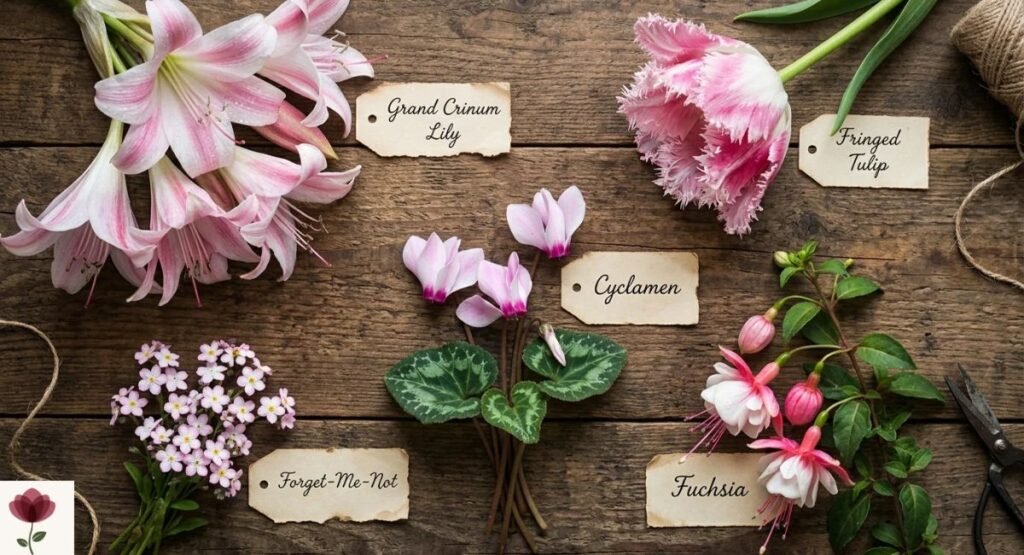
Grand Crinum Lily is a bold plant with long, strap-like leaves and large lily-shaped blooms. Some crinum varieties produce pink flowers, while others have different shades. Choose a confirmed bicolored cultivar if you want both colors. It suits warm gardens with sun and well-drained soil.
7. Cyclamen
Cyclamen has swept-back petals and attractive, heart-shaped leaves. Some cultivars feature pink flowers with white edges or pale centers. Florist cyclamen is popular indoors, while hardy types can grow outdoors in suitable regions. Give it bright, indirect light and avoid leaving its roots in soggy soil.
8. Forget-Me-Not
Forget-Me-Not (Myosotis) is a low-growing plant with clusters of tiny flowers. Blue varieties are common, but pink and white selections are also available. These flowers suit cottage gardens, borders, and partly shaded spaces. They prefer moist soil and may self-seed in favorable conditions.
9. Fringed Tulip
Fringed Tulip stands out because its petal edges look finely cut or feathered. Some cultivars have pink petals with white margins, creating a delicate spring display. Plant the bulbs in fall in a sunny location. Well-drained soil is essential because excess moisture can cause bulbs to rot.
10. Fuchsia
Fuchsia produces dangling flowers with colorful sepals and petals. Many varieties combine pink, red, purple, and white shades. Its graceful stems make it a favorite for hanging baskets and shaded patios. Fuchsia generally prefers bright shade, cooler conditions, and evenly moist soil during active growth.
11. Cattleya Orchid
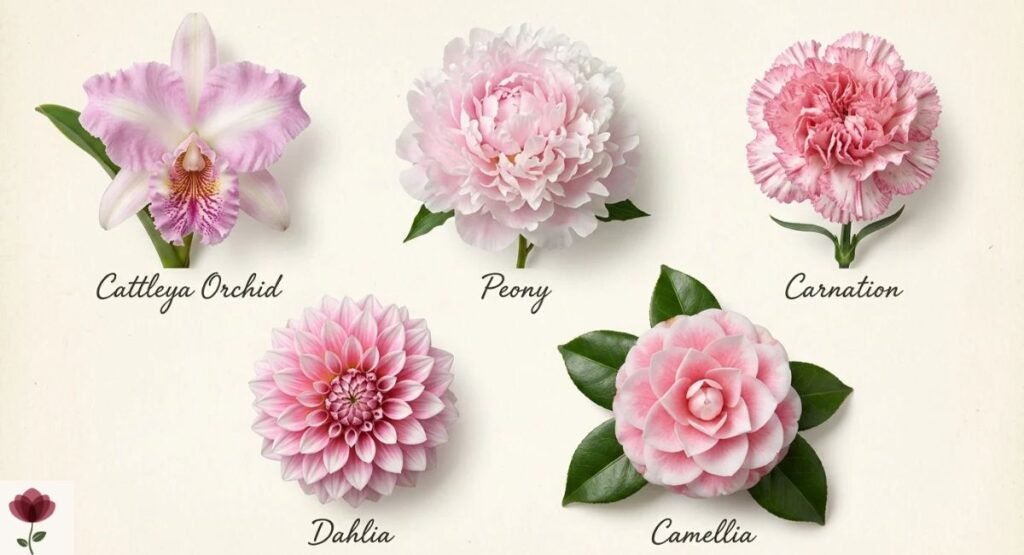
Cattleya Orchid is admired for its large, showy flowers and tropical appearance. Certain cultivars combine pink petals with white areas or contrasting lips. Grow it in bright, indirect light with an airy orchid potting mix. Water thoroughly, then allow the growing medium to approach dryness.
12. Peony
Peony produces large, often fragrant flowers that make beautiful garden displays and bouquets. Many cultivars have soft pink petals, while others are white or bicolored. Peonies need a sunny location and fertile, well-drained soil. Avoid planting their eyes too deeply because this can reduce flowering.
13. Carnation
Carnation has ruffled petals and long-lasting flowers. Many varieties come in pink, white, and striped combinations. Grow carnations in a sunny spot with well-drained soil. Remove faded blooms to keep plants tidy and encourage further flowering. Their sturdy stems also make them useful cut flowers.
14. Dahlia
Dahlia offers an impressive range of flower shapes, from small pompons to large decorative blooms. Pink-and-white cultivars can become striking focal points in summer gardens. Dahlias grow from tubers and need sunlight, fertile soil, and regular moisture. Support taller varieties to protect their stems.
15. Camellia
Camellia is an evergreen shrub with glossy leaves and elegant flowers. Certain cultivars produce soft pink blooms with white markings or layered petals. Camellias generally prefer acidic, well-drained soil and protection from harsh afternoon sun. They add year-round foliage and seasonal flowers to suitable gardens.
16. Azalea
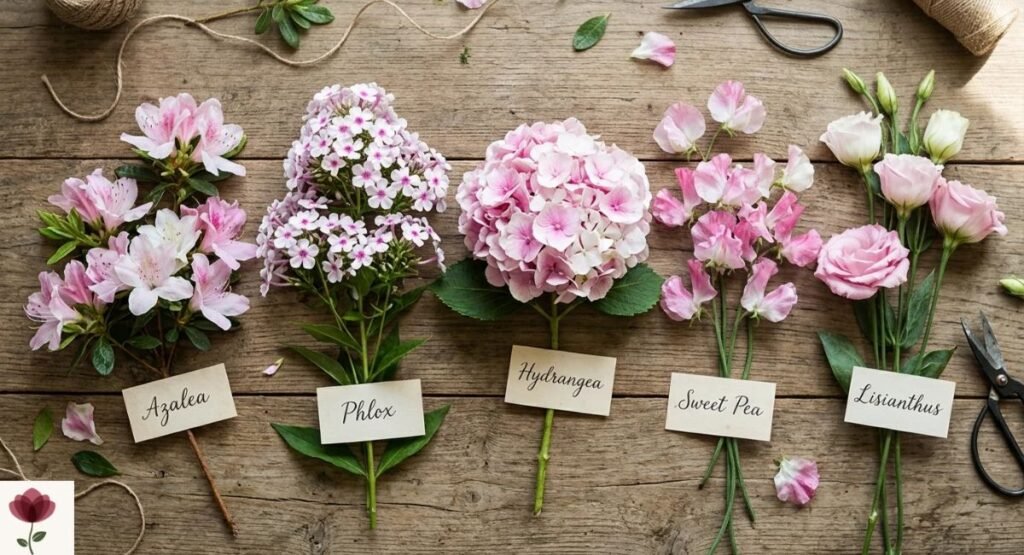
Azalea is a flowering shrub that produces abundant blooms, often in spring. Pink, white, and bicolored cultivars can brighten foundation beds and woodland borders. Most azaleas prefer acidic soil, consistent moisture, and partial shade. Good drainage is important because their roots dislike waterlogged conditions.
17. Phlox
Phlox includes creeping ground covers and taller garden perennials. Several varieties offer pink flowers with white centers or pale edges. Creeping phlox works well along paths and rock gardens, while taller types suit mixed borders. Give garden phlox suitable airflow to help reduce powdery mildew.
18. Hydrangea
Hydrangea is known for its large, rounded or cone-shaped flower clusters. Some cultivars produce pink-and-white blooms, while others offer solid colors. Flower color depends on the species and cultivar, and some bigleaf hydrangeas respond to soil conditions. Give many varieties moisture and morning sun.
19. Sweet Pea
Sweet Pea is a fragrant climbing annual with delicate, butterfly-like flowers. Pink and white varieties add a soft look to cottage gardens and trellises. It usually performs best in cool weather and fertile, well-drained soil. Provide support early so its climbing stems can attach easily.
20. Lisianthus
Lisianthus has rose-like flowers with smooth, delicate petals. It is popular in bouquets because its blooms look elegant and last well after cutting. Pink and white cultivars are widely used in floral designs. In the garden, it needs bright light, good drainage, and careful watering.
Flowering Trees With Pink and White Blossoms
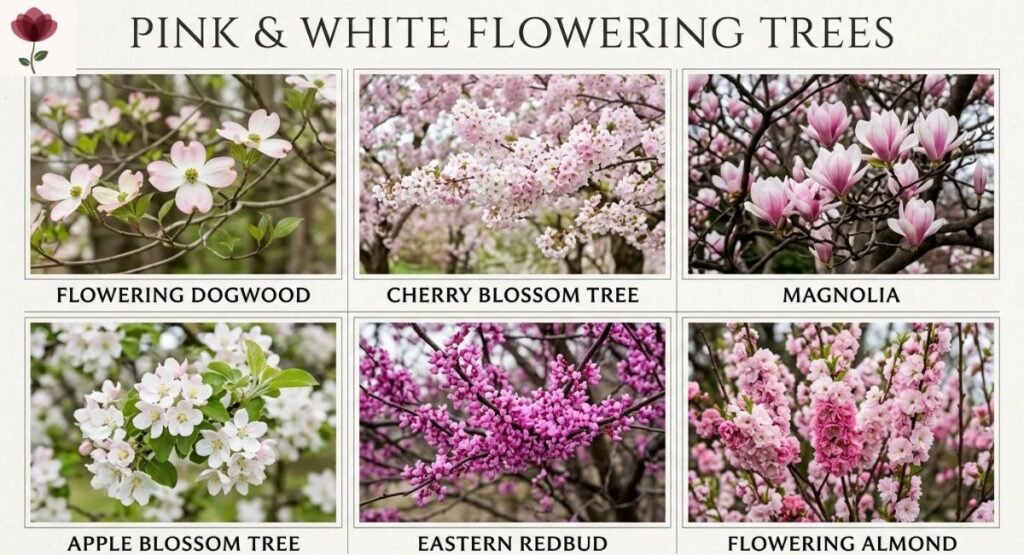
Pink and white tree flowers add height, seasonal interest, and beauty to a landscape. Flowering trees can frame entrances, shade patios, and create a focal point in larger gardens. Before planting, check the tree’s mature height and spread so it has enough room.
Some trees produce white blossoms, while selected cultivars offer pink flowers or mixed shades. Flowering dogwood, cherry, magnolia, and flowering almond are popular ornamental choices. Their bloom times and growing needs differ, so choose a tree suited to your region.
University of Maryland Extension+2
| Flowering tree | Bloom appearance | Garden feature |
| Flowering Dogwood | White or pink bracts | Spring flowers and fall color |
| Cherry Blossom Tree | White to pink blossoms | Seasonal ornamental display |
| Magnolia | White, pink, or purple-pink flowers | Large, showy blooms |
| Apple Blossom Tree | White flowers opening from pink buds | Blossoms and possible fruit |
| Eastern Redbud | Pink to purple-pink flowers | Early spring color |
| Flowering Almond | Usually pink blossoms | Small ornamental tree or shrub |
Flowering Dogwood
Flowering Dogwood (Cornus florida) is a small ornamental tree native to eastern North America. Its petal-like bracts are usually white, although pink-flowered forms are available. It prefers partial shade and moist, well-drained soil. The tree also offers red berries and attractive fall foliage.
Cherry Blossom Tree
Cherry Blossom Trees are famous for their spring displays. Depending on the species and cultivar, blossoms may be white, pale pink, or deep pink. These trees work well as specimen plants in open lawns. Choose a variety suited to your region and provide full sun with good drainage.
Magnolia
Magnolia trees produce large, striking flowers that can appear before or alongside their leaves. Some varieties have white petals, while others bloom in pink or purple-pink shades. Select the species according to your climate and available space. Magnolias look beautiful as standalone landscape trees.
Apple Blossom Tree
Apple Blossom Trees offer clusters of white flowers that often open from pink buds. They bring spring color and may later produce fruit, depending on the variety and pollination. Plant them in a sunny location with well-drained soil. Regular pruning helps maintain a healthy structure.
Eastern Redbud
Eastern Redbud (Cercis canadensis) is valued for its early spring flowers and heart-shaped leaves. Most varieties produce pink to rosy-purple blooms rather than a true pink-and-white mix. It suits lawns, woodland edges, and smaller landscapes. Give it well-drained soil and sun or partial shade.
extension.psu.edu
Flowering Almond
Flowering Almond is a small ornamental shrub or multi-stemmed tree with spring blossoms. Many varieties produce soft pink flowers rather than a true two-tone display. It works well in borders and compact gardens. Prune after flowering when needed to maintain its shape.
Bushes and Shrubs With Pink and White Flowers
A bush with pink and white flowers can add color without taking up the space of a large tree. Flowering shrubs also help define garden edges, soften fences, and fill spaces around foundations. Select plants according to their mature size and flowering season.
Some shrubs are evergreen, while others lose their leaves in winter. Azaleas and rhododendrons prefer acidic soil, while other shrubs have different needs. Check the plant label before buying, especially when you want a specific pink and white flowering shrub.
| Shrub | Flower colors available | Common garden use |
| Weigela | Pink, red, white | Borders and pollinator gardens |
| Azalea | Pink, white, bicolored | Foundation and woodland beds |
| Rhododendron | Pink, white, and other shades | Shrub borders |
| Daphne | Pink buds, pale or white flowers in some varieties | Fragrant garden areas |
| Spirea | Pink or white, depending on variety | Low-maintenance borders |
| Rose of Sharon | Pink, white, and bicolored cultivars | Summer flowering hedge |
Small Flowers for Garden Beds and Borders
Small pink and white flowers are useful when you want color near paths, lawns, and garden edges. Their compact growth can soften hard borders and fill gaps between larger plants. You can also combine them with taller flowers to create layers and depth.
When choosing small flowers, consider their spread as well as their height. Some plants form low ground covers, while others grow in compact clumps. Mix varieties with different flowering times to keep your flower borders attractive through more of the growing season.
| Small flower | Best placement | Main advantage |
| Forget-Me-Not | Shaded borders | Delicate spring color |
| Sweet Alyssum | Edges and containers | Tiny fragrant blooms |
| Creeping Phlox | Rock gardens and slopes | Spreading ground cover |
| Dianthus | Sunny borders | Fringed, fragrant flowers |
| Primrose | Cool, partly shaded beds | Early-season color |
| Impatiens | Shady beds and pots | Color in low-light spaces |
Pink and White Flowering Plants for Containers and Hanging Baskets
Pink and white flowering plants can brighten patios, balconies, porches, and small outdoor spaces. Containers also let you move plants when sunlight or weather conditions change. Choose pots with drainage holes and use a suitable potting mix rather than heavy garden soil.
Trailing plants work especially well in hanging baskets because their stems spill over the edges. Upright varieties can add height in the center of a container. Combine plants with similar light and watering needs so one plant does not struggle while another thrives.
| Plant | Container style | Light preference |
| Petunia | Pots, window boxes, hanging baskets | Full sun |
| Begonia | Patio pots and shaded containers | Partial shade |
| Fuchsia | Hanging baskets | Bright shade |
| Cyclamen | Indoor or sheltered pots | Bright, indirect light |
| Calibrachoa | Hanging baskets and window boxes | Full sun |
| Million Bells | Trailing containers | Full sun |
Pink and White Wedding Flowers for Beautiful Bouquets
Pink and white wedding flowers create a romantic palette that suits many wedding styles. Soft blush tones look gentle and classic, while brighter pinks add energy. Roses, peonies, carnations, lisianthus, and hydrangeas are popular choices for bouquets and decorations.
Flower availability changes with the season and local supply. Peonies, for example, are strongly associated with spring and early summer in many markets, while roses and carnations are commonly available more broadly. Ask your florist about seasonal options before finalizing your design.
| Wedding flower | Appearance | Common use |
| Rose | Classic layered petals | Bridal and bridesmaid bouquets |
| Peony | Large, full blooms | Romantic bridal bouquets |
| Lisianthus | Soft, rose-like flowers | Bouquets and centerpieces |
| Carnation | Ruffled petals | Bouquets and arrangements |
| Hydrangea | Large flower clusters | Centerpieces and floral installations |
| Ranunculus | Layered, rounded petals | Bridal bouquets and table flowers |
Best Flowers for Bridal Bouquets
Roses, peonies, lisianthus, and carnations are attractive choices for bridal bouquets. Their different shapes create texture and depth. Large peonies can act as focal flowers, while smaller blooms fill gaps. Choose flowers that suit your dress, wedding colors, season, and budget.
Blush Pink and White Wedding Flowers
Blush pink and white wedding flowers create a soft and romantic look. Combine blush roses with white lisianthus or delicate filler flowers. Greenery adds contrast without making the bouquet look too busy. This palette suits classic ceremonies, garden weddings, and elegant reception tables.
Light Pink and White Wedding Flowers
Light pink and white flowers work well for simple, graceful wedding designs. Pale roses, carnations, and lisianthus can create a balanced bouquet. Add white flowers in different sizes to give the arrangement texture. Soft ribbons and natural greenery complete the look.
Pale Pink and White Wedding Flowers
Pale pink and white wedding flowers are ideal when you want a subtle color scheme. Choose blooms with similar tones so the arrangement feels calm rather than crowded. Roses, ranunculus, and seasonal filler flowers can create a delicate bouquet with a natural shape.
Peach Pink and White Wedding Flowers
Peach pink and white wedding flowers bring warmth to a floral design. Peach roses or dahlias can pair beautifully with white carnations and lisianthus. This combination suits outdoor weddings and late-summer celebrations. Use greenery to connect the warm shades and create a natural finish.
White and Pink Wedding Arrangements
White and pink wedding arrangements can decorate ceremony arches, reception tables, and welcome areas. Use larger flowers as focal points and smaller blooms to fill the design. Repeating the same flower colors across different decorations helps create a coordinated wedding theme.
Blue, Pink, and White Wedding Flowers
Blue, pink, and white wedding flowers create a fresh palette with a little more contrast. Blue delphiniums or tweedia can complement pink roses and white lisianthus. Keep one color dominant and use the others as accents. This helps the arrangement look balanced.
Flowers for Bridesmaid Bouquets
Bridesmaid bouquets usually look best when they complement the bridal arrangement without copying it exactly. Smaller roses, carnations, lisianthus, and seasonal flowers are useful options. Keep the colors consistent and vary the flower sizes or greenery to give each bouquet a coordinated appearance.
Pink, Red, and White Flowers for Colorful Arrangements
Adding red to pink and white flowers creates a stronger and more vibrant garden palette. Red blooms stand out against pale petals, while pink helps soften the contrast. This combination can work in cottage gardens, summer borders, and mixed flower containers.
For a balanced display, vary the height and shape of the flowers. Place taller plants toward the back of a border and shorter varieties near the front. Repeat each color in more than one area so the garden feels connected rather than patchy.
Red and White Flowers
Red and white flowers create a classic contrast in garden beds and bouquets. Roses, carnations, and tulips offer varieties in these colors. Combine large blooms with smaller flowers to add texture. Check each plant’s growing needs before placing different varieties together.
Pink and Red Flower Combinations
Pink and red flower combinations can look warm and lively. Pair soft pink roses with deeper red carnations or tulips for contrast. A little white foliage or pale filler flower can prevent the arrangement from feeling too intense. Repeat the colors to create a unified display.
Pink, Red, and White Garden Flowers
A pink, red, and white flower garden can look beautiful throughout the growing season. Choose plants that bloom at different times so the display does not disappear after one short flowering period. Mix annuals with suitable perennials and shrubs for changing layers of color.
Different Types of Pink and White Flowers
Not all pink and white flowering plants grow in the same way. Some complete their life cycle in one season, while others return each year. Flowering time, fragrance, and growth habit also affect where a plant works best.
Understanding these differences makes garden planning easier. You can combine annuals for quick color with perennials for lasting structure. Add spring and summer bloomers to extend the display, and use climbing plants to bring flowers above ground level.
| Flower type | Meaning | Examples |
| Annual | Completes its life cycle in one growing season | Petunia, sweet alyssum |
| Perennial | Returns for several growing seasons | Peony, bleeding heart, phlox |
| Spring-blooming | Flowers mainly in spring | Tulip, primrose, flowering dogwood |
| Summer-blooming | Flowers mainly in warmer months | Dahlia, petunia, many hydrangeas |
| Fragrant | Valued for noticeable scent | Sweet pea, carnation, daphne |
| Climbing | Grows upward with support | Clematis, climbing sweet pea |
How to Grow and Care for Pink and White Flowers
Healthy flowers start with the right planting location. Before choosing a variety, check how much sun it needs, what soil it prefers, and how large it will grow. A plant that suits your garden conditions usually needs less correction and maintenance later.
Watering and pruning also affect flowering. Some plants prefer evenly moist soil, while others need better drainage between watering sessions. Follow the care instructions for each species rather than treating every flower the same way. This is especially important when growing several varieties together.
Sunlight Requirements
Sunlight needs vary widely among flowers. Petunias and dahlias generally need plenty of sun, while bleeding hearts and many fuchsias prefer partial shade. Observe your garden throughout the day before planting. Remember that strong afternoon sun can be much hotter than gentle morning light.
Soil and Drainage
Most flowering plants need soil that drains well, but their preferred soil types differ. Azaleas and rhododendrons prefer acidic conditions, while other flowers tolerate a wider range. Add organic matter when appropriate and avoid planting in areas where water collects after rain.
Watering Requirements
Watering depends on the plant, weather, soil, and container size. Newly planted flowers need regular attention while their roots establish. Water deeply when the soil begins to dry rather than giving every plant a little water each day. Containers may need more frequent checks during hot weather.
Pruning and Maintenance
Remove faded flowers when deadheading helps encourage fresh blooms. Prune shrubs according to their flowering habits because cutting at the wrong time may remove future buds. Many spring-flowering shrubs should be pruned after flowering, while some summer bloomers can be pruned before spring growth begins.
extension.psu.edu+1
USDA Hardiness Zones
The USDA Plant Hardiness Zone Map helps gardeners compare average annual extreme minimum winter temperatures across the United States. Use it to check whether a perennial or shrub is likely to survive your winters. However, zones do not show every factor, including soil, humidity, summer heat, and local microclimates.
USDA Plant Hardiness Zone Map+1
Conclusion
Pink and white flowers can bring softness, color, and variety to almost any garden. You can choose delicate flowers for borders, climbing plants for trellises, shrubs for structure, or flowering trees for a seasonal focal point. The right combination depends on your space and local growing conditions.
Before planting, check each variety’s mature size, sunlight needs, soil preferences, and hardiness. Choose cultivars that genuinely produce the colors you want. With thoughtful planning, pink and white flowering plants can create a beautiful display in your garden and provide lovely flowers for bouquets and special occasions.
FAQs
What Are the Most Popular Pink and White Flowers?
Roses, peonies, tulips, carnations, and hydrangeas are popular choices. Look for specific cultivars with both colors if you want a true two-tone display.
What Tree Has Pink and White Flowers?
Flowering dogwood, cherry blossom, magnolia, and flowering almond are attractive options. Their flower colors vary by species and cultivar.
What Bush Has Pink and White Flowers?
Weigela, azalea, rhododendron, and rose of Sharon offer pink, white, or bicolored varieties. Check the mature size before planting.
Which Plants Have Small Pink and White Flowers?
Sweet alyssum, dianthus, forget-me-not, primrose, and some phlox varieties are good choices. They can brighten borders, paths, and small garden spaces.
What Are the Best Pink and White Wedding Flowers?
Roses, peonies, lisianthus, carnations, and hydrangeas are popular wedding flowers. Choose them according to your wedding season, bouquet style, and local availability.

Welcome to PetalNexa! I’m Anam Sattar, an AI-powered SEO Specialist and Content Writer with over 4 years of experience in creating high-quality, search-optimized content. I help businesses improve their search engine rankings, increase organic traffic, and build beautiful, user-friendly websites. My mission is to make SEO, content creation, and web design simple, effective, and accessible for everyone. Let’s grow your online presence and achieve success together!
1 thought on “20 Pink and White Flowers: Trees, Shrubs, and Flowering Plants for Your Garden”