

Pink flowers can bring beauty, warmth, and charm to any garden. From delicate blossoms to bold, colorful blooms, there are countless ways to enjoy these lovely plants. Whether you have a small backyard or a large landscape, pink flowers offer options for every space and gardening style. You can choose fragrant flowering shrubs, elegant pink flowering trees, or colorful perennials to create a beautiful display throughout the growing season.
Some varieties thrive in sunny spots, while others prefer partial shade. In this guide, you’ll discover 65 pink flowers for your garden, along with helpful tips to choose suitable plants and care for them successfully in your local climate.
65 Beautiful Pink Flowers for Your Garden
The best pink flowers for gardens depend on what you want to grow. Some plants thrive in sunny flower beds, while others prefer partial shade or indoor conditions. Flowering shrubs and small trees also provide structure that annual flowers cannot offer.
The table below includes 65 choices for gardens across the United States. Bloom times, mature sizes, and growing needs vary by species and cultivar. Check the plant label and your local growing zone before buying.
| No. | Pink flower | Plant type | Main garden use |
| 1 | Pink Rose | Flowering shrub | Borders and containers |
| 2 | Pink Hydrangea | Flowering shrub | Shaded borders |
| 3 | Pink Azalea | Flowering shrub | Spring color |
| 4 | Pink Rhododendron | Flowering shrub | Evergreen structure |
| 5 | Pink Camellia | Flowering shrub | Sheltered gardens |
| 6 | Pink Weigela | Flowering shrub | Shrub borders |
| 7 | Pink Flowering Spirea | Flowering shrub | Compact beds |
| 8 | Pink Butterfly Bush | Flowering shrub | Sunny gardens |
| 9 | Pink Rose of Sharon | Flowering shrub | Summer blooms |
| 10 | Pink Hibiscus | Shrub or perennial | Tropical-style gardens |
| 11 | Pink Cherry Blossom | Flowering tree | Spring displays |
| 12 | Pink Dogwood | Flowering tree | Partly shaded yards |
| 13 | Pink Magnolia | Flowering tree | Garden focal point |
| 14 | Eastern Redbud | Flowering tree | Residential landscapes |
| 15 | Pink Flowering Crabapple | Flowering tree | Lawns and wildlife gardens |
| 16 | Pink Crape Myrtle | Flowering tree or shrub | Summer color |
| 17 | Pink Flowering Peach | Flowering tree | Early spring blooms |
| 18 | Pink Lily | Bulbous flower | Beds and containers |
| 19 | Pink Phlox | Perennial or ground cover | Cottage gardens |
| 20 | Pink Dianthus | Perennial | Edging and rock gardens |
| 21 | Pink Peony | Perennial | Flower borders |
| 22 | Pink Tulip | Bulbous flower | Spring displays |
| 23 | Pink Gerbera Daisy | Flowering perennial | Pots and beds |
| 24 | Pink Begonia | Annual or perennial | Shaded patios |
| 25 | Pink Orchid | Flowering houseplant | Indoor displays |
| 26 | Pink Dahlia | Tuberous perennial | Summer borders |
| 27 | Pink Chrysanthemum | Perennial | Fall color |
| 28 | Pink Ranunculus | Tuberous flowering plant | Beds and bouquets |
| 29 | Pink Zinnia | Annual | Sunny flower beds |
| 30 | Pink Anemone | Flowering perennial | Seasonal displays |
| 31 | Pink Lisianthus | Flowering plant | Cutting gardens |
| 32 | Pink Sweet Pea | Climbing annual | Trellises |
| 33 | Pink Geranium | Flowering plant | Pots and borders |
| 34 | Pink Cosmos | Annual | Informal gardens |
| 35 | Pink Stock Flower | Annual or biennial | Fragrant borders |
| 36 | Pink Gladiolus | Bulbous flower | Tall flower displays |
| 37 | Pink Snapdragon | Annual or short-lived perennial | Borders and pots |
| 38 | Pink Aster | Perennial | Late-season blooms |
| 39 | Pink Fuchsia | Shrub or container plant | Hanging baskets |
| 40 | Pink Petunia | Annual | Window boxes |
| 41 | Pink Bougainvillea | Climbing shrub | Warm-climate gardens |
| 42 | Pink Cyclamen | Tuberous flowering plant | Cool-season containers |
| 43 | Pink Impatiens | Annual or perennial | Shaded beds |
| 44 | Pink Bleeding Heart | Perennial | Woodland gardens |
| 45 | Pink Columbine | Perennial | Cottage gardens |
| 46 | Pink Hellebore | Perennial | Shaded borders |
| 47 | Pink Hyacinth | Bulbous flower | Spring fragrance |
| 48 | Pink Heather | Low-growing shrub | Rock gardens |
| 49 | Pink Lavender | Perennial subshrub | Sunny borders |
| 50 | Pink Poppy | Annual or perennial | Cottage-style beds |
| 51 | Pink Allium | Bulbous perennial | Mixed borders |
| 52 | Pink Scabiosa | Perennial or annual | Pollinator gardens |
| 53 | Pink Amaryllis | Bulbous flower | Indoor displays |
| 54 | Pink Bergenia | Evergreen perennial | Ground cover |
| 55 | Pink Primrose | Perennial | Spring borders |
| 56 | Pink Lilac | Flowering shrub | Fragrant hedges |
| 57 | Pink Lobelia | Annual or perennial | Edging and containers |
| 58 | Pink Lupine | Perennial or annual | Cottage gardens |
| 59 | Pink Lantana | Flowering shrub | Sunny, warm gardens |
| 60 | Pink Periwinkle | Perennial or subshrub | Ground cover |
| 61 | Pink Nasturtium | Annual | Edging and edible gardens |
| 62 | Pink Nemesia | Annual or short-lived perennial | Containers |
| 63 | Pink Passion Flower | Climbing vine | Trellises |
| 64 | Pink Penstemon | Perennial | Sunny borders |
| 65 | Pink Wisteria | Climbing woody vine | Strong garden structures |
25 Pink Flowers Worth Knowing
1. Pink Roses
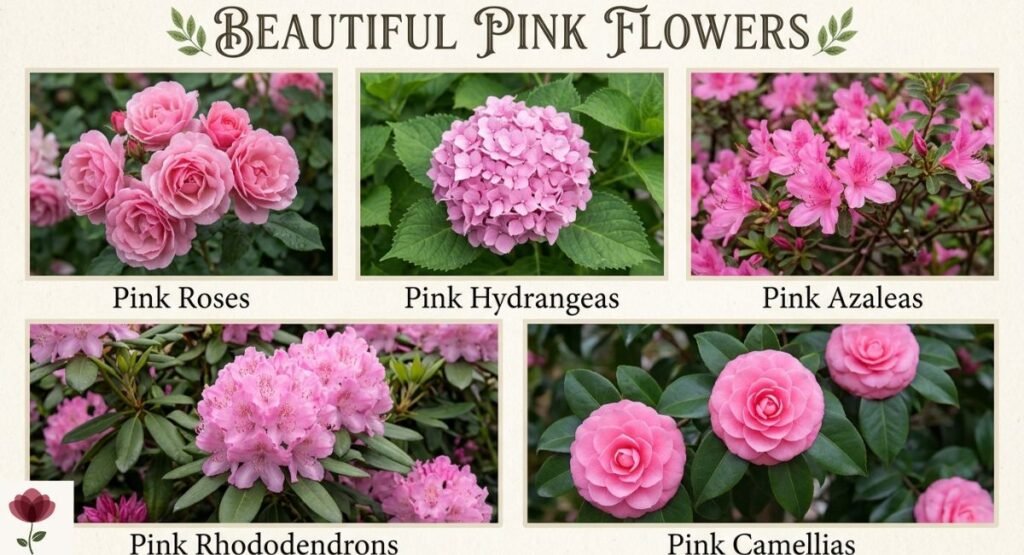
Pink roses are classic flowering garden plants with shades ranging from pale blush to deep rose. Depending on the variety, they can bring fragrance, repeat blooms, or a traditional cottage-garden look. Plant them where they receive suitable sunlight and have good air circulation. Choose disease-resistant varieties for easier care and prune according to the rose type.
2. Pink Hydrangeas
Pink hydrangeas produce rounded or cone-shaped flower clusters that stand out in garden beds. Many grow well in locations with morning sun and some afternoon shade, although requirements vary by type. Certain bigleaf hydrangeas can change from pink toward blue as soil conditions change. For pruning advice, check the cultivar because some hydrangeas bloom on old wood while others bloom on new growth. The University of Minnesota Extension hydrangea guide explains these differences.
3. Pink Azaleas
Pink azaleas create a bright spring display beneath trees or along partly shaded borders. Most prefer acidic soil that drains well, along with protection from intense afternoon sun in hot climates. Water newly planted azaleas regularly while their roots become established. A layer of organic mulch can help retain soil moisture, but keep it away from the main stems.
4. Pink Rhododendrons
Pink rhododendrons grow large clusters of flowers above broad green leaves. Many varieties keep their foliage through winter, so they add structure even when flowers are absent. They generally prefer acidic soil, steady moisture, and good drainage. Before planting, check the expected mature width because some varieties become much larger than young nursery plants suggest.
5. Pink Camellias
Pink camellias are known for their polished evergreen leaves and layered flowers. Depending on the species and cultivar, they may bloom during fall, winter, or spring. They usually grow best in sheltered locations with acidic soil and consistent moisture. In colder parts of the USA, choose a hardy variety and protect young plants from harsh winter winds.
6. Pink Weigela
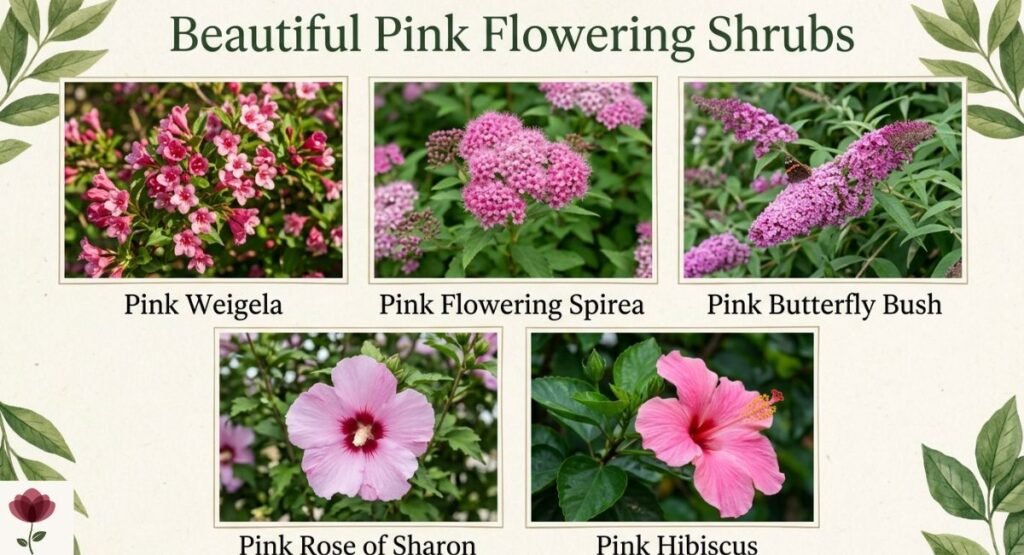
Pink weigela produces trumpet-shaped flowers that can attract hummingbirds to the garden. It works well in shrub borders and mixed plantings, and some cultivars offer purple or burgundy foliage. Most varieties flower best with adequate sunlight and well-drained soil. Prune at the right time for the cultivar because cutting back at the wrong time may remove developing flower buds.
7. Pink Flowering Spirea
Pink flowering spirea is a useful option for gardeners who want a manageable shrub with clusters of small pink flowers. Many varieties fit neatly into foundation beds, low borders, or mixed shrub plantings. Their size and shape differ, so compare mature dimensions before choosing one for a narrow space. Give the plant suitable light and avoid keeping its roots constantly wet.
8. Pink Butterfly Bush
Pink butterfly bush develops long flower clusters that butterflies may visit for nectar. It generally prefers a sunny location and well-drained soil. However, butterfly bush can be invasive in some regions, where it may spread beyond gardens. Check local recommendations before planting it. Native plants suited to your area can often provide better support for local wildlife throughout its life cycle. The University of Illinois Extension explains why native plants matter in butterfly gardens.
9. Pink Rose of Sharon
Rose of Sharon produces large, hibiscus-like flowers during summer. Pink varieties add color when many spring shrubs have finished blooming. Depending on the cultivar, the plant can grow into a tall shrub that works as a specimen or informal screen. Give it room to reach its mature size and check whether the selected variety produces unwanted seedlings in your region.
10. Pink Hibiscus
Pink hibiscus offers large, dramatic blooms that create a tropical feel. The name covers different plants, including tropical hibiscus shrubs and hardy perennial hibiscus. Their temperature and watering needs are not the same. Tropical varieties need protection from cold weather, while hardy types can survive winters in suitable regions. Check the plant label before deciding where to grow it.
11. Pink Cherry Blossom Trees
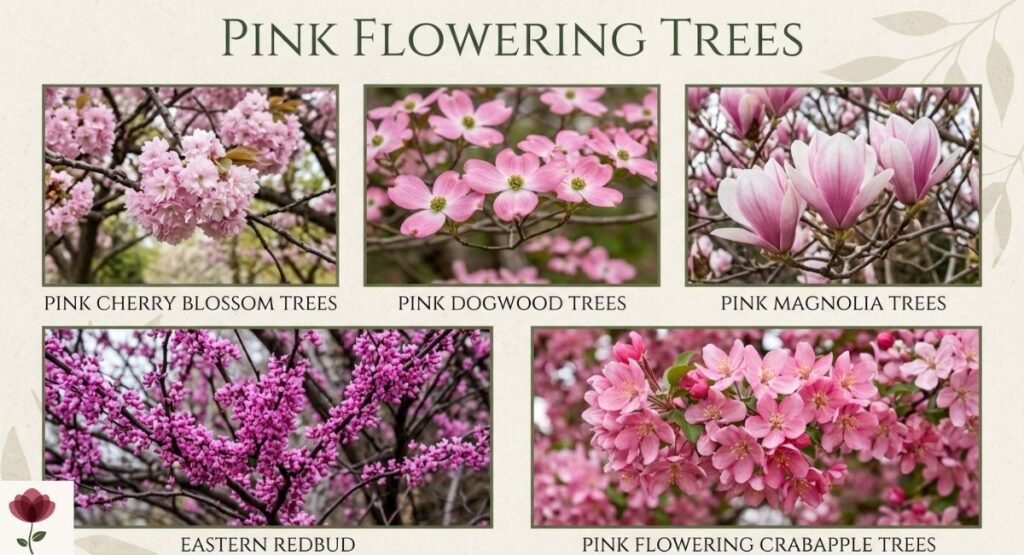
Pink cherry blossom trees create an eye-catching display in early or mid-spring. They work well as specimen trees near lawns, paths, and front gardens. Flowering periods may be brief, but the seasonal effect can be striking. Choose a variety that suits your local climate, then allow enough room for the mature canopy and root system.
12. Pink Dogwood Trees
Pink dogwood trees bring spring flowers and attractive branching to residential landscapes. Many perform well with morning sunlight and afternoon shade, especially in warmer areas. They prefer soil that holds some moisture without becoming waterlogged. Select a healthy, regionally suitable cultivar and give it enough room for air to move through its branches.
13. Pink Magnolia Trees
Pink magnolias produce large flowers that may open before the leaves emerge. This makes them attractive focal points in front yards and larger gardens. Some types grow into substantial trees, while others remain smaller shrubs or compact trees. Check the mature height and width before planting, and choose a variety that tolerates your area’s winter temperatures.
14. Eastern Redbud
Eastern redbud displays clusters of pink-purple flowers along its branches in early spring. Its heart-shaped leaves provide additional interest after flowering, and its moderate size suits many residential landscapes. It can work well near a lawn or at the edge of a woodland-style garden. Choose a location with enough room for the mature canopy and suitable drainage.
15. Pink Flowering Crabapple Trees
Pink flowering crabapple trees offer abundant spring blossoms, and many varieties produce small fruits later in the year. Those fruits may provide food for wildlife, although fallen fruit can create extra cleanup near patios or paths. Look for disease-resistant cultivars suited to your region. Planting in a sunny, well-drained spot can help the tree grow well.
16. Pink Crape Myrtle
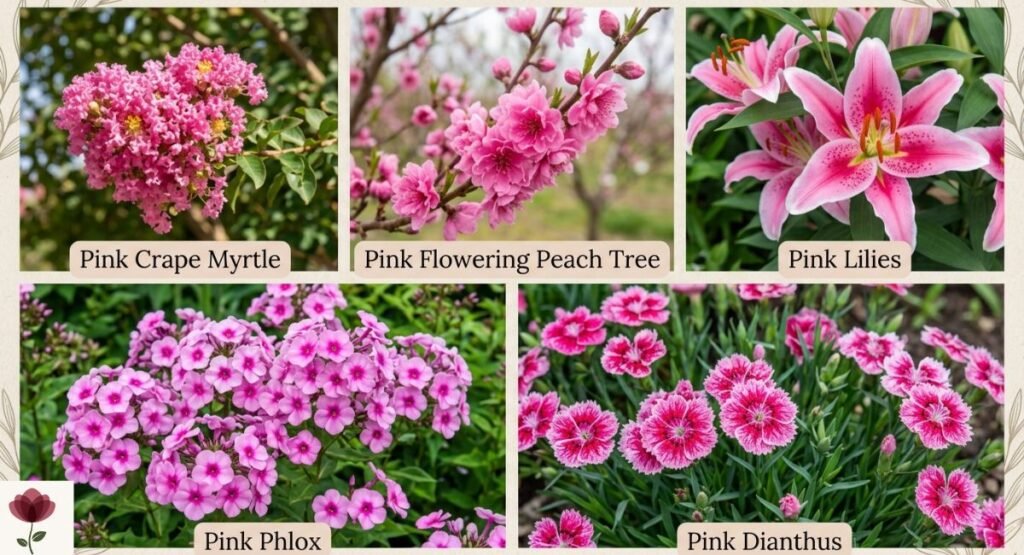
Pink crape myrtle is popular in warmer parts of the United States because it can produce flowers through much of summer. Depending on the variety, it grows as a shrub or small tree. Its attractive bark adds interest outside the flowering season. Give it full sun where possible and choose a size that fits the space without severe annual pruning.
17. Pink Flowering Peach Trees
Ornamental peach trees can cover their branches with pink blossoms in early spring. Their main appeal is usually the floral display rather than fruit production. Choose an ornamental variety if flowers are your priority, and confirm its hardiness before planting. Good sunlight and suitable drainage support healthy growth, while enough space helps preserve the tree’s natural shape.
18. Pink Lilies
Pink lilies have prominent petals and can bring height and color to garden beds. Some varieties also have a strong fragrance, while others have little scent. Plant them in soil that drains well and follow the light requirements for the chosen type. Their stems may need support when flowers become heavy, especially in exposed locations.
19. Pink Phlox
Pink phlox can grow as a low ground cover or a taller flowering perennial, depending on the species. Low-growing types work well along paths and rock gardens, while taller varieties suit mixed borders. Choose a variety that matches your sunlight and spacing needs. Good air circulation can help reduce problems such as powdery mildew in susceptible plants.
20. Pink Dianthus
Pink dianthus plants often have fringed petals and a light, pleasant fragrance. Their compact growth makes them useful for edging, rock gardens, and containers. Many varieties prefer sunny locations and well-drained soil. Avoid planting them in spots where water collects after rain, because persistently wet roots can weaken the plants.
21. Pink Peonies
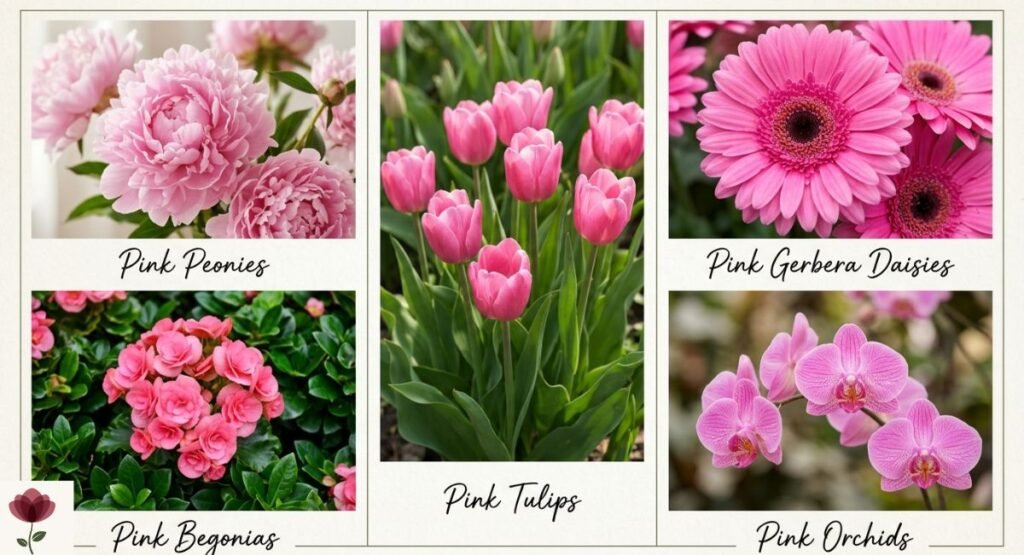
Pink peonies produce large, layered flowers that stand out in perennial borders. Once established, they can return for many years with suitable care. Give them sunlight and well-drained soil, and avoid planting the growing eyes too deeply. Mature flowers may become heavy after rain, so some varieties benefit from discreet plant supports.
22. Pink Tulips
Pink tulips provide clean shapes and bright color in spring gardens. Planting bulbs in groups creates a fuller display than spacing them widely across a bed. In many US regions, tulip bulbs are planted in fall so they can receive the cold period needed for flowering. Select varieties suited to your climate and local growing conditions.
23. Pink Gerbera Daisies
Pink gerbera daisies have large, cheerful flower heads that work well in pots and garden beds. They need good drainage and careful watering because constantly wet soil can damage their roots. In colder regions, gardeners often treat them as seasonal plants or grow them in containers that can be moved to shelter. Remove faded flowers to keep the display tidy.
24. Pink Begonias
Pink begonias combine colorful blooms with foliage that can also be decorative. Many types thrive in bright shade, making them useful for patios, porches, and shaded garden beds. Their exact light needs depend on the variety. Water when needed rather than keeping the soil soggy, and provide drainage holes for container plants.
25. Pink Orchids
Pink orchids, especially phalaenopsis types, are popular indoor flowering plants. They generally prefer bright, indirect light and an airy growing medium that allows roots to breathe. Water according to the plant’s needs instead of leaving the roots constantly wet. With suitable care, an orchid can keep its flowers for weeks and may bloom again in a later season.
Pink Flowering Bushes and Shrubs for Different Gardens
Pink flowering bushes and shrubs can add color, privacy, and structure to your landscape. Pink roses suit traditional flower beds, while azaleas and camellias work well in suitable partly shaded areas. Weigela and spirea are useful choices for mixed borders. For smaller spaces, look for compact cultivars and compare their mature height and spread before planting.
Some gardeners prefer shrubs with small pink flowers, while others want bold blooms or contrasting foliage. Selected weigela cultivars combine pink flowers with purple leaves, creating an attractive color contrast. Pink lilac can add fragrance, while Rose of Sharon provides summer flowers. Always check your region’s growing conditions and avoid shrubs known to spread aggressively where you live.
Small Trees With Pink Flowers
Small trees with pink flowers can become the main feature of a front yard or garden bed. Eastern redbud offers spring blossoms and heart-shaped leaves, while flowering dogwoods suit many partly shaded landscapes. Pink cherry blossoms create a dramatic seasonal display. Flowering crabapples may also provide ornamental fruit after their blooms fade, depending on the variety.
Before buying a pink flowering tree, check its mature height, canopy width, flowering period, and climate needs. A young tree may look small at a garden center but eventually shade nearby plants or grow close to buildings. Choose a location that allows the tree to develop naturally. For additional guidance, the University of Minnesota Extension’s pruning guide explains how correct pruning supports tree and shrub health.
How to Choose the Best Pink Flowers for Your Garden
The best pink flowers for your garden are those that suit your local climate and the conditions you can provide. Start by checking sunlight, soil drainage, and mature plant size. Azaleas and camellias generally prefer acidic soil, while many dianthus varieties prefer sunny, well-drained locations. If you garden in a hot region, consider heat tolerance and afternoon shade requirements before choosing delicate plants.
Think about when you want flowers to appear. Cherry blossoms and many tulips offer spring color, while crape myrtles and some hibiscus varieties bloom in summer. Asters and chrysanthemums can extend the display later in the year. Combining plants with different flowering seasons helps your garden remain colorful for longer. For the best results, check plant labels and local extension advice rather than assuming every pink-flowering variety grows well in every US state.
| Garden condition | Pink flowers to consider | What to check |
| Sunny garden | Pink roses, dianthus, zinnias | Sun exposure and drainage |
| Partly shaded garden | Pink hydrangeas, azaleas, dogwoods | Shade tolerance and soil moisture |
| Small yard | Compact weigela, dwarf spirea, eastern redbud cultivars | Mature size and spread |
| Containers | Pink begonias, gerberas, petunias | Pot size and drainage |
| Spring color | Pink tulips, cherry blossoms, flowering crabapples | Bloom time and winter hardiness |
| Summer color | Pink hibiscus, crape myrtle, zinnias | Heat tolerance and water needs |
| Pollinator-friendly garden | Pink phlox, asters, suitable native plants | Local wildlife value and regional suitability |
How to Care for Pink Flowering Plants
Healthy pink flowering plants need suitable water, soil, sunlight, and seasonal care. Water newly planted shrubs and trees regularly while their roots establish, then adjust watering to the plant and weather. Check the soil before watering container plants because pots can dry out faster than garden beds. Use mulch to help conserve moisture, but keep it away from direct contact with stems and tree trunks.
Pruning and feeding depend on the plant. Some flowering shrubs develop next year’s buds on older wood, so pruning at the wrong time can reduce blooms. Others flower on new growth and tolerate different pruning schedules. Remove dead or damaged branches when appropriate, and avoid applying more fertilizer than the plant needs. The University of Minnesota Extension offers practical guidance on pruning trees and shrubs.
| Care task | Helpful approach | Common mistake |
| Watering | Check soil moisture and water according to plant needs | Keeping soil constantly soggy |
| Soil preparation | Match drainage and soil pH to the plant | Assuming all flowers need the same soil |
| Mulching | Apply a moderate layer around the root zone | Piling mulch against stems or trunks |
| Pruning | Check the plant’s flowering habit and best pruning time | Cutting off next season’s flower buds |
| Fertilizing | Follow plant-specific recommendations | Applying excessive fertilizer |
| Pest checks | Inspect leaves and stems regularly | Ignoring early signs of damage |
Conclusion
Pink flowers can brighten almost any garden, whether you have a large yard, a small border, or a few containers. From pink roses and hydrangeas to flowering shrubs and small trees, there are many options for different growing conditions.
Choose plants that suit your local climate, sunlight, soil, and available space. Combine spring and summer bloomers with late-season flowers for longer-lasting color. With thoughtful choices and simple care, you can enjoy a beautiful garden filled with pink flowers throughout much of the growing season.
FAQs
What are the most popular pink flowers?
Pink roses, hydrangeas, peonies, tulips, lilies, and cherry blossoms are popular garden choices. The best option depends on your climate, available space, and preferred flowering season.
Which bushes have small pink flowers?
Pink flowering spirea, weigela, azaleas, and some compact rose varieties can produce small or clustered pink blooms. Check the mature size and growing requirements before planting.
What trees have pink flowers in spring?
Pink cherry blossoms, dogwoods, magnolias, eastern redbuds, and flowering crabapples can bring spring color. Choose a variety suited to your local climate and garden size.
Which shrubs have purple leaves and pink flowers?
Some weigela cultivars combine purple foliage with pink flowers. Their leaf colors, flower shades, and mature sizes vary, so check the cultivar details before buying.
What plants have small pink flowers and waxy leaves?
Some ornamental plants have small pink blooms and glossy or waxy-looking leaves. Several unrelated plants share these features, so use the plant’s full appearance and growing conditions to identify it accurately.

Welcome to PetalNexa! I’m Anam Sattar, an AI-powered SEO Specialist and Content Writer with over 4 years of experience in creating high-quality, search-optimized content. I help businesses improve their search engine rankings, increase organic traffic, and build beautiful, user-friendly websites. My mission is to make SEO, content creation, and web design simple, effective, and accessible for everyone. Let’s grow your online presence and achieve success together!
1 thought on “65 Pink Flowers: Flowering Bushes, Shrubs and Small Trees for Your Garden”