


Orange and white flowers bring warmth, freshness, and charm to gardens and floral arrangements. Orange adds cheerful energy, while white creates a soft, elegant contrast. Together, these colors suit many settings, from home gardens to beautiful wedding decorations. You can find them in roses, tulips, dahlias, lilies, and other popular blooms.
Some varieties feature both colors on the same petals, while others look stunning when paired together. Their different sizes, shapes, and blooming seasons offer plenty of creative choices. Whether you want small garden flowers, a romantic bridal bouquet, or colorful floral arrangements, this combination can make any space feel welcoming and bright.
Orange and White Flowers at a Glance
Choosing flowers becomes easier when you compare their sizes, colors, and blooming seasons. Some varieties produce compact blooms, while others create large statement flowers. The table below highlights popular choices for gardens, bouquets, and events across the USA.
| Flower | Size | Orange Color | White Color | Bloom Season | Best Use |
| Roses | Medium–Large | Peach, coral, orange | Cream, ivory, pure white | Spring–Fall | Garden, Bouquet, Wedding |
| Tulips | Medium | Bright orange, apricot | White, ivory | Spring | Garden, Bouquet |
| Dahlias | Medium–Large | Orange, burnt orange | White, cream | Summer–Fall | Garden, Wedding |
| Marigolds | Small–Medium | Golden orange, deep orange | Cream or pale shades | Summer–Fall | Garden |
| Zinnias | Small–Large | Orange, coral | White | Summer–Fall | Garden, Bouquet |
| Poppies | Medium | Orange, tangerine | White | Spring–Summer | Garden |
| Lilies | Large | Orange, apricot | White, ivory | Summer | Garden, Bouquet |
| Orchids | Small–Medium | Orange, coral | White | Varies | Indoor Display, Event |
| Calla Lilies | Medium–Large | Orange | White | Spring–Summer | Bouquet, Wedding |
| Carnations | Small–Medium | Orange, peach | White | Spring–Fall | Bouquet, Event |
| Chrysanthemums | Small–Large | Orange, bronze | White | Late Summer–Fall | Garden, Bouquet |
| Ranunculus | Small–Medium | Orange, peach | White, cream | Spring | Bouquet, Wedding |
| Gerbera Daisies | Medium–Large | Orange, coral | White | Spring–Fall | Bouquet, Celebration |
| Cosmos | Small–Medium | Orange shades | White | Summer–Fall | Garden, Bouquet |
| Begonias | Small–Medium | Orange, salmon | White | Spring–Fall | Garden, Containers |
| Columbine | Small–Medium | Orange, red-orange | White | Spring–Early Summer | Garden |
| Nasturtiums | Small–Medium | Orange, apricot | Creamy shades | Summer–Fall | Garden |
| Azaleas | Medium–Large | Orange varieties | White varieties | Spring | Landscaping |
| Flowering Trees | Large | Orange fruit or foliage | White blossoms | Varies | Landscaping |
| Mixed Arrangements | Varies | Orange blooms | White blooms | Year-round | Bouquet, Event |
Note: Flower colors and blooming periods vary by cultivar, climate, and growing zone. Some flowers have naturally mixed orange-and-white petals. Others are available in separate colors that you can combine.
20 Beautiful Orange and White Flowers
Many flowers bring these two colors into a garden or bouquet. Some have striking two-tone petals. Others create the same effect through thoughtful planting and floral design. Here are 20 beautiful choices to consider.
1. Orange and White Roses
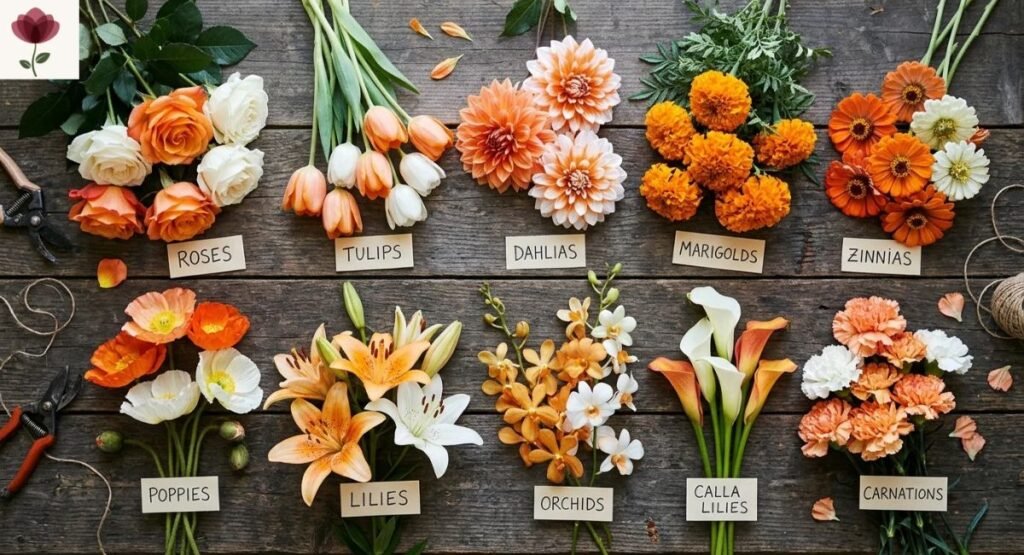
Roses offer one of the most romantic ways to enjoy orange and white flowers. Orange varieties often display peach, coral, apricot, or deeper sunset shades. White roses add a soft contrast. Some cultivars have blended or striped petals, while mixed arrangements can combine separate orange and white roses.
Their sizes range from compact garden blooms to large, full garden roses. They suit flower beds, borders, bridal bouquets, and anniversary arrangements. Roses grow best in sunny locations with well-drained soil. Give them enough space for airflow and water them near the base. Regular pruning and removing faded blooms can encourage healthy growth.
2. Orange and White Tulips
Orange and white tulips bring a fresh look to spring gardens. Their smooth, cup-shaped blooms stand upright on long stems. Orange varieties may show bright tangerine, apricot, or soft peach shades. White tulips create a clean contrast. Some varieties also have contrasting markings or blended colors.
Tulips prefer cool winters and well-drained soil. Plant their bulbs in fall for spring flowers. They look attractive in garden beds, containers, and seasonal displays. Their straight stems also make them useful for a spring flower bouquet. For a wedding, combine orange tulips with white roses or ranunculus for a graceful seasonal design.
3. Orange and White Dahlias
Dahlias are famous for their large flower heads and many petal shapes. Their colors include orange, coral, bronze, cream, and white. You can plant separate orange and white varieties to create a colorful garden display. Some cultivars also show blended shades or contrasting petal details.
These flowers are especially popular in late-summer and autumn arrangements. Large dahlias work well as focal blooms in wedding bouquets and centerpieces. Smaller varieties suit garden borders and mixed containers. Dahlias need plenty of sunlight and fertile, well-drained soil. Water them regularly during dry weather. In colder areas, gardeners often lift and store their tubers after the first frost.
4. Orange and White Marigolds
Marigolds bring cheerful orange shades to sunny gardens. Their rounded flowers have dense petals and a warm appearance. Most familiar varieties bloom in golden yellow, orange, or reddish-orange shades. Pale cream varieties can also complement them in mixed planting schemes.
Marigolds are useful for garden borders, containers, and summer displays. They generally flower for a long period when you remove faded blooms. Plant them in a sunny spot with well-drained soil. Avoid keeping the soil constantly wet. Their bright flowers pair beautifully with white petunias, alyssum, and other light-colored plants.
5. Orange and White Zinnias
Zinnias are easy-care flowers with cheerful colors and varied shapes. Their blooms can be small and button-like or large and rounded. Orange, coral, and white varieties make attractive combinations in gardens and cutting beds. Their strong stems also make them useful for fresh arrangements.
These flowers thrive in warm weather and full sunlight. Give them good spacing to improve airflow and reduce disease problems. Water the soil rather than soaking the leaves. Zinnias work well in informal bouquets with cosmos, roses, and greenery. They also attract butterflies, making them a useful choice for a lively summer garden.
6. Orange and White Poppies
Poppies have delicate petals and distinctive centers. Orange poppies bring a bright, natural look to garden beds. White varieties offer a softer appearance. Planting both colors together creates an attractive display, although not every poppy produces orange-and-white petals on one flower.
Blooming seasons depend on the species and local climate. Many poppies flower during spring or early summer. They prefer sunny areas and soil that drains well. Their delicate stems can make them challenging as cut flowers. However, they look beautiful in cottage gardens and relaxed, wildflower-style arrangements.
7. Orange and White Lilies
Lilies produce large, dramatic blooms that stand out in gardens and bouquets. Orange varieties often feature spotted petals or darker markings. White lilies may have trumpet-shaped or star-like flowers. Combining both colors creates a strong display with plenty of contrast.
Some lilies have a noticeable fragrance, so consider their placement before bringing them indoors. Their pollen can also stain clothing and table linens. Remove the anthers carefully when preparing certain varieties for arrangements. Lilies grow well in suitable sunlight and well-drained soil. Their tall stems make them useful as focal flowers in summer displays.
8. Orange and White Orchids
Orchids offer an elegant choice for indoor displays and formal events. Their unusual petals and graceful stems create a refined appearance. Orange orchids can show coral, apricot, or warm sunset shades. White orchids provide a clean and classic contrast. Some varieties have mixed markings.
Many popular indoor orchids, such as Phalaenopsis, grow well in bright, indirect light. They need a suitable orchid potting mix rather than ordinary garden soil. Water them when their growing medium begins to dry. Good airflow also helps prevent moisture problems. Orange and white orchids look beautiful in modern centerpieces, reception displays, and decorative indoor arrangements.
9. Orange and White Calla Lilies
Calla lilies have smooth, trumpet-shaped blooms and long stems. Their simple form makes them popular in modern floral design. Orange varieties add warmth, while white calla lilies bring a clean and elegant appearance. Together, they create a balanced look without needing many extra flowers.
These blooms suit minimalist bridal bouquets, formal centerpieces, and ceremony decorations. Their shape works especially well in tall vases and hand-tied arrangements. Calla lilies prefer well-drained soil and suitable sunlight. Growing conditions depend on the variety and local climate. Keep the soil evenly moist during active growth, but avoid waterlogged roots.
10. Orange and White Carnations
Carnations have full, ruffled petals and strong stems. They are available in many colors, including orange, peach, cream, and white. Their long vase life makes them useful for larger floral arrangements. They also offer an affordable option when you need many flowers for an event.
Carnations work well in bouquets, table centerpieces, and celebration decorations. Their layered petals add volume without making an arrangement too heavy. Combine them with roses, chrysanthemums, or greenery for extra texture. To keep cut carnations fresh, trim their stems and place them in clean water. Remove leaves that would sit below the waterline.
11. Orange and White Chrysanthemums
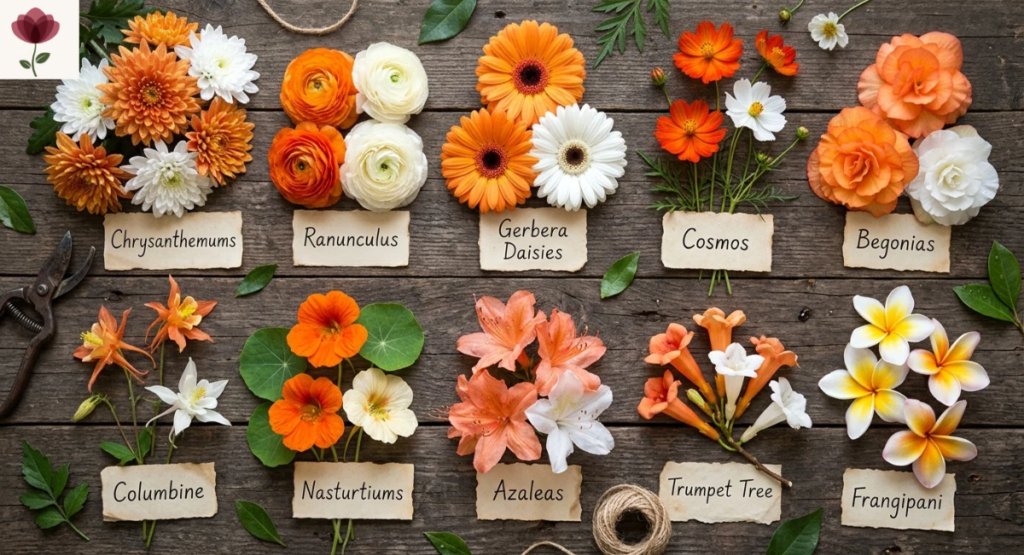
Chrysanthemums come in many shapes and sizes. Some have rounded petals, while others look like small daisies or decorative pom-poms. Orange chrysanthemums bring a warm autumn feeling. White varieties create a bright contrast in garden beds and flower arrangements.
They are especially popular for fall displays across the USA. You can use them in porch containers, seasonal planters, and bouquets. They also combine well with dahlias, roses, and ornamental foliage. Most garden mums prefer full sunlight and soil with good drainage. Regular watering helps them establish, while removing faded flowers keeps displays looking tidy.
12. Orange and White Ranunculus
Ranunculus flowers have layers of thin petals that create a soft, rose-like appearance. Their rounded shape makes them popular in romantic bouquets. Orange and peach varieties add warmth. White and cream blooms soften the overall design.
These flowers are especially useful for spring weddings and elegant hand-tied arrangements. They look beautiful with roses, lisianthus, and delicate greenery. Ranunculus generally grow best in cool conditions with plenty of light and well-drained soil. Their stems need gentle handling because the flowers can be delicate. Use them as focal blooms or combine them with smaller supporting flowers.
13. Orange and White Gerbera Daisies
Gerbera daisies have bright petals and large, visible centers. Their cheerful appearance suits birthdays, celebrations, and casual floral displays. Orange varieties create a lively focal point. White gerberas add contrast and help balance stronger colors.
Their flower heads come in different sizes, depending on the cultivar. They look attractive in simple bouquets and mixed arrangements. Gerberas need bright light and well-drained soil. Avoid keeping their crowns too wet, as excess moisture can cause problems. For cut arrangements, use a clean vase and enough support to keep their stems upright.
14. Orange and White Cosmos
Cosmos have delicate petals and a light, airy growth habit. Their flowers bring a relaxed look to cottage gardens and informal borders. Orange cosmos add a warm touch, while white varieties create a softer effect. Planting both colors together can produce a natural-looking display.
These flowers usually bloom during summer and continue into fall in suitable conditions. They prefer full sunlight and soil that is not overly rich. Too much fertilizer can encourage leafy growth instead of flowers. Cosmos also work well in loose bouquets with zinnias and other seasonal blooms. Their slender stems give arrangements a gentle, natural shape.
15. Orange and White Begonias
Begonias are useful for gardens, patios, and containers. Their flowers can appear in clusters or above attractive foliage. Depending on the type, they offer orange, salmon, pink, red, and white shades. Pairing orange and white varieties creates a bright display in small spaces.
Many begonias prefer partial shade, although light needs vary by type. They generally grow best in moist but well-drained soil. Avoid letting water collect around their roots. They are useful for balconies, hanging baskets, and shaded garden corners. In colder parts of the USA, move tender varieties indoors before frost arrives.
16. Orange and White Columbine
Columbine flowers have a distinctive shape with backward-pointing spurs. Their unusual form makes them stand out from many common garden flowers. Orange and red-orange varieties look striking beside white columbines. These plants can also attract hummingbirds and other pollinators.
Columbines suit cottage gardens, woodland borders, and partly shaded planting areas. They generally prefer moist, well-drained soil. Morning sunlight and afternoon shade can work well in warmer regions. Their flowering period often falls in spring and early summer. Allowing some flowers to set seed may encourage new plants to appear in the garden.
17. Orange and White Nasturtiums
Nasturtiums have bright, open flowers and rounded leaves. Their orange blooms bring strong color to garden beds and containers. Some varieties offer creamy or pale shades that can complement orange flowers. Their trailing growth also makes them useful for hanging baskets.
These plants prefer sunlight and soil with good drainage. They often grow well without heavy feeding. In fact, overly rich soil may produce more leaves and fewer flowers. Nasturtiums suit borders, raised beds, and informal garden designs. Their leaves and flowers are also edible when grown without unsuitable chemical treatments.
18. Orange and White Azaleas
Azaleas are flowering shrubs that create impressive seasonal displays. White varieties bring a fresh look to garden landscapes. Orange azaleas add a warmer color, although availability depends on the species and cultivar. Planting different varieties together can create an attractive spring combination.
Azaleas are useful for foundation planting, woodland gardens, and shrub borders. Most prefer acidic soil that drains well. They often grow best with morning sunlight and some afternoon shade. Keep their roots cool with a layer of mulch. Choose varieties suited to your USDA hardiness zone before planting them outdoors.
19. Orange Trumpet Tree
The Orange Trumpet Tree produces bright, trumpet-shaped flowers in warm orange or golden shades. Its colorful blooms create a striking display, especially when the tree loses some of its leaves before flowering. It grows best in warm climates with full sunlight and well-drained soil. Its bold flowers can complement nearby white-flowering trees and shrubs. This makes it an attractive choice for spacious gardens and tropical landscapes.
20. White Frangipani
White Frangipani is a small ornamental tree with beautiful white petals and yellow centers. Its flowers have a sweet fragrance and often appear during warm weather. The tree grows well in sunny locations with well-drained soil. It suits patios, tropical gardens, and outdoor landscaping. Planting it near orange-flowering plants creates a lovely color contrast. Its graceful branches and fragrant blooms also make it a popular choice for decorative gardens.
Small, Medium, and Large Orange and White Flowers
| Flower Size | Flower Names | Characteristics | Best Uses |
| Small | Cosmos, small zinnias, begonias, nasturtiums, small carnations | Compact blooms with delicate shapes and soft details | Garden borders, containers, and small bouquets |
| Medium | Tulips, roses, ranunculus, gerbera daisies, chrysanthemums | Balanced blooms with attractive shapes and versatile colors | Mixed bouquets, flower beds, and wedding arrangements |
| Large | Dahlias, lilies, large roses, large gerbera daisies, calla lilies | Bold blooms with strong visual impact and larger petals | Bridal bouquets, floral arches, and large centerpieces |
Orange and White Flowers Bouquet Ideas
A beautiful bouquet needs more than attractive colors. Flower shape, stem length, texture, and proportion also matter. Start by choosing a main flower. Then add supporting blooms and greenery. The best orange and white flowers bouquet designs balance warm colors with lighter shades.
Romantic Orange and White Bouquet
A romantic bouquet can combine peach roses, orange ranunculus, and creamy white blooms. Soft greenery adds a natural finish without making the arrangement look crowded. This style suits bridal bouquets, anniversaries, and spring celebrations. Choose flowers with rounded petals for a gentle and full appearance.
Bright Orange and White Bouquet
For a cheerful design, combine bold orange gerbera daisies with crisp white roses or carnations. Orange tulips and dahlias can also add strong color. This orange and white flower bouquet works well for birthdays, summer parties, and congratulations. Choose a simple wrapping style to keep attention on the flowers.
Wildflower-Style Orange and White Bouquet
A wildflower-style bouquet uses loose shapes and different stem heights. Combine cosmos, zinnias, poppies, and seasonal flowers with natural greenery. The result feels relaxed rather than perfectly arranged. This style works well for rustic weddings, outdoor celebrations, and anyone who prefers a natural look.
Orange and White Wedding Flowers
Orange and white wedding flowers can suit many wedding styles. Soft peach and ivory create a romantic atmosphere. Strong orange and pure white look brighter and more modern. Your venue, season, dress details, and table decorations can help determine the right balance.
Orange and White Bridal Bouquets
Bridal bouquets can feature roses, ranunculus, calla lilies, and seasonal blooms. A round bouquet looks classic, while a loose hand-tied design feels more natural. You can also add eucalyptus or other greenery for texture. Choose flowers that will remain fresh throughout photographs and the ceremony.
Orange and White Wedding Centerpieces
Centerpieces bring the wedding color palette onto guest tables. Low arrangements allow guests to talk across the table. Taller displays create a more dramatic effect in larger venues. Combine orange focal flowers with white supporting blooms. Choose vases and candles that complement the overall design.
Orange and White Ceremony Flowers
Ceremony decorations can include floral arches, aisle arrangements, and large displays near the altar. White flowers can create a clean base, while orange blooms add warmth. For outdoor ceremonies, choose flowers that can handle the expected weather. Secure arrangements properly so wind does not damage them.
Orange and White Reception Flowers
Reception flowers help connect the ceremony design with the celebration space. Use matching colors on the entrance table, guest tables, and sweetheart table. Smaller arrangements can decorate narrow spaces, while larger displays suit open areas. Keep the overall design consistent without making every arrangement identical.
Orange and White Flowering Trees
| Tree Name | Flower Color | Blooming Season | Size | Growing Conditions |
| Orange Trumpet Tree (Handroanthus species) | Yellow-orange to golden | Spring or dry season, depending on species | Medium–Large | Full sun, well-drained soil, warm climate |
| White Frangipani (Plumeria alba) | White petals with yellow centers | Summer–Fall | Small–Medium | Full sun, warm temperatures, well-drained soil |
| Sweetbay Magnolia (Magnolia virginiana) | Creamy white | Late Spring–Summer | Medium | Moist, acidic soil, full sun or partial shade |
| White Dogwood (Cornus florida cultivars) | White | Spring | Small–Medium | Partial shade, moist, well-drained soil |
Note: These trees do not all produce orange-and-white flowers on the same plant. They can create an orange-and-white landscape when planted together or paired with orange-flowering plants.
Orange and White Flowers With Other Colors
Adding another color can change the mood of a floral arrangement. Pink creates a softer appearance, while green adds a natural feel. Blue produces stronger contrast, and purple brings depth. Choose extra colors carefully so orange and white remain the main focus.
Pink, Orange, and White Flowers
Pink, orange, and white flowers create a warm and romantic palette. Peach roses, pink garden roses, orange zinnias, and white blooms can work beautifully together. This combination suits spring weddings, garden parties, and anniversary bouquets. Use soft pink shades when you want a gentle look. Stronger pink creates a bolder design.
Green, White, and Orange Flowers
Greenery gives orange and white arrangements a fresh, natural appearance. Eucalyptus, ferns, and suitable foliage can soften strong flower colors. You can also use green plants around orange and white blooms in garden beds. This combination works well for outdoor events, rustic weddings, and seasonal table decorations.
Blue, Orange, and White Flowers
Blue creates a striking contrast with orange because the colors sit opposite each other on the traditional color wheel. White helps balance the combination. Blue accent flowers can work with orange roses, white carnations, or other seasonal blooms. This palette suits coastal weddings, summer events, and modern arrangements.
Purple, Orange, and White Flowers
Purple adds depth and drama to orange and white displays. Deep purple blooms create a rich contrast, while lavender shades offer a softer finish. Combine purple accent flowers with orange dahlias and white roses for an autumn-inspired design. This palette also suits formal arrangements and evening celebrations.
Orange and White Flowers for Different Occasions
The right flower arrangement depends on the occasion. A wedding may need carefully planned bouquets and centerpieces. A birthday display can use brighter colors and playful shapes. Consider the event setting, arrangement size, and personal preferences before choosing flowers.
Weddings
Weddings often benefit from coordinated bouquets, ceremony flowers, and reception centerpieces. Roses, ranunculus, calla lilies, and dahlias offer several design options. Match the flowers to the wedding season and venue. Seasonal blooms can also help manage costs.
Birthdays and Celebrations
Bright orange and white flowers suit cheerful celebrations. Gerbera daisies, zinnias, carnations, and tulips can create colorful bouquets. Use a compact arrangement for a gift or a larger display for a party table. Add greenery to create more texture.
Baby Showers
Soft peach, pale orange, and creamy white create a gentle palette for baby showers. Small rose arrangements and delicate seasonal flowers can decorate tables and gift areas. Keep the design light and simple. Avoid strong fragrances if guests may be sensitive to them.
Corporate Events
Corporate floral displays often look best when they have a clean and organized design. Use controlled color placement in reception areas, conference rooms, and event spaces. White flowers can provide a neutral base. Orange accents add warmth without making the display look too busy.
Fall Gatherings
Autumn is a natural time to use burnt orange and creamy white flowers. Dahlias, chrysanthemums, roses, and seasonal foliage can create a warm display. These arrangements suit harvest dinners, porch decorations, and outdoor gatherings. Add natural textures to complement the seasonal colors.
Sympathy and Funeral Arrangements
Orange and white funeral flowers can create a gentle and respectful display when they reflect the wishes of the family. Softer peach, pale orange, and white shades may feel more subdued than bright orange. Roses, carnations, and chrysanthemums are common choices for formal arrangements. Always consider cultural traditions and the preferences of those receiving the flowers.
Fresh vs. Artificial Orange and White Flowers
Fresh and artificial flowers serve different purposes. Fresh blooms offer natural fragrance and texture. Artificial arrangements last longer and can be reused. Your budget, event date, and decoration needs will help you choose the better option.
Fresh Orange and White Flowers
Fresh flowers have natural shapes, fragrance, and subtle differences between blooms. Their availability depends on the season and local suppliers. They are popular for weddings, bouquets, and special celebrations. However, they need water and careful handling. Their lifespan is also shorter than that of artificial flowers.
Orange and White Artificial Flowers
Orange and white artificial flowers offer a long-lasting option for reusable decorations. They work well for event backdrops, permanent displays, and DIY arrangements. Quality varies by material and construction. Silk-style and realistic fabric flowers can look attractive from a distance. Clean them gently and store them away from dust and direct sunlight.
How to Choose the Best Orange and White Flowers
Start by deciding where you will use the flowers. A sunny garden needs different varieties from an indoor centerpiece. Consider the season, flower size, fragrance, and vase life. Your event style and budget also matter. For outdoor planting, check whether each variety suits your USDA hardiness zone.
Flower shape affects the final appearance. Round blooms create a full look, while trumpet-shaped flowers add height and movement. Fragrance matters for indoor spaces and wedding tables. Some guests may prefer arrangements with little or no scent. Also decide whether fresh or artificial flowers suit your plans better.
How to Care for Orange and White Flower Arrangements
Good care helps cut flowers stay attractive for longer. Start with clean tools and a clean vase. Remove damaged leaves before arranging the stems. Use fresh water and suitable flower food. Keep arrangements away from strong heat, direct sunlight, and fruit bowls when possible.
Preparing Fresh-Cut Flowers
Trim each stem with a clean, sharp tool before placing it in water. Remove leaves that would sit below the waterline. These leaves can decay and make the water dirty. Handle delicate blooms carefully. Some flowers, such as lilies and ranunculus, need extra care because their petals and stems can bruise.
Water and Vase Care
Use a clean vase and fresh water. Follow the instructions on commercial flower food rather than adding random household ingredients. Change the water when it becomes cloudy. Recut stems when needed to help flowers take up water. Keep the vase away from heaters and sunny windows.
Keeping Flowers Fresh Longer
Place arrangements in a cool area when possible. Remove fading blooms before they affect the rest of the display. Check water levels daily, especially in warm rooms. Avoid placing flowers near ripening fruit. Some fruits release ethylene gas, which can speed up aging in sensitive flowers.
Caring for Floral Foam Arrangements
Floral foam supports stems and holds water in many event arrangements. Keep the foam moist by adding water carefully. Do not pour water over the flower heads. Check the arrangement regularly because foam can dry out faster in warm conditions. Follow the product instructions when preparing and disposing of floral foam.
Conclusion
Orange and white flowers bring beauty, warmth, and freshness to every space. From small garden blooms to large dahlias, flowering trees, and elegant roses, there are plenty of choices to explore. You can combine these flowers for beautiful bouquets, wedding decorations, or colorful garden displays. Adding pink, green, blue, or purple creates even more variety.
Choose flowers that suit your season, space, and personal style. With the right combinations and proper care, orange and white flowers can make any garden or special occasion feel truly memorable.
FAQs
What are the best orange and white flowers for a bouquet?
Roses, ranunculus, tulips, dahlias, carnations, and gerbera daisies are popular choices. Roses and ranunculus create a romantic appearance. Gerbera daisies and zinnias look brighter and more playful. Choose flowers that are in season and have similar care needs.
What flowers are naturally orange and white?
Some cultivars have orange-and-white markings or blended petals. Other flowers are available in separate orange and white varieties. The exact colors depend on the species and cultivar. Always check the variety description before buying if you want a single flower with both colors.
What flowers go well with orange and white?
Roses, dahlias, tulips, ranunculus, carnations, and zinnias can work well together. Greenery adds texture and balances bright colors. Choose flowers with different shapes and sizes to create depth. Avoid using too many competing colors in one arrangement.
Are orange and white flowers good for weddings?
Yes. The combination can look romantic, modern, rustic, or seasonal. Peach and ivory create a softer style, while bright orange and crisp white look more energetic. These colors work in bridal bouquets, ceremony decorations, and reception centerpieces.
What colors look good with orange and white flowers?
Pink, green, blue, and purple can all complement orange and white. Pink creates a romantic look. Green adds a natural touch. Blue gives a stronger contrast, while purple creates a richer palette. Choose shades that match your event or garden style.
Can I use orange and white artificial flowers for events?
Yes. Artificial flowers work well for reusable decorations, backdrops, and displays that need to last. Choose realistic materials and colors that suit the venue. They are especially useful when fresh flowers are difficult to source or maintain.
What are the best orange and white flowers for fall?
Dahlias, chrysanthemums, roses, and seasonal foliage are useful choices for autumn displays. Burnt orange and creamy white create a warm seasonal palette. Combine different flower sizes to make centerpieces, bouquets, and porch arrangements look fuller.

Welcome to PetalNexa! I’m Anam Sattar, an AI-powered SEO Specialist and Content Writer with over 4 years of experience in creating high-quality, search-optimized content. I help businesses improve their search engine rankings, increase organic traffic, and build beautiful, user-friendly websites. My mission is to make SEO, content creation, and web design simple, effective, and accessible for everyone. Let’s grow your online presence and achieve success together!
1 thought on “20 Orange and White Flowers: Bouquets, Wedding Flowers, Pink & Green Combinations”