


Blue and white flowers bring a calm, elegant look to gardens, bouquets, and special events. The contrast between soft white petals and rich blue blooms creates a fresh display that feels both classic and modern. From large hydrangeas and tall delphiniums to delicate forget-me-nots and white roses, there are many choices for different styles and seasons. These blue and white flowering plants can brighten garden borders, while blue and white bouquet flowers create graceful wedding arrangements.
The same color palette can also suit sympathy designs and home décor. In this guide, you’ll discover beautiful flower choices, growing tips, bouquet ideas, wedding combinations, and blue and white funeral flowers for meaningful occasions.
1. Why Blue and White Flowers Make a Beautiful Color Combination
Blue and white flowers have a naturally peaceful appearance. Blue is often associated with calmness, trust, and serenity. White is commonly linked with purity, simplicity, remembrance, and elegance. Their meanings can change with the flower and occasion, so the combination works for both cheerful gardens and thoughtful memorial displays.
The color contrast also makes floral designs easier to balance. Deep blue flowers can act as focal points while white blooms soften the display. Pale blue flowers create a lighter look. Adding green foliage can connect both colors and make blue and white garden flowers feel more natural.
| Color combination | Visual effect | Good use |
| Dark blue + white | Strong contrast | Formal gardens |
| Pale blue + white | Soft and airy | Weddings |
| Blue + cream | Warm and elegant | Home décor |
| Blue + white + green | Natural and fresh | Garden displays |
| Blue + white + pink | Romantic | Bridal bouquets |
| Blue + white + purple | Rich and graceful | Formal events |
2. 20 Beautiful Blue and White Flowers to Grow and Arrange
The 20 flowers below include separate blue and white varieties as well as flowers that can naturally show both colors. This distinction matters because not every plant produces a true blue-and-white bloom on the same flower. Some combinations are created by arranging separate blue and white varieties together.
1. Blue Hydrangeas
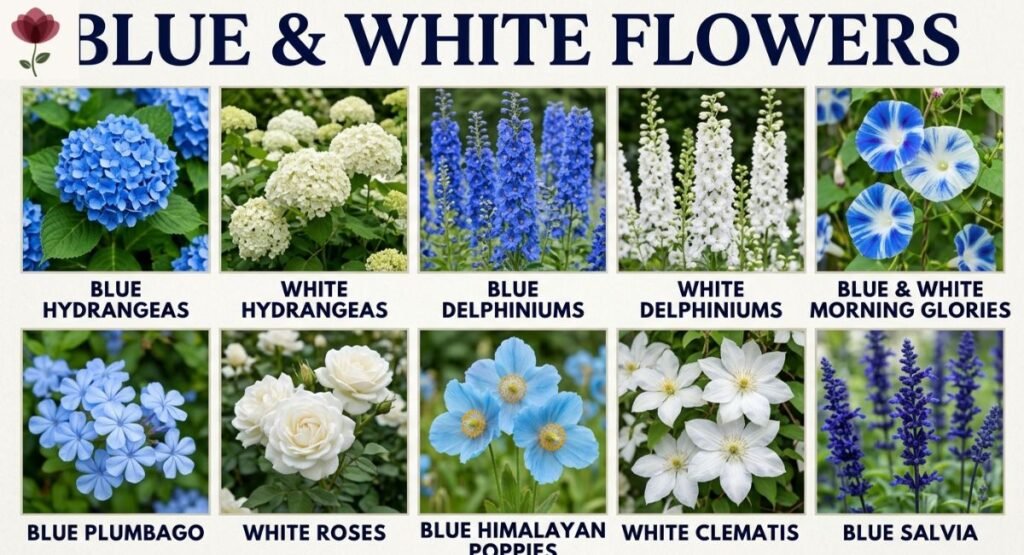
Blue hydrangeas are famous for their large, rounded flower heads. Their blue color can range from soft sky blue to deeper shades, depending partly on the cultivar and growing conditions. Soil chemistry can strongly affect flower color in many bigleaf hydrangeas, so gardeners should check the specific variety before trying to change its color.
These large blue blooms work beautifully beside white roses or white hydrangeas. They can become the main focal flower in a bouquet or garden border. They also suit blue and white wedding flowers because their rounded shape creates volume without needing many individual stems.
2. White Hydrangeas
White hydrangeas offer the same full, rounded form while creating a brighter appearance. They can fill large spaces quickly in floral arrangements. Their clean color also makes them useful when you want to soften darker blue flowers.
White hydrangeas are especially useful for wedding centerpieces and large bouquets. They also work well in garden beds where blue flowers need a neutral companion. Their broad flower heads can visually connect smaller flowers throughout an arrangement.
3. Blue Delphiniums
Blue delphiniums are known for tall stems covered with many individual flowers. Their upright form gives an arrangement height and movement. They are excellent tall blue flowering plants for borders, cottage gardens, and cutting gardens.
Their vertical shape makes them different from rounded hydrangeas. That contrast is useful in floral design. A bouquet can combine tall delphiniums, rounded white hydrangeas, and smaller filler flowers for a layered appearance.
4. White Delphiniums
White delphiniums provide the same vertical structure in a softer color. Their tall stems can create a graceful background behind shorter flowers. They are particularly useful when a wedding arrangement needs height without relying entirely on greenery.
Pairing white delphiniums with blue hydrangeas creates a strong size contrast. The hydrangea provides a rounded focal area while the delphinium draws the eye upward. This approach works in garden beds as well as formal floral arrangements.
5. Blue and White Morning Glories
Morning glories are climbing plants with trumpet-shaped flowers. Some varieties produce blue flowers with lighter centers or markings. Their climbing habit makes them useful around trellises, fences, arches, and other vertical structures.
These blue and white flowering plants can create a relaxed garden appearance. They are better suited to informal displays than traditional formal bouquets. Gardeners should also check local growing conditions because morning glories can behave differently depending on climate.
6. Blue Plumbago
Blue plumbago produces clusters of delicate blue flowers and can provide a soft, airy effect. It is especially useful in warm regions where it can grow as a landscape plant. Its relaxed form works well around patios, containers, borders, and larger garden beds.
Plumbago is a useful choice when you want blue flowers without a heavy visual appearance. Pair it with white flowers and green foliage for a fresh landscape design. Its suitability varies by climate, so gardeners should choose a variety appropriate for their region.
7. White Roses
White roses are among the most versatile flowers for floral design. Their rounded petals and classic form make them useful as focal flowers, while their white color blends easily with almost any blue flower.
A blue and white bridal bouquet can use white roses as the main flower with blue hydrangeas or delphiniums as accents. White roses also suit funeral arrangements because their simple appearance can create a respectful and peaceful design.
8. Blue Himalayan Poppies
Blue Himalayan poppies are known for their striking blue petals. Their unusual color can make them one of the most noticeable flowers in a garden. They are best treated as specialty plants because they can be more demanding than common garden flowers.
Their delicate appearance works well in cool, natural-looking displays. If you want to grow them, research the needs of the specific species or cultivar first. Climate, moisture, soil conditions, and summer temperatures can strongly affect their performance.
9. White Clematis
White clematis can produce large, elegant flowers on climbing vines. The plant is useful for trellises, fences, arches, and pergolas. Some clematis types prefer full sun for their upper growth while benefiting from a cooler, shaded root zone.
White clematis looks especially attractive beside blue flowers. The vine adds height while its white blooms create a light contrast. This makes it useful for blue and white garden borders, wedding arches, and romantic garden spaces.
10. Blue Salvia
Blue salvia provides upright flower spikes and a strong blue or blue-purple color. Salvias are also valuable in pollinator gardens because their flowers can attract bees, butterflies, and hummingbirds. Many ornamental salvias prefer full sun and well-drained soil.
Blue salvia works well with white daisies, roses, petunias, and other light-colored flowers. It can also add structure to a garden bed. Removing spent flower spikes can encourage additional blooms in many types.
11. White Lilies
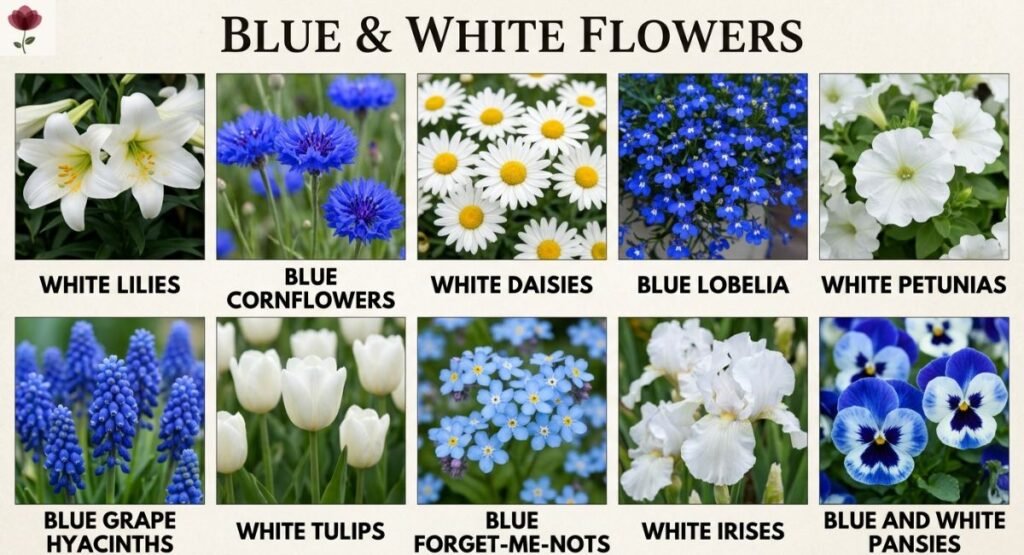
White lilies have large flowers that immediately attract attention. Their trumpet or star-like forms make them useful as focal flowers. Their elegant appearance also makes them popular for formal events and sympathy arrangements.
In white and blue flowers arrangements, lilies can provide size and fragrance while smaller blue flowers fill the spaces around them. They work particularly well with blue hydrangeas, delphiniums, and blue accents.
12. Blue Cornflowers
Blue cornflowers have small, distinctive blooms and a strong blue color. They are useful when an arrangement needs texture rather than one large focal flower. Cornflowers can also work well in informal gardens and cutting gardens.
Their smaller size makes them useful as supporting flowers. Place them around white daisies, roses, or tulips to create a relaxed blue and white flower combination. Cornflowers are also among the flowers commonly started from seed in spring-growing schedules.
13. White Daisies
White daisies have a simple shape that keeps arrangements from looking too complicated. Their white petals can brighten darker flowers and create a cheerful garden appearance.
Daisies work especially well with blue cornflowers and blue salvia. Their simple form also fits cottage gardens and informal bouquets. They can make a sophisticated color palette feel more relaxed and approachable.
14. Blue Lobelia
Blue lobelia produces many small flowers and works well in containers, borders, and hanging displays. Its compact habit makes it useful for filling gaps between larger plants.
Instead of competing with large hydrangeas or lilies, lobelia can provide a layer of smaller blue blooms. This makes it useful for blue flowers with white centers, mixed containers, and low-growing garden displays.
15. White Petunias
White petunias produce trumpet-shaped flowers and can provide a long season of color when properly grown. They work especially well in containers, hanging baskets, window boxes, and garden borders.
White petunias can soften deep blue flowers without taking attention away from them. They are also useful when you need many small-to-medium blooms to connect larger focal flowers.
16. Blue Grape Hyacinths
Blue grape hyacinths produce compact clusters of small, bell-shaped flowers. Their flower spikes appear early in the season and can bring blue color into spring gardens.
They look attractive with white spring flowers and can create a low-growing layer beneath taller plants. Grape hyacinths are bulb plants, and extension guidance includes them among commonly planted spring bulbs.
17. White Tulips
White tulips provide a clean, simple flower shape. Their smooth petals and upright stems make them excellent for formal arrangements. They can also create a modern appearance when planted in groups.
White tulips work beautifully with blue flowers in spring displays. In a bouquet, their upright stems add movement while blue hydrangeas or smaller blue flowers provide contrast. Tulips are also commonly grown from bulbs.
18. Blue Forget-Me-Nots
Forget-me-nots are small flowers that can create a delicate blue carpet. Their size makes them more useful as supporting flowers than as major focal blooms.
They work well around white flowers because their small blue flowers create repeated points of color. In a cottage-style garden, they can give the planting a softer and more natural appearance.
19. White Irises
White irises have a distinctive flower shape and upright foliage. Their structured blooms can bring elegance to a garden or floral arrangement.
White irises look particularly attractive with blue flowers that have softer shapes. Their form creates contrast without needing a third strong color. They can also suit formal garden designs and seasonal bouquets.
20. Blue and White Pansies
Blue and white pansies can show strong color patterns, including dark markings and lighter petals. Their compact growth makes them useful for containers, borders, window boxes, and seasonal beds.
Pansies are especially useful when you want blue and white blooms close to ground level. They are also cool-season plants in many areas and can tolerate cooler conditions better than many warm-season annuals.
3. Blue and White Flowers at a Glance
The following table makes it easier to compare the 20 choices. Size refers to the general visual or mature plant form. Exact height can vary by species, cultivar, climate, and growing conditions.
| Flower | Size | Color | Blooming Season | Annual/Perennial | Best Uses |
| Blue Hydrangeas | Large | Blue | Summer | Perennial | Gardens, bouquets |
| White Hydrangeas | Large | White | Summer | Perennial | Weddings, bouquets |
| Blue Delphiniums | Tall | Blue | Summer | Perennial | Borders, bouquets |
| White Delphiniums | Tall | White | Summer | Perennial | Weddings, gardens |
| Morning Glories | Medium/Tall | Blue and white | Summer | Annual in many areas | Trellises |
| Blue Plumbago | Medium | Blue | Warm season | Perennial in warm climates | Landscaping |
| White Roses | Medium | White | Spring–fall | Perennial | Bouquets, weddings |
| Blue Himalayan Poppies | Medium | Blue | Spring–summer | Perennial | Specialty gardens |
| White Clematis | Climbing | White | Spring–summer | Perennial | Trellises |
| Blue Salvia | Medium/Tall | Blue | Summer–fall | Varies | Borders, pollinator gardens |
| White Lilies | Tall | White | Summer | Perennial | Bouquets, events |
| Blue Cornflowers | Medium | Blue | Summer | Annual | Gardens, bouquets |
| White Daisies | Medium | White | Spring–fall | Varies | Gardens, bouquets |
| Blue Lobelia | Small | Blue | Summer | Annual/perennial by climate | Containers |
| White Petunias | Small/Medium | White | Summer–fall | Annual | Containers, baskets |
| Blue Grape Hyacinths | Small | Blue | Spring | Perennial | Borders |
| White Tulips | Medium | White | Spring | Bulb perennial | Gardens, bouquets |
| Blue Forget-Me-Nots | Small | Blue | Spring | Annual/biennial/perennial by type | Cottage gardens |
| White Irises | Medium/Tall | White | Spring–summer | Perennial | Gardens, bouquets |
| Blue and White Pansies | Small | Blue and white | Cool seasons | Annual/biennial | Containers, borders |
The annual or perennial label deserves attention. A plant may be perennial in one region but grown as an annual somewhere colder. USDA hardiness zones, winter temperatures, soil moisture, and cultivar differences can change how a flower performs. Always check the requirements for your specific location.
4. Red, White, and Blue Flowers for Patriotic Gardens and Arrangements
Red, white, and blue flowers create an instantly recognizable patriotic palette in the United States. Red roses, red salvia, red geraniums, and red petunias can add the warm color needed to complete a display. White flowers then create separation between red and blue tones.
This palette works especially well for summer garden beds and holiday decorations. Red white and blue perennial flowers can provide lasting structure while annuals add seasonal color. Artificial and silk flowers are another option when the display needs to remain attractive for several weeks.
| Red flower | White flower | Blue flower | Suitable display |
| Red rose | White rose | Blue hydrangea | Formal arrangement |
| Red petunia | White petunia | Blue lobelia | Container |
| Red salvia | White daisies | Blue salvia | Garden bed |
| Red geranium | White petunia | Blue flowers | Patio display |
5. Blue and White Wedding Flowers and Decoration Ideas
Blue and white wedding flowers can create anything from a soft garden theme to a formal ballroom design. White roses and hydrangeas provide classic structure while blue delphiniums, hydrangeas, or smaller flowers add color. Green foliage can connect the palette and prevent the arrangement from looking too stark.
For ceremony décor, tall flowers can frame an arch while smaller blooms work along the aisle. Reception tables can use compact centerpieces in blue and white ceramic vessels. Seasonal availability matters too, because the exact blue flowers you want may not naturally bloom during your wedding month.
Blue, green, and white wedding flowers create a natural look. Blue, pink, and white flowers feel more romantic. Blue, purple, and white combinations appear richer and more dramatic. These variations allow the same core palette to fit very different wedding styles.
6. Blue and White Bouquet Flowers: Beautiful Floral Combinations
A successful bouquet needs more than matching colors. It also needs different shapes, sizes, textures, and stem lengths. Floral designers often think about focal flowers, filler flowers, line flowers, and foliage when building an arrangement.
A blue and white bouquet flowers design might use white roses as focal blooms, blue delphiniums for height, and small blue flowers as fillers. Another design could use white tulips with blue hydrangeas for a cleaner spring look. The best combination depends on the season, bouquet size, and overall event style.
| Bouquet size | Main flowers | Supporting flowers | Best style |
| Small | White roses | Blue lobelia | Simple |
| Medium | Hydrangeas | Delphiniums, greenery | Garden style |
| Large | White lilies, hydrangeas | Delphiniums, fillers | Formal |
| Cascading | White roses | Blue flowers, greenery | Bridal |
Fresh flowers should also be handled carefully. Cutting stems with clean, sharp tools and placing flowers into water quickly can help preserve their quality. Removing foliage below the waterline can also help keep vase water cleaner.
7. Blue and White Funeral Flowers and Sympathy Arrangements
Blue and white funeral flowers can create a calm and respectful appearance. White flowers often provide the main foundation because their color feels clean and peaceful. Blue flowers can then add a quieter accent that supports a remembrance-focused design.
The arrangement style should match the service and relationship. A wreath can create a circular symbol of remembrance. A standing spray provides a formal display. A heart-shaped arrangement can express love and personal connection. For a father’s funeral, blue and white flowers can be combined with flowers that reflect his personality or favorite colors.
Red, white, and blue funeral flowers can also be appropriate when the family wants a patriotic theme. This can be meaningful for veterans, military families, or services where American symbolism has personal importance.
8. Blue and White Artificial Flowers for Home and Events
Artificial flowers provide a practical alternative when you need a display that lasts. Blue and white artificial flowers can remain in place for weeks or months without watering, temperature control, or daily maintenance.
Quality varies greatly, however. Realistic artificial flowers usually have varied petal shapes, natural-looking leaves, flexible stems, and less uniform color. Cheap flowers may have overly glossy petals or perfectly identical shapes. Red, white, and blue silk flowers can work particularly well for seasonal patriotic decorations.
When choosing artificial arrangements, look at the entire design rather than one flower. A realistic arrangement needs believable proportions. Too many large flowers can make it look artificial. Mixing different flower sizes and adding greenery usually creates a more natural appearance.
9. Blue and White Flowers in a Vase: Elegant Arrangement Ideas
A blue and white vase with flowers can become a decorative feature even before you choose the flowers. Blue and white ceramic designs pair naturally with white roses, hydrangeas, tulips, and blue accent flowers.
A tall vase works best with long stems such as delphiniums, while a wide vessel can support hydrangeas and fuller flowers. A blue and white Chinese vase can create a traditional look. A simple white ceramic vase can produce a more modern result.
Bud vases are useful when you want several small arrangements instead of one large centerpiece. You can place blue flowers in some vases and white flowers in others. This creates repetition without making every arrangement identical.
Pink accents can soften the display further. A blue and white vase with pink flowers can work particularly well for spring décor, bridal showers, baby celebrations, and romantic table settings.
10. Blue, White, and Yellow Flowers for Bright Garden Displays
Yellow changes the mood of a blue and white arrangement. Blue provides cool depth while yellow adds warmth and energy. White sits between them as a visual bridge.
Blue, yellow, and white flowers can work well in garden beds where you want a cheerful summer display. Blue flowers with yellow centers can naturally introduce the third color without making the planting look overly planned.
For weddings, yellow can make a blue-and-white palette feel more relaxed and seasonal. For funerals, however, the combination should be selected carefully because the desired tone may be more restrained.
11. Blue, Purple, and White Flowers for Soft, Elegant Displays
Blue, purple, and white flowers create a deeper and more romantic palette. The colors sit close together visually, so the arrangement often feels smoother than a blue-and-yellow design.
A blue, white, and purple wedding bouquet can combine blue hydrangeas, white roses, and purple accents. In gardens, purple salvia or other purple flowers can bridge the gap between blue and white blooms.
The key is balance. Too much purple can make a small arrangement look dark. White flowers can solve this problem by creating bright spaces between the stronger blue and purple tones.
12. How to Grow and Care for Blue and White Flowers
The first step is choosing plants that match your growing conditions. Some flowers need full sun while others tolerate partial shade. Soil drainage also matters. For example, ornamental salvias generally perform best in full sun and well-drained soil.
Watering should depend on the plant and soil rather than a fixed calendar. Constantly wet soil can damage roots, while very dry soil can stress plants. A soil test can also help identify pH or nutrient problems before you start adding amendments.
| Care factor | General guidance |
| Sunlight | Match the plant’s specific needs |
| Soil | Use well-drained soil for most garden flowers |
| Water | Water according to soil moisture and weather |
| Fertilizer | Use only when the plant benefits from feeding |
| Pruning | Remove damaged growth when appropriate |
| Deadheading | Remove spent flowers when recommended |
| Spacing | Follow mature plant size |
| Climate | Select plants suited to your USDA zone |
Keeping flowers blooming longer often requires simple maintenance. Removing spent blooms can encourage additional flowering in some plants. Salvias, for example, can benefit from removing old flower spikes.
13. How to Choose the Best Blue and White Flowers for Different Occasions
For gardens and landscaping, start with sunlight, soil, climate, and mature plant size. Tall flowers such as delphiniums can add height. Low-growing flowers such as lobelia and pansies can cover edges and containers.
For weddings and bridal bouquets, season and availability become equally important. A flower may look perfect in a photograph but be difficult to source fresh during your wedding month. For funerals and sympathy gifts, consider the family’s preferences and the tone of the service.
For home decoration, the choice is more flexible. Fresh flowers offer fragrance and natural variation. Artificial flowers provide longevity. Dried flowers offer another option when a softer, long-lasting display is desired.
Conclusion
Blue and white flowers offer remarkable flexibility. You can use tall delphiniums for height, hydrangeas for volume, roses for elegance, and small flowers such as lobelia or forget-me-nots for detail. The same colors can create a garden, bouquet, wedding centerpiece, or funeral arrangement.
The best choice depends on more than color. Think about bloom season, plant size, climate, flower shape, maintenance, and the occasion. With the right balance of blue, white, and greenery, even a simple arrangement can feel polished, meaningful, and memorable.
FAQs
1. What are the most popular blue and white flowers?
Hydrangeas, delphiniums, white roses, morning glories, cornflowers, lobelia, tulips, and pansies are popular choices for blue and white displays.
2. What flowers naturally come in blue and white?
Some plants can produce blue-and-white markings or contrasting centers. In other cases, gardeners combine separate blue and white varieties to create the effect.
3. What flowers look good with blue and white flowers?
White roses, hydrangeas, daisies, lilies, tulips, and greenery pair especially well with blue flowers because their shapes and colors create useful contrast.
4. Are blue and white flowers suitable for weddings?
Yes. Blue and white wedding flowers work well for bouquets, ceremony arches, aisle décor, centerpieces, and reception arrangements.
5. What do blue and white funeral flowers symbolize?
Blue and white arrangements can create a peaceful and respectful appearance. White often suggests purity and remembrance while blue can add a calm, gentle feeling.

Welcome to PetalNexa! I’m Anam Sattar, an AI-powered SEO Specialist and Content Writer with over 4 years of experience in creating high-quality, search-optimized content. I help businesses improve their search engine rankings, increase organic traffic, and build beautiful, user-friendly websites. My mission is to make SEO, content creation, and web design simple, effective, and accessible for everyone. Let’s grow your online presence and achieve success together!
1 thought on “20 Blue and White Flowers: Bouquets, Wedding Ideas, and Funeral Arrangements”