

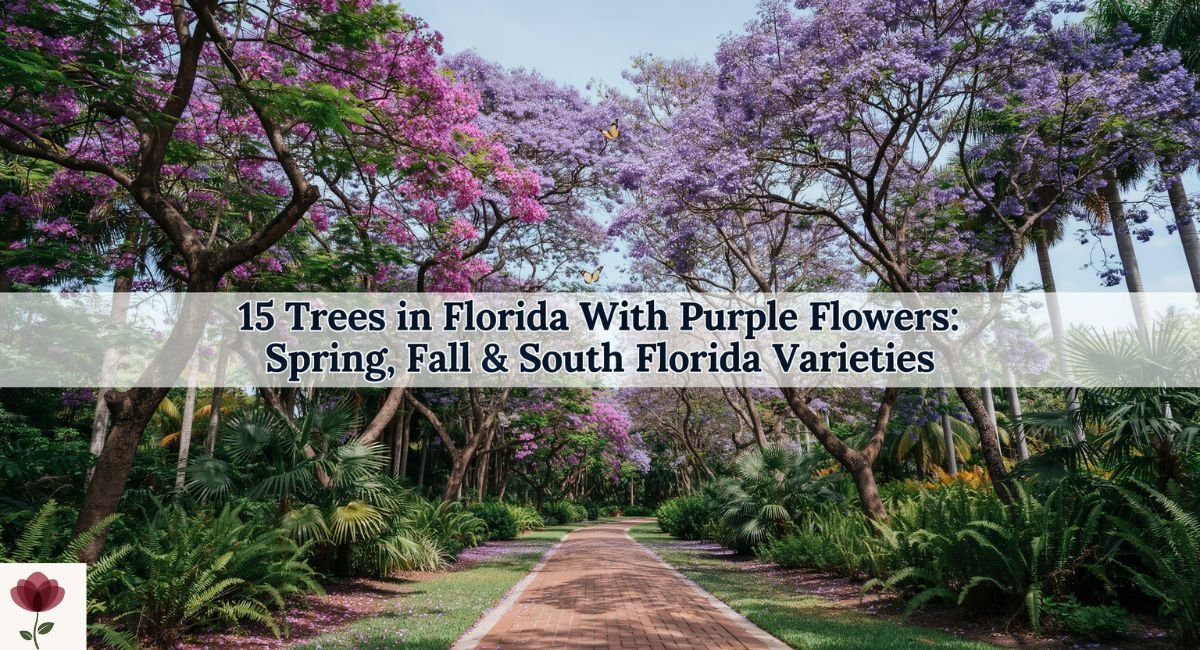
Florida’s warm climate creates the perfect stage for trees in Florida with purple flowers. From graceful jacarandas to elegant orchid trees, these colorful blooms can brighten yards, streets, and public landscapes. Some varieties produce flowers in spring, while others bring purple flowering trees to life during summer, fall, or even winter. However, choosing the right tree involves more than picking your favorite shade of purple. You also need to consider Florida’s region, sunlight, soil drainage, mature size, and cold tolerance.
In this guide, you’ll discover 15 beautiful purple flowering trees in Florida, including options for Central, North, and South Florida. You’ll also learn their bloom seasons, growing needs, and tree with purple flowers identification tips.
Trees in Florida With Purple Flowers at a Glance
A quick comparison can make plant selection much easier. The table below highlights useful differences among these purple flowering trees in Florida, including flowering period, approximate size, hardiness, and regional suitability. Treat bloom periods as general guides because weather and cultivar can shift flowering dates.
| Tree | Flower Color | Main Bloom Season | Mature Height | USDA Zones | Best Florida Region |
| Jacaranda | Purple-blue | Spring | 30–50 ft | 9–11 | Central & South |
| Princess Tree | Lavender-purple | Spring | 40–50 ft | 5B–9B | North & Central* |
| Purple Orchid Tree | Purple | Fall–Spring | 15–30 ft | 9–11 | Central & South |
| Hong Kong Orchid Tree | Purple-pink | Winter–Spring | 20–45 ft | 9–11 | Central & South |
| Royal Purple Smoke Tree | Purple-pink | Spring–Summer | 10–15 ft | 5–8 | North & Central* |
| Purple Tabebuia | Pink-purple | Spring | 20–40 ft | 9–11 | Central & South |
| Queen’s Crape Myrtle | Lavender | Late spring–Summer | 30–60 ft | 9–10 | Central & South |
| Vitex Tree | Purple-blue | Summer | 8–20 ft | 6–9 | North & Central |
| Yesterday-Today-and-Tomorrow | Purple-lavender-white | Warm months | 8–10 ft | 9B–11 | Central & South |
| Purple Glory Tree | Violet-purple | Summer–Fall | Varies | 9–11 | South |
| Blue Jacaranda | Blue-violet | Spring | 30–50 ft | 9–11 | Central & South |
| Purple Bauhinia | Purple | Seasonal | 15–30 ft | 9–11 | Central & South |
| Purple Flowering Cassia | Lavender-purple | Seasonal | Varies | 9–11 | South |
| Lavender Trumpet Tree | Lavender-purple | Spring | 15–30 ft | 9–11 | Central & South |
| Florida-Friendly Purple Small Tree | Purple/lavender | Seasonal | Varies | Region-dependent | Site-dependent |
*Princess tree deserves special caution because UF/IFAS currently rates Paulownia tomentosa as a high invasion-risk species and does not recommend it for Florida.
15 Trees in Florida With Purple Flowers
1. Jacaranda Tree

Jacaranda Tree (Jacaranda mimosifolia) is one of Florida’s most recognizable purple-flowering trees. Its fern-like foliage and clusters of purple-blue blooms create a dramatic display, especially during spring. The tree can become fairly large, so it needs plenty of room to develop its broad canopy.
Jacaranda performs best in full sun with well-drained soil. It handles Florida’s warm conditions well, although its brittle branches and surface roots deserve consideration when choosing a planting site.
2. Princess Tree
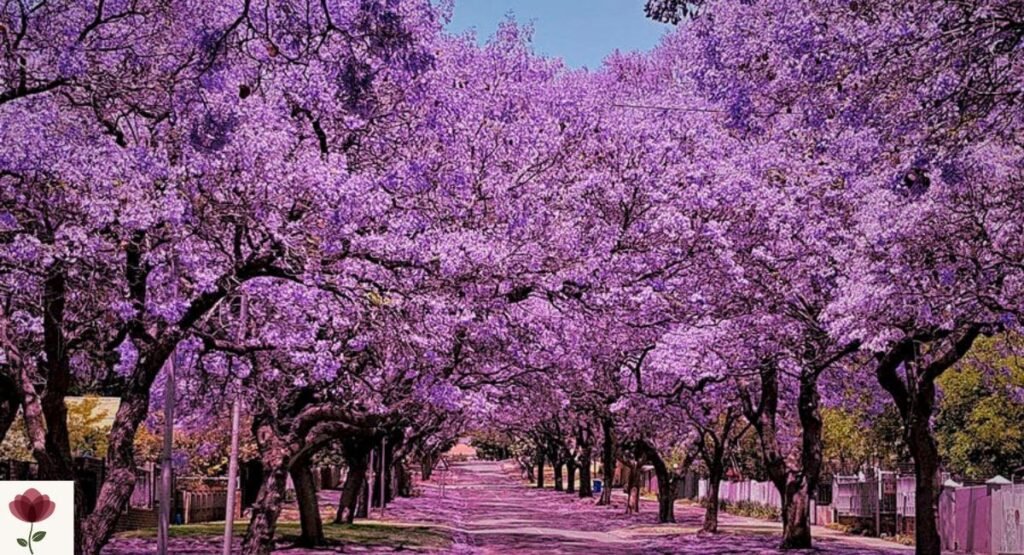
Princess Tree (Paulownia tomentosa) produces large lavender-purple flowers before its enormous leaves appear. Its fast growth and distinctive heart-shaped foliage make it easy to recognize. However, its invasive potential makes it an unsuitable choice for many Florida landscapes.
If you encounter this tree in Florida, treat it primarily as an identification example rather than a planting recommendation. Always check current UF/IFAS guidance before introducing a nonnative flowering tree.
3. Purple Orchid Tree
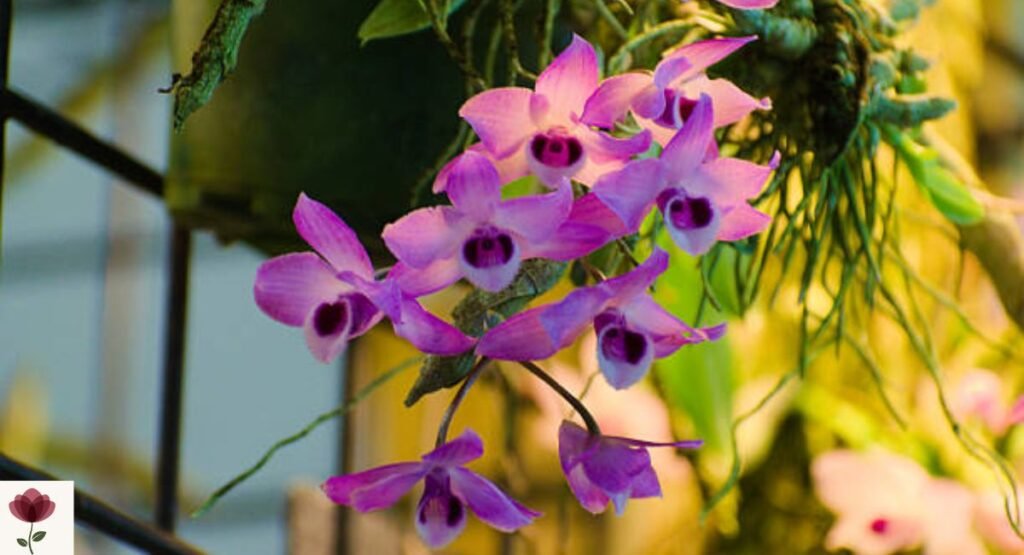
Purple Orchid Tree (Bauhinia purpurea) produces large, fragrant flowers with purple, pink, and lavender tones. The blooms generally appear from September through November, giving Florida landscapes a colorful display when many spring-flowering trees have finished blooming.
This fast-growing tree can reach roughly 30–35 feet tall and wide. It has an attractive vase-shaped crown, but UF/IFAS notes invasive potential for this species in Florida, so homeowners should check current local recommendations before planting.
4. Hong Kong Orchid Tree
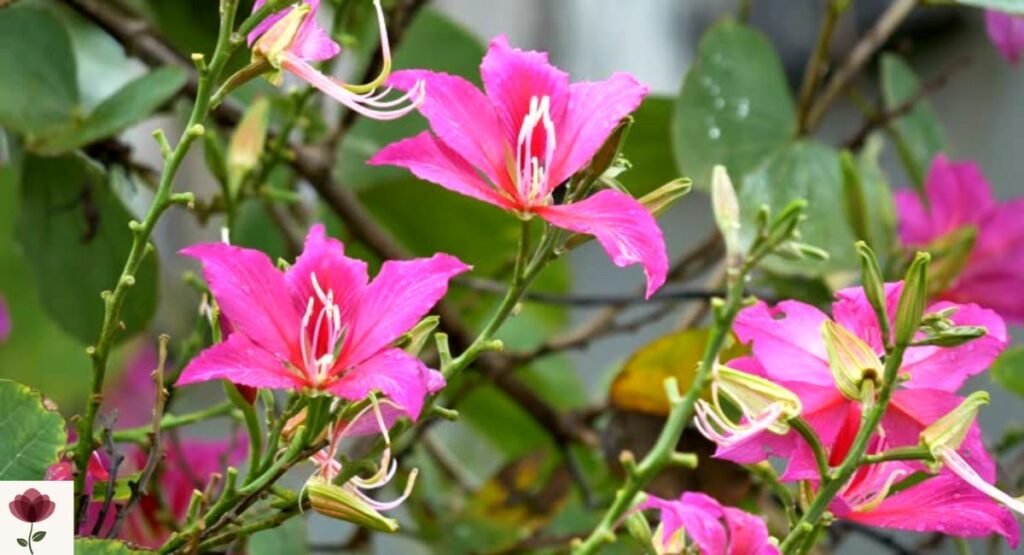
Hong Kong Orchid Tree (Bauhinia × blakeana) is valued for its orchid-like flowers and attractive rounded canopy. Its blooms can range from pinkish-purple to purplish tones, creating a tropical appearance that works especially well in warmer parts of Florida.
This hybrid is commonly used as an ornamental specimen because it doesn’t produce the seed pods associated with some other Bauhinia species. Give it adequate space for its mature canopy and protect it from severe cold exposure.
5. Royal Purple Smoke Tree
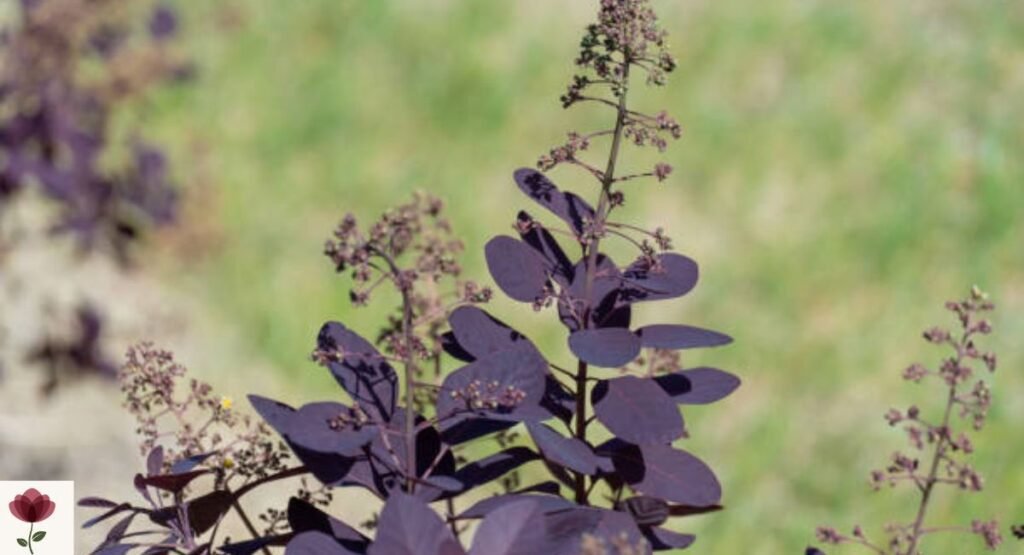
Royal Purple Smoke Tree is better known for its unusual purple foliage and smoky flower clusters than for classic purple blossoms. Its airy flower structures can create a soft, hazy effect around the canopy, adding a different type of color to a landscape.
This option is more appropriate for gardeners in Florida’s cooler northern areas than for consistently tropical conditions. Before planting, check the cultivar’s hardiness and local availability because Florida’s heat and humidity can limit its performance.
6. Purple Tabebuia
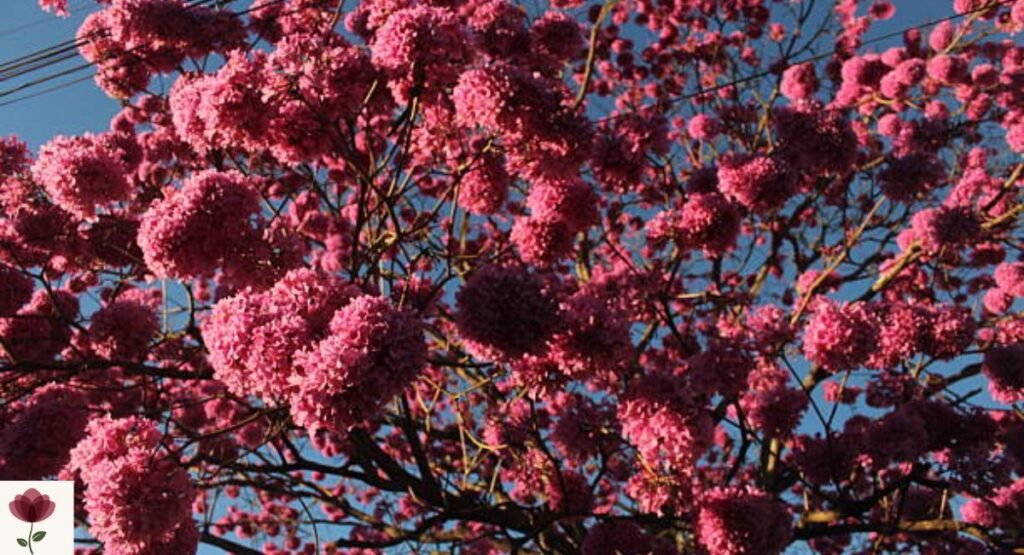
Purple Tabebuia (Handroanthus impetiginosus, often associated with the older name Tabebuia impetiginosa) produces spectacular trumpet-shaped flowers in pinkish-purple to lavender shades. The blooms can appear when the tree has little foliage, making the flowering display especially noticeable.
This ornamental tree is particularly suited to warm areas of Florida. A sunny location with good drainage helps encourage strong flowering, while adequate space allows the mature crown to develop without crowding buildings or utility lines.
7. Queen’s Crape Myrtle
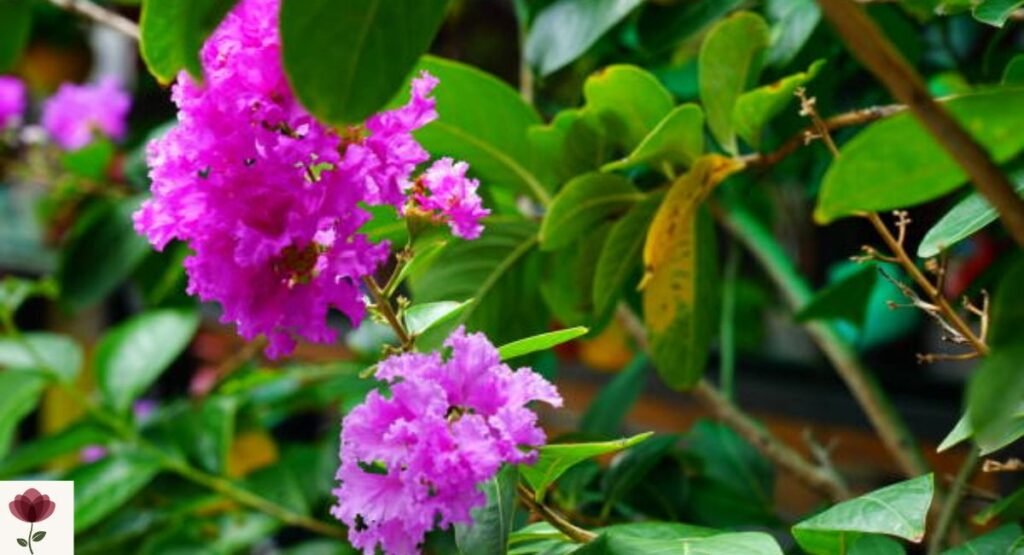
Queen’s Crape Myrtle (Lagerstroemia speciosa) is a larger crape myrtle with showy lavender to purple-toned flowers. Its impressive blooms appear during the warm season, while the attractive foliage adds interest between flowering periods.
Unlike smaller crape myrtles, this species can become a substantial landscape tree. Choose an open location with plenty of sunlight and room for the mature canopy to spread naturally.
8. Vitex Tree
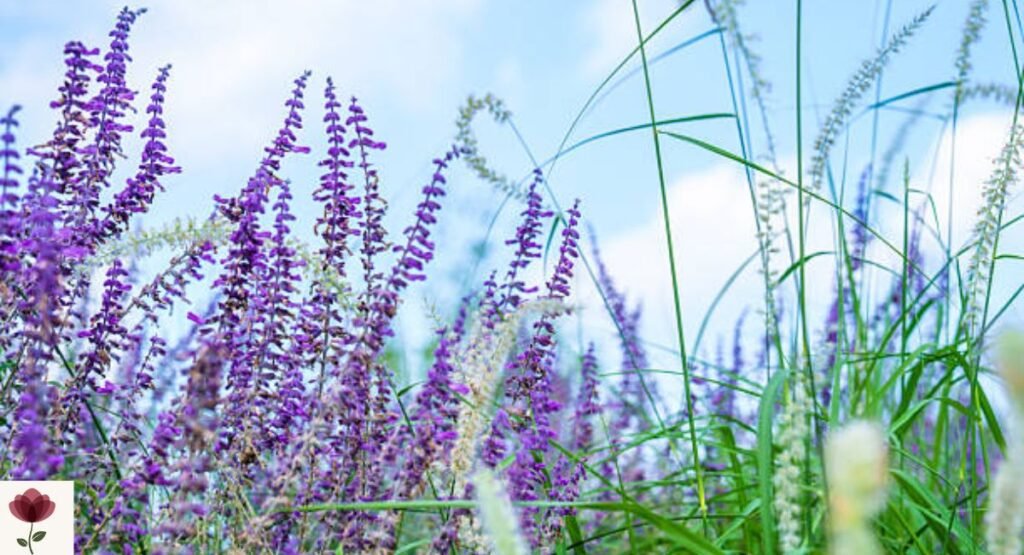
Vitex Tree (Vitex agnus-castus) produces upright clusters of fragrant blue-purple flowers that attract attention throughout the warmer months. Its compound leaves give the tree a distinctive texture, while its moderate size makes it useful for residential landscapes.
Vitex prefers full sun and well-drained soil. Regular pruning can help maintain an attractive shape, especially when the plant is grown as a small ornamental tree rather than a large multi-stemmed specimen.
9. Yesterday-Today-and-Tomorrow Tree
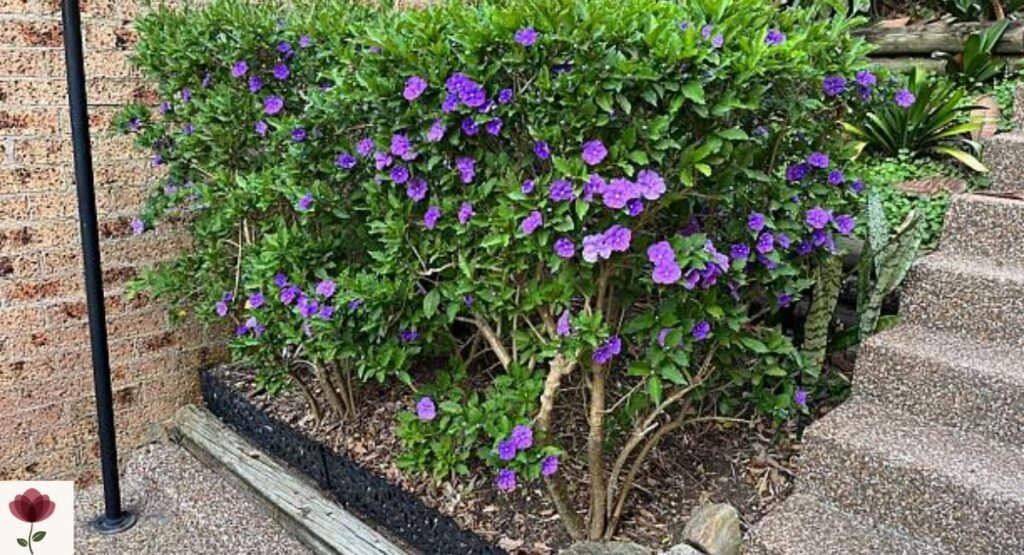
Yesterday-Today-and-Tomorrow (Brunfelsia species) is a small woody plant famous for flowers that change color as they age. Fresh blooms can appear purple or lavender before fading toward white, creating several shades on the same plant.
Its compact growth makes it useful where a large canopy would be impractical. In Florida, it performs particularly well in warm areas with suitable light and regular moisture, although its classification is often closer to a shrub or small tree.
10. Purple Glory Tree
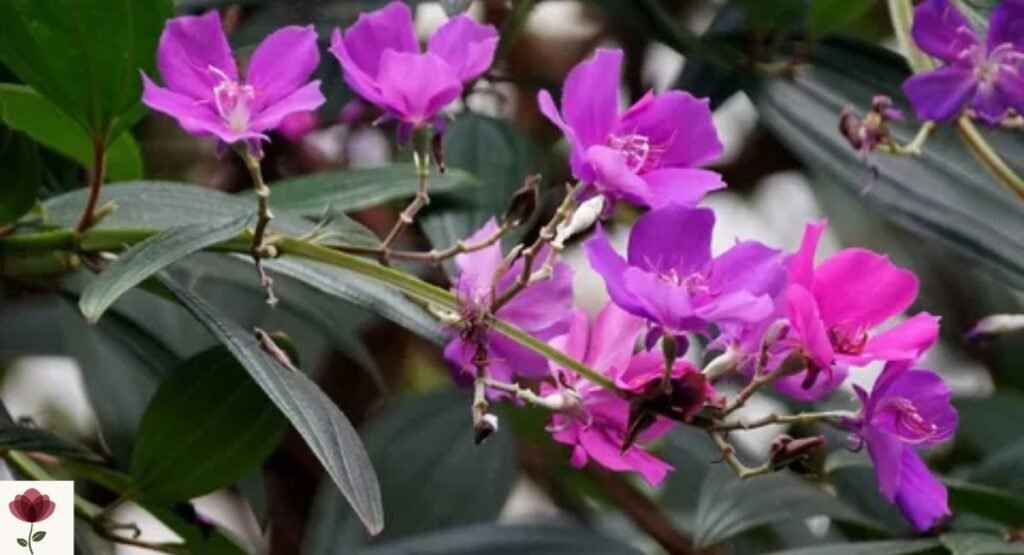
Purple Glory Tree (Clerodendrum species) can produce striking clusters of purple flowers that stand out against its green foliage. The exact appearance varies among species and cultivars sold under the common name, so checking the botanical name is important before purchasing.
This plant can work as a small ornamental specimen when given adequate warmth, sunlight, and moisture. Its growth habit can vary considerably, making mature size an important consideration for smaller Florida yards.
11. Blue Jacaranda
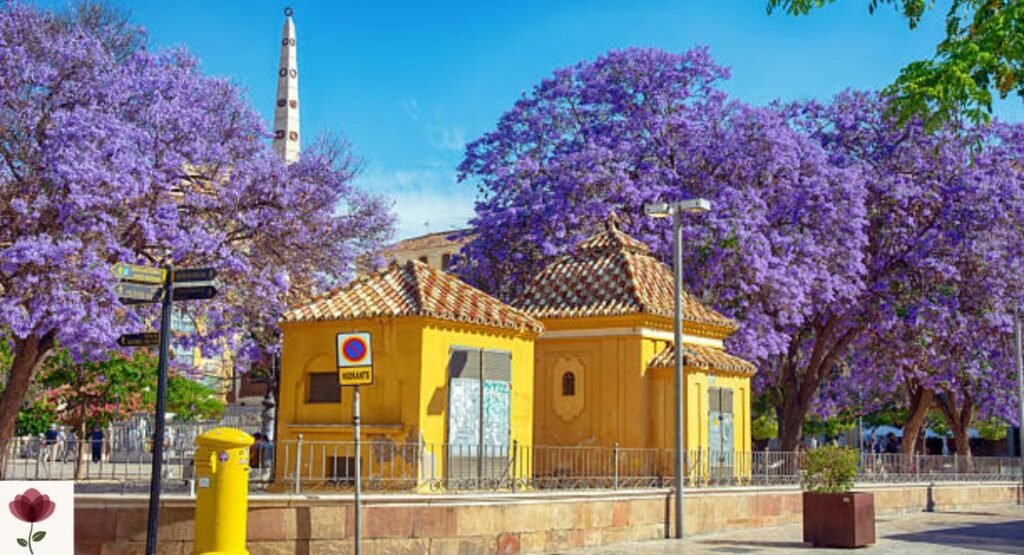
Blue Jacaranda is another common name associated with Jacaranda mimosifolia, the same species widely recognized for its blue-purple spring flowers. The flowers can look distinctly violet or purple depending on sunlight, viewing distance, and individual trees.
Its fern-like foliage creates a soft backdrop for the flowers, while the spreading crown provides a graceful silhouette. Plant it where fallen flowers and leaves won’t create problems around pools, driveways, or heavily used walkways.
12. Purple Bauhinia
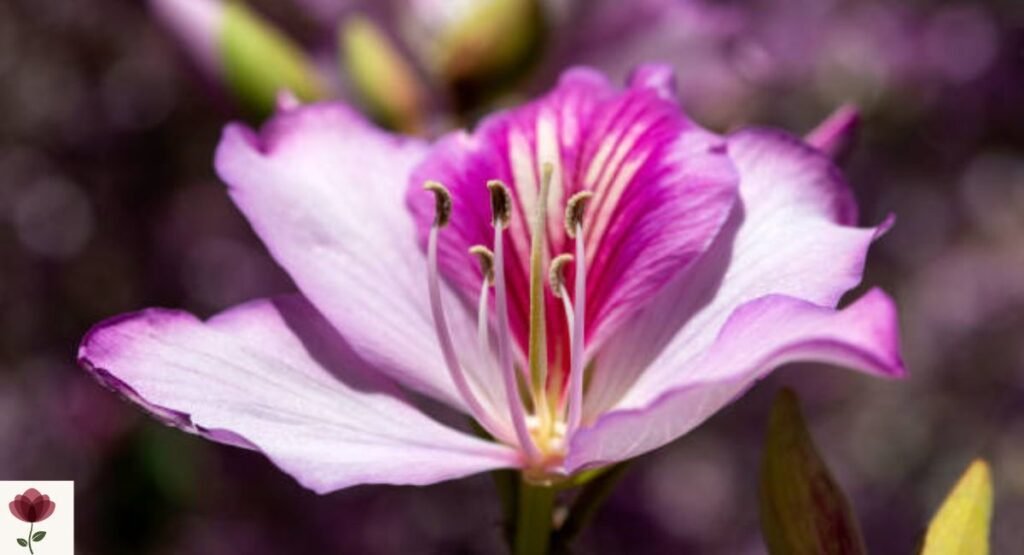
Purple Bauhinia refers to ornamental Bauhinia trees with purple-toned orchid-like flowers. Their unusual two-lobed leaves and showy blossoms make them easy to distinguish from many other Florida landscape trees.
However, common names can overlap between different Bauhinia species. Before planting one, identify the exact scientific name and check its current Florida status, because some purple-flowering Bauhinia species have documented invasive concerns.
13. Purple Flowering Cassia
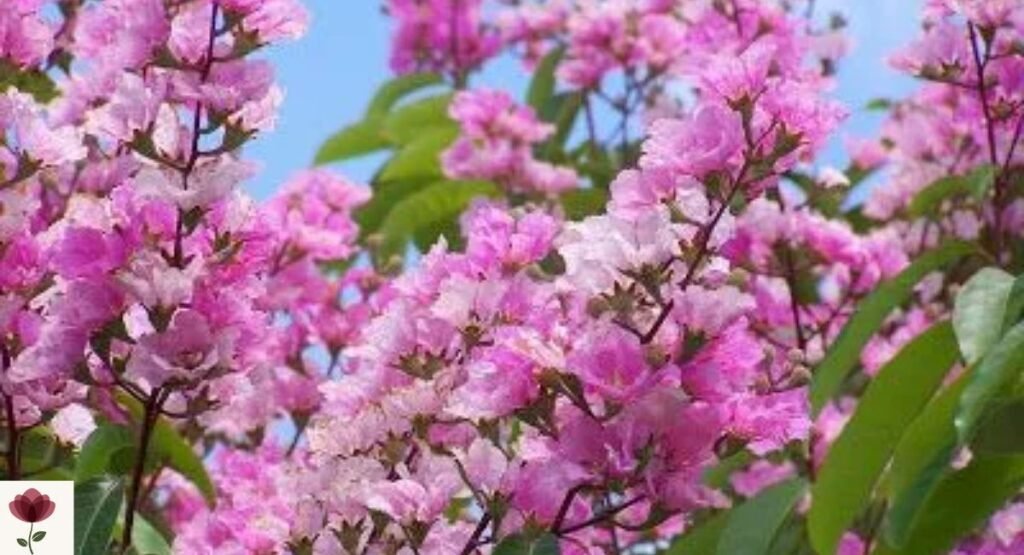
Purple Flowering Cassia is a name sometimes used loosely for flowering trees with cassia-like foliage and colorful blossoms. However, many commonly grown cassias in Florida produce yellow flowers rather than purple ones, so this name can cause confusion.
For that reason, always check the botanical name attached to a nursery plant. This small step helps you avoid buying a yellow-flowering cassia when your goal is a genuine purple-flowering tree.
14. Lavender Trumpet Tree
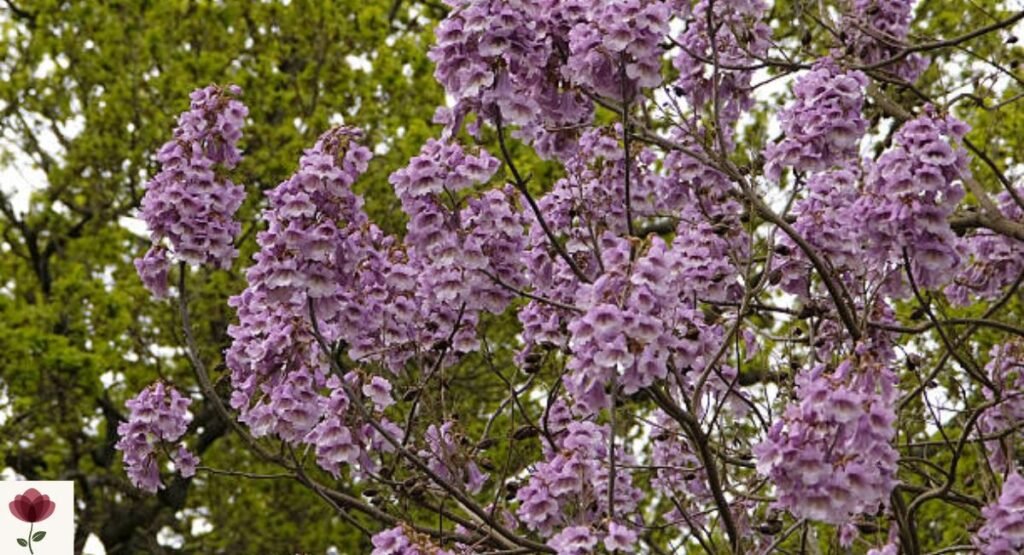
Lavender Trumpet Tree is a useful common-name description for trumpet-flowering trees that produce lavender, violet, or purple-toned blooms. These flowers often have a tubular shape that gives the tree a distinctly tropical appearance.
Because several plants can be sold under similar common names, verify the scientific name before planting. A sunny position, good drainage, and enough space for the mature crown are important for most warm-climate trumpet trees.
15. Purple Prince Saucer Magnolia
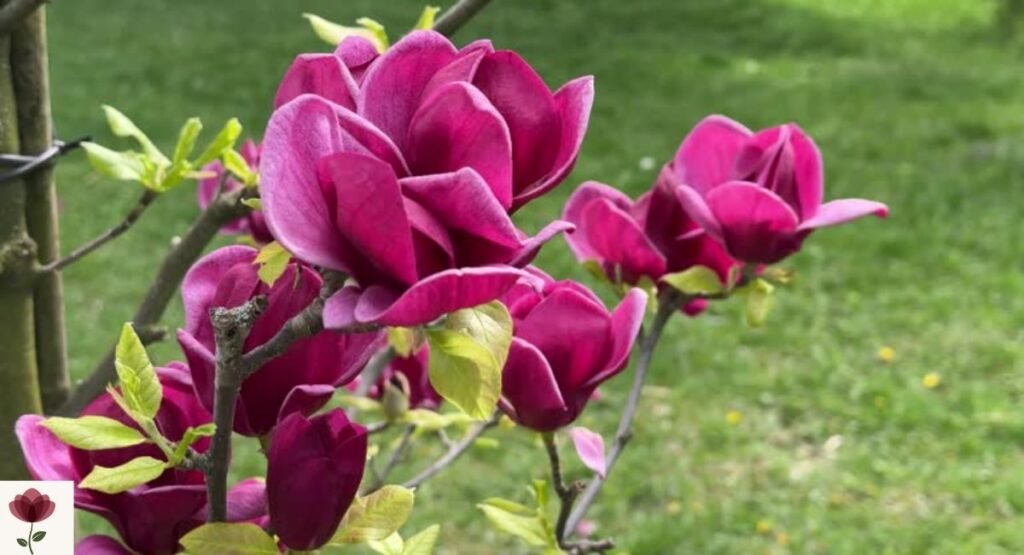
Purple Prince Saucer Magnolia (Magnolia × soulangiana ‘Purple Prince’) is a compact ornamental tree with striking purple flowers. UF/IFAS lists it at about 20–25 feet tall with a 15–25-foot spread. Its large blooms appear in late winter or spring before the leaves emerge.
This magnolia works well as a specimen near a patio, deck, or open lawn. It can grow in clay, sand, loam, and acidic soils and tolerates partial sun. Its open canopy gives the tree an elegant shape, but leave enough room for mature branches to develop naturally.
Purple Flowering Trees in Florida by Blooming Season
Flowering calendars help narrow your choices quickly. Spring tends to dominate among the showiest selections, while warm South Florida conditions can extend flowering windows. Some plants also bloom in winter or repeatedly during warm months.
Purple Flowering Trees in Spring
Spring brings major displays from jacaranda, purple tabebuia, princess tree, and several orchid-tree selections. Weather remains important, though. A cold snap can damage flower buds before they open, especially on trees adapted to warmer climates.
Purple Flowering Trees in Summer
Summer color often comes from crape myrtles, vitex, and warm-climate ornamentals. High temperatures aren’t necessarily a problem when roots have adequate moisture and drainage. However, prolonged wet soil can create a different set of problems.
Fall Purple Flowering Tree in Florida
A fall purple flowering tree in Florida is less predictable than a spring bloomer. Some warm-climate plants can continue flowering into fall, especially in southern counties. Yesterday-today-and-tomorrow is one example that can flower for extended periods in suitable Florida conditions.
Purple Flowering Trees by Florida Region
Florida isn’t one uniform gardening zone. Winter temperatures change dramatically from the Panhandle to the Keys. Salt exposure, soil type, urban heat, and frost pockets can also alter plant performance. Choosing by region is therefore more reliable than choosing by appearance alone.
Purple Flowering Trees in North Florida
North Florida presents greater winter risk for tropical species. Gardeners should favor cold-tolerant selections and protected planting sites. Princess tree may appear suitable by hardiness alone, but its current UF/IFAS invasion-risk assessment makes it a poor Florida recommendation.
Purple Flowering Trees in Central Florida
Central Florida offers a useful middle ground. Some subtropical trees can thrive while cold-sensitive species still need thoughtful placement. Hong Kong orchid tree, for example, appears in Central Florida flowering-tree guidance but can suffer cold damage during significant freezes.
Purple Flowering Trees in South Florida
South Florida supports the widest selection of tropical and subtropical ornamentals. Hong Kong orchid trees, jacarandas, Bauhinia species, and other warm-climate plants can flourish when drainage and sunlight are right. Winter flowering can also become a major landscape feature.
How to Identify a Tree With Purple Flowers in Florida
Identification becomes much easier when you stop relying on flower color alone. Look at the entire plant. Flower shape, leaf structure, bark, canopy, flowering season, and mature size together create a much stronger botanical fingerprint.
Look at the Flower Shape
Trumpet-shaped flowers point toward one group while orchid-like blossoms suggest another. Flower clusters also matter. Large terminal panicles, dangling racemes, and individual blooms can quickly narrow your options.
Check the Leaves
Jacaranda has delicate, fern-like foliage while Bauhinia has distinctive bilobed leaves. Crape myrtle has simple leaves and a different branching character. Leaf structure often solves an identification puzzle after flowers disappear.
Consider the Blooming Season
Timing acts like a natural calendar. A purple-flowering tree blooming in winter deserves a different identification path than one covered in violet blossoms during midsummer.
Check the Tree’s Size and Growth Habit
A 10-foot specimen and a 50-foot canopy tree require very different landscape planning. Mature size also helps separate shrubs trained into tree forms from naturally large trees.
How to Choose the Right Purple Flowering Tree for Your Florida Yard
Choosing a flowering tree isn’t simply a color decision. The tree must fit the site for decades. Florida extension guidance recommends considering factors such as climate, soil, mature height, rooting behavior, salt tolerance, pests, and invasiveness when selecting woody plants.
Consider Your Florida Growing Zone
Check your local hardiness zone before buying. Then look beyond the number. A coastal site, low frost pocket, or protected courtyard can behave differently from a nearby exposed property.
Check the Mature Tree Size
Nursery trees look deceptively small. Always picture the mature canopy above your house, driveway, fence, and utility lines. This simple step can prevent years of aggressive pruning later.
Choose the Right Amount of Sunlight
Most flowering trees need strong light to bloom well. Jacaranda, for example, flowers most heavily in full sun. Shade may keep a tree alive while leaving you wondering where the flowers went.
Consider Soil Drainage and Moisture
Florida soils vary widely. Sandy sites may drain rapidly while compacted urban ground can hold water. Match the tree to the site’s moisture pattern instead of watering automatically.
Think About Maintenance and Pruning
Flower drop, seed pods, weak branches, suckers, and fast growth can change maintenance needs. Crape myrtle, for instance, rarely needs severe topping when you select an appropriately sized cultivar.
Leave Enough Space for Roots and Branches
Space is a long-term investment. Jacaranda can develop large surface roots, while broad-canopied trees need substantial overhead clearance. Plan around mature dimensions rather than today’s attractive nursery shape.
How to Grow Purple Flowering Trees in Florida
Successful flowering starts before planting day. Choose the right species, locate it carefully, prepare the site properly, and then provide consistent establishment care. Good placement usually beats constant intervention.
Sunlight Requirements
Most showy flowering trees need abundant sunlight. A bright site helps support photosynthesis and flower production. Before planting, watch the property during the day because nearby structures can cast surprisingly long shadows.
Soil and Drainage
Good drainage protects roots from prolonged saturation. This matters especially in Florida after heavy rain. Improve the planting strategy according to the species rather than automatically adding large quantities of amendments.
Watering
Newly planted trees need dependable moisture while roots expand into surrounding soil. Once established, some species tolerate dry spells better than others. Jacaranda, for example, has high drought tolerance yet benefits from watering during dry periods.
Fertilizing
Fertilizer should support growth rather than replace good site selection. Excessive nitrogen can encourage lush foliage without producing the floral display you wanted. When nutrient problems are suspected, soil testing provides better information than guesswork.
Pruning
Prune with a purpose. Remove damaged, crossing, or poorly attached branches and preserve the tree’s natural structure. UF/IFAS specifically recommends structural pruning for jacaranda and warns that poor branch attachments can increase breakage risk.
Common Problems With Purple Flowering Trees in Florida
Poor flowering often begins with insufficient sunlight, excessive shade, incorrect pruning, immature trees, or unsuitable growing conditions. Cold damage can also destroy flower buds on tropical species. Poor drainage creates another problem by stressing roots after repeated heavy rain.
Pests and diseases vary by species. Bauhinia can experience borers, caterpillars, mites, leaf spots, and scorch diseases. Crape myrtle can experience powdery mildew, especially when planted in shade or when foliage remains wet.
Purple Flowering Trees vs. Purple Flowering Shrubs
Not every plant marketed as a small “tree” naturally grows as a true tree. Yesterday-today-and-tomorrow is a good example. UF/IFAS describes it as a flowering shrub or small tree that reaches around 10 feet.
The distinction matters because trained shrubs may need more frequent pruning to maintain a tree-like trunk. Before purchasing, check the botanical name, natural growth habit, mature dimensions, and pruning requirements rather than trusting the common name alone.
Conclusion
Purple blooms can transform an ordinary Florida landscape into something memorable. From jacaranda’s spring canopy to Hong Kong orchid tree’s winter display, different species offer color at different times of year.
The smartest choice starts with your site. Consider your Florida region, winter exposure, sunlight, soil drainage, mature dimensions, and maintenance needs before planting. Also verify botanical names when common names seem confusing. With that approach, your new flowering tree won’t merely look beautiful for one season. It can become a defining feature of the landscape for years.
FAQs
What is the most common purple flowering tree in Florida?
Jacaranda is among Florida’s most recognizable purple-flowering landscape trees. Its purple-blue spring flowers and fern-like foliage make it particularly easy to spot.
What tree in Florida has purple flowers in spring?
Jacaranda, purple tabebuia, and several orchid-tree selections can provide spring color. Exact bloom timing varies with species, weather, and location.
What is the purple flowering tree commonly seen in South Florida?
Hong Kong orchid tree is a prominent choice, especially for winter color. Jacaranda and several Bauhinia species also perform well in suitable warm locations.
What trees in Florida have purple flowers?
Florida has several choices, including jacaranda, orchid trees, purple tabebuia, crape myrtle, and vitex. Their climate requirements differ significantly.
What is the tree with purple flowers in Florida called?
There isn’t one universal name. Flower shape, leaves, size, bloom season, and botanical characteristics are needed to identify the exact species.

Welcome to PetalNexa! I’m Anam Sattar, an AI-powered SEO Specialist and Content Writer with over 4 years of experience in creating high-quality, search-optimized content. I help businesses improve their search engine rankings, increase organic traffic, and build beautiful, user-friendly websites. My mission is to make SEO, content creation, and web design simple, effective, and accessible for everyone. Let’s grow your online presence and achieve success together!
1 thought on “15 Trees in Florida With Purple Flowers: Spring, Fall & South Florida Varieties”