

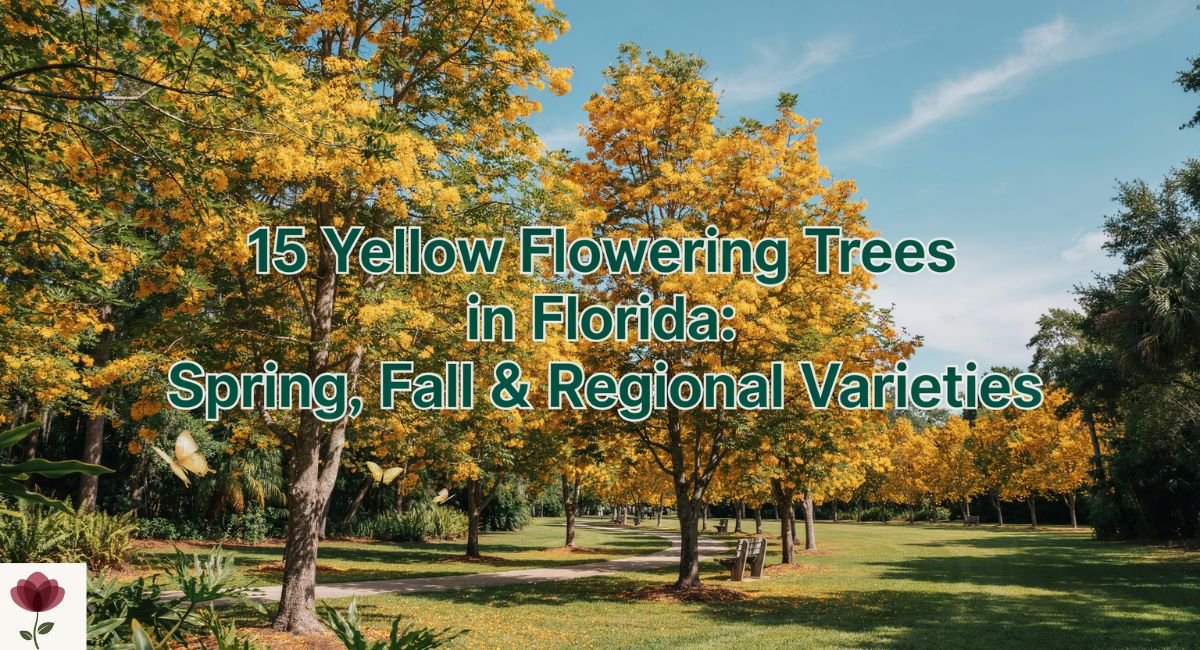
Florida landscapes can look completely different when a tree bursts into golden bloom. From quiet residential yards to sunny coastal gardens, yellow flowering trees in Florida add warmth, color, and seasonal charm. Some varieties bloom in early spring, while others keep producing bright yellow flowers during summer or even fall. Yellow tabebuia is especially striking when its leaves drop before flowering, leaving branches covered with vivid blooms. Other choices offer trumpet-shaped flowers, hanging clusters, or smaller blossoms against green foliage.
Your location also matters because North, Central, and South Florida have different growing conditions. In this guide, you’ll discover beautiful yellow flowering trees, their bloom seasons, mature sizes, growing needs, and the best regions for each variety.
Yellow Flowering Trees in Florida at a Glance
Florida offers a surprisingly diverse collection of trees with golden blooms. Some produce flowers before their leaves return, while others flower against a full green canopy. Yellow tabebuia is especially famous for its leafless spring display, while golden shower produces long hanging clusters during warmer months.
| Tree | Flower Color | Bloom Season | Mature Size | USDA Zone | Florida Region |
| Yellow Tabebuia | Bright yellow | Winter–spring | Small–medium | 9–11 | Central, South |
| Golden Trumpet Tree | Golden yellow | Late winter–spring | Medium | 9b–11 | Central, South |
| Golden Shower Tree | Golden yellow | Spring–summer, sometimes fall | 30–40 ft | 10b–11 | Central, South |
| Yellow Elder | Bright yellow | Much of the year | Small–medium | 9–11 | Central, South |
| Cassia Tree | Yellow | Spring–summer | Medium | 9–11 | Central, South |
| Yellow Poinciana | Yellow-gold | Warm season | Medium–large | 10–11 | South |
| Parkinsonia Tree | Yellow | Spring–summer | Medium | 9–11 | Central, South |
| Jerusalem Thorn | Yellow | Warm season | Small–medium | 9–11 | Central, South |
| Copperpod Tree | Golden yellow | Warm season | Large | 10–11 | South |
| Yellow Bells Tree | Yellow | Spring–fall | Small–medium | 9–11 | Central, South |
| Caribbean Trumpet Tree | Bright yellow | Winter–spring | Small–medium | 10–11 | South |
| Yellow Oleander Tree | Yellow | Warm season | Small–medium | 9–11 | Central, South |
| Golden Chain Tree | Yellow | Spring | Small–medium | Varies | Limited Florida use |
| Yellow Flowering Magnolia | Yellow | Spring–summer | Medium–large | Cultivar dependent | North, Central |
| Yellow Jacaranda | Yellow | Seasonal | Medium | Species dependent | Central, South |
Bloom dates and mature size can vary with cultivar, weather, soil, and local growing conditions.
What Are Yellow Flowering Trees in Florida?
Yellow flowering trees are woody landscape plants that produce noticeable yellow or golden blossoms. Their flowers may appear as trumpets, hanging racemes, clusters, or individual blooms. Some species are deciduous and briefly lose their leaves before flowering. This creates a dramatic effect because the blossoms stand against bare branches rather than green foliage.
Florida’s warm climate supports many tropical and subtropical ornamentals that struggle in colder states. Yet Florida is not one uniform growing region. North Florida experiences colder winters, Central Florida occupies a transition zone, and South Florida has a much more tropical climate. That difference explains why a tree that thrives in Miami may need extra cold protection farther north.
15 Yellow Flowering Trees in Florida
1. Yellow Tabebuia
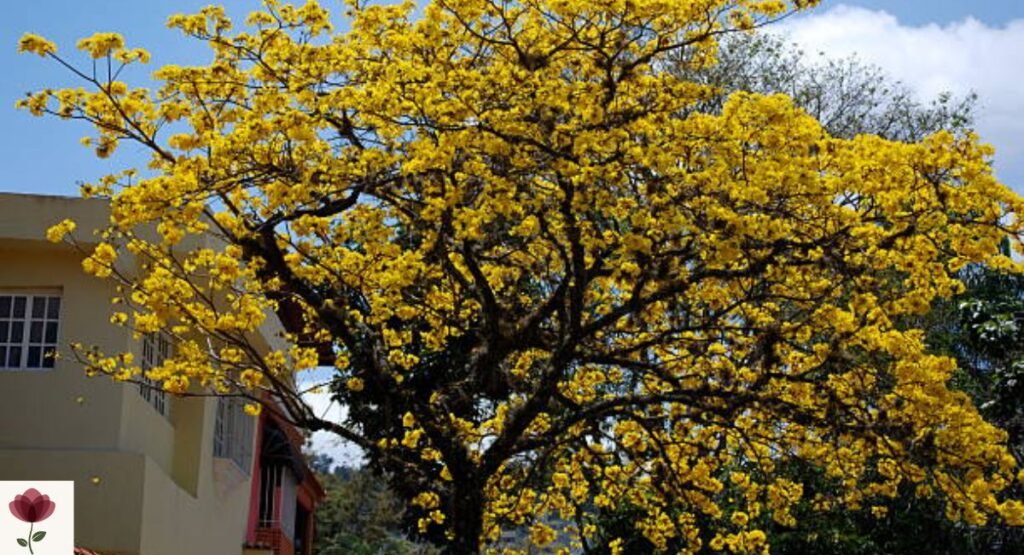
Yellow tabebuia is one of the most recognizable trees with yellow flowers in Florida. Its brilliant blossoms can appear after the foliage drops, creating an almost entirely golden canopy. The closely related trumpet trees are commonly grown as ornamentals in Central and South Florida. Bloom timing often falls around late winter or spring, although temperature and rainfall can shift the display.
Its leafless flowering habit makes it particularly striking as a specimen tree. Give it full sun and enough room for the mature canopy. A useful feature is its drought tolerance after establishment. The exact species matters, however, because several yellow trumpet trees share similar common names.
2. Golden Trumpet Tree
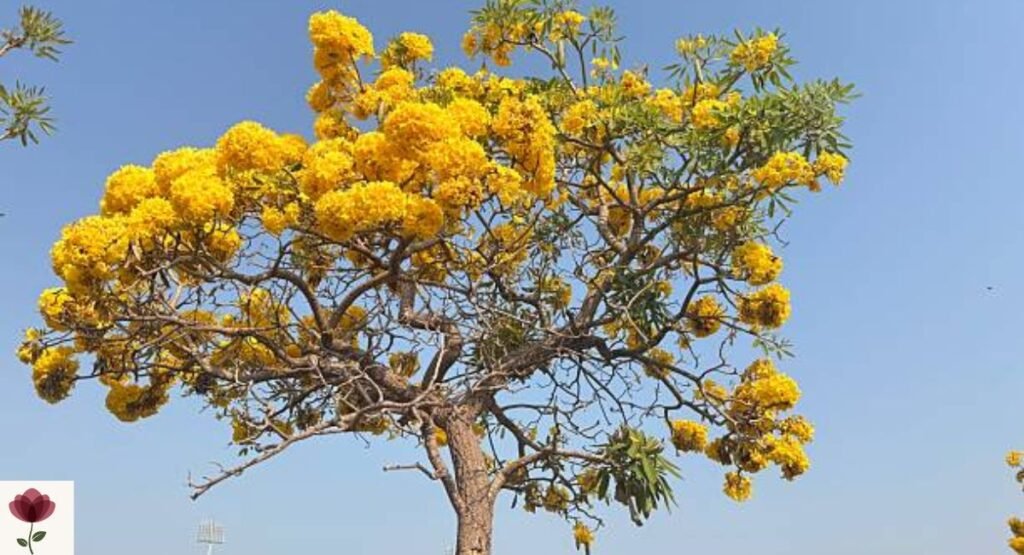
Golden trumpet tree, now commonly treated botanically as Handroanthus chrysotrichus, produces brilliant yellow trumpet-shaped flowers before or around the emergence of new foliage. UF/IFAS describes it as a medium-sized tree suitable for Central and South Florida, with typical cultivated heights around 30 to 40 feet.
This species performs best in full sun and can handle Florida’s sandy soils once established. Its open canopy gives it a graceful appearance rather than a dense shade-tree form. Because it can be cold-sensitive, gardeners in the northern part of the state should pay close attention to local winter temperatures.
3. Golden Shower Tree
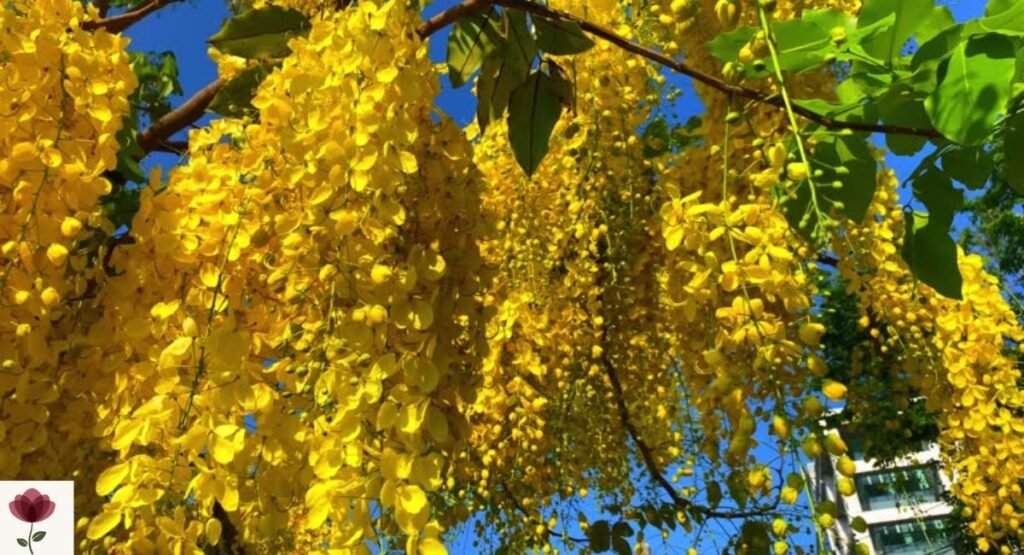
Golden shower is famous for its spectacular hanging chains of yellow flowers. Cassia fistula can reach roughly 30 to 40 feet in height and width. Its long flower racemes can cover drooping branches during the warm season. UF/IFAS lists it for USDA zones 10B through 11 and notes its use as a specimen and landscape tree.
The tree prefers full sun and well-drained soil. It has moderate drought and salt tolerance once established. Its long dark seed pods can create litter, and the seeds are poisonous, so placement matters around children and pets. Its flowers may appear from spring into early summer and can return in early fall.
4. Yellow Elder
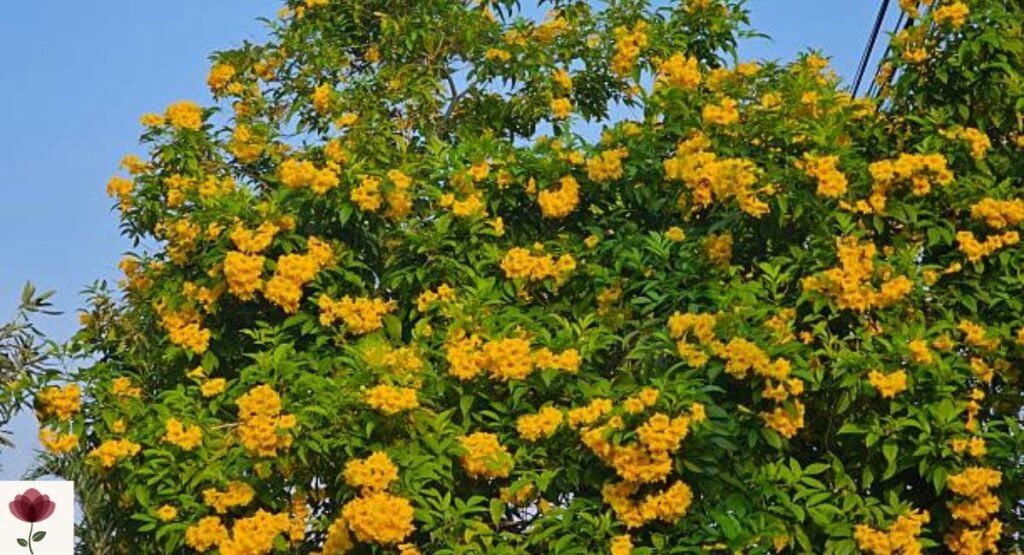
Yellow elder, scientifically known as Tecoma stans, is valued for its bright yellow trumpet-like flowers and ability to bloom repeatedly. In warm parts of Florida, it can provide color over a much longer period than trees that produce one short annual display. UF/IFAS describes it as often shrubby, fast-growing, drought tolerant, and capable of flowering through much of the year.
Its flexible growth makes it useful where you want a small tree or large shrub. Full sun encourages heavier flowering. Regular pruning can also help maintain a cleaner tree form. Because it can become somewhat weak-wooded, avoid placing it where poor structure could create problems near important structures.
5. Cassia Tree
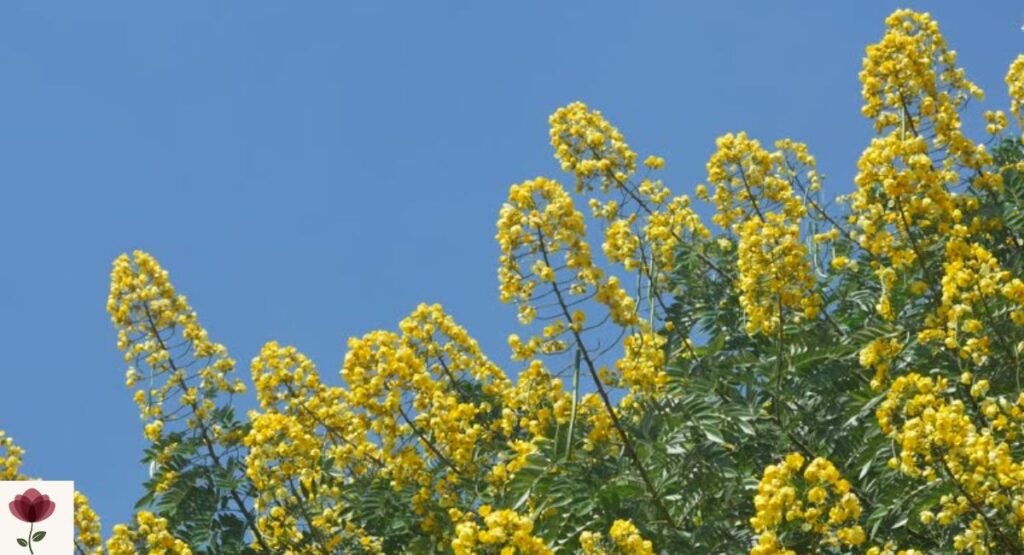
The name “cassia tree” can refer to several related ornamental species, so the scientific name on the nursery label matters. Some cassias produce vivid yellow flowers in large clusters and perform well in Florida’s warm climate. Cassia leptophylla, for example, is known as the gold medallion tree and produces bright yellow summer flower clusters.
Cassias can be excellent ornamental flowering trees when planted in sunny, spacious locations. Their compound leaves provide a soft texture between flowering periods. Before planting, check the exact species because mature size, cold tolerance, flowering season, and maintenance needs can differ considerably among cassias.
6. Yellow Poinciana
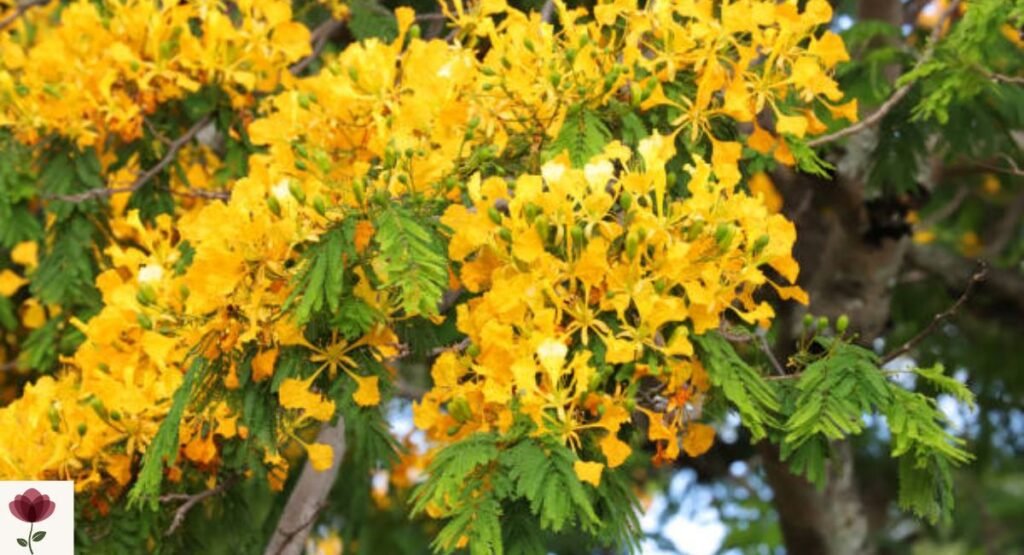
Yellow poinciana is a useful common name for several yellow-flowering members of the bean family. One important example is Peltophorum pterocarpum, a tropical tree grown for its yellow flower clusters and broad canopy. It suits warm landscapes better than cold northern locations.
This type of tree needs generous space as it matures. Its golden flowers can create a strong focal point against dark green foliage. Choose a sunny position with good drainage and avoid squeezing a large-canopy specimen into a narrow planting strip. In South Florida, its tropical appearance fits naturally into resort-style and residential landscapes.
7. Parkinsonia Tree
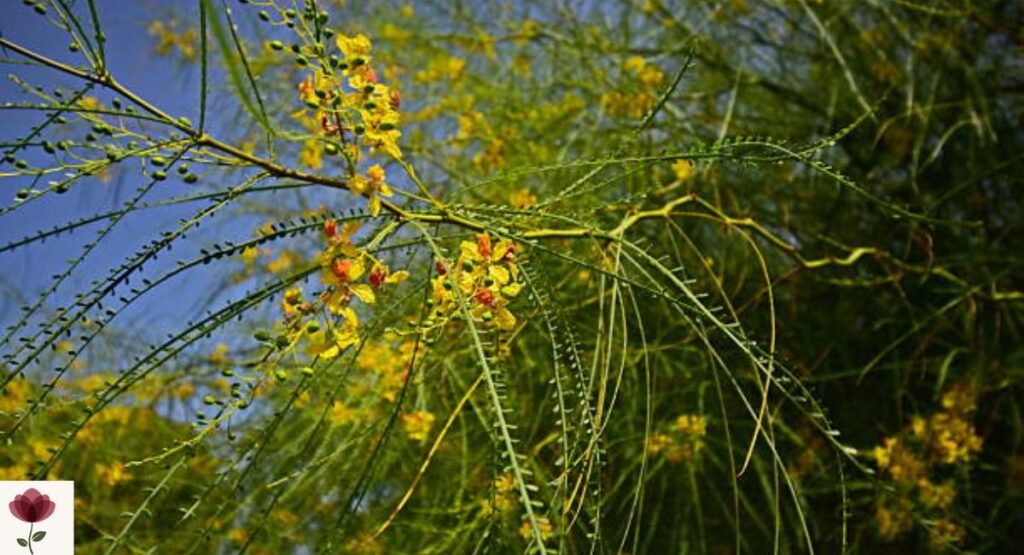
Parkinsonia trees have an unusual appearance that separates them from many traditional yellow flowering trees in Florida. Their green stems and fine-textured foliage create an airy silhouette. Small yellow flowers appear seasonally, while the narrow canopy allows sunlight to pass through the branches.
These trees are particularly interesting for dry landscapes because they tolerate drought after establishment. Full sun suits them best. Their open growth habit can also reduce the heavy, crowded appearance sometimes associated with larger shade trees. Give the tree enough room to develop its natural architecture instead of forcing it into a tight space.
8. Candlebrush
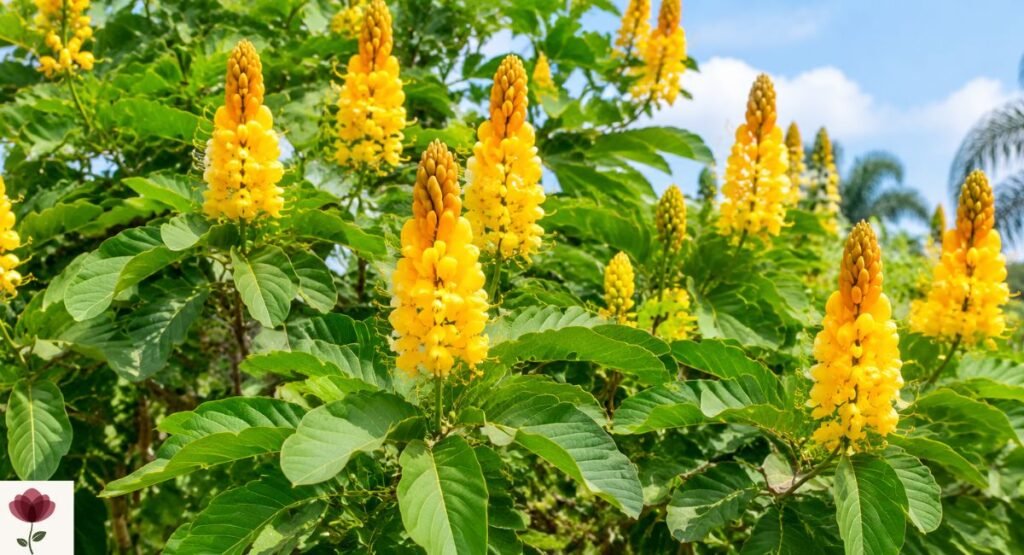
Candlebrush, scientifically known as Senna alata, is a tropical flowering plant that can develop into a small tree-like form in Florida. It produces tall spikes of golden-yellow flowers that resemble candles, giving the plant its memorable common name. The large leaves add a lush tropical look between flowering periods. It grows best in warm Florida regions where temperatures remain mild.
Its bright blooms make candlebrush an attractive choice for a Florida landscape or sunny garden focal point. It prefers full sun and well-drained soil and can tolerate periods of dry weather once established. However, gardeners should consider its spreading growth and potential to naturalize before planting. Give it adequate space and avoid placing it near sensitive natural areas.
9. Copperpod Tree
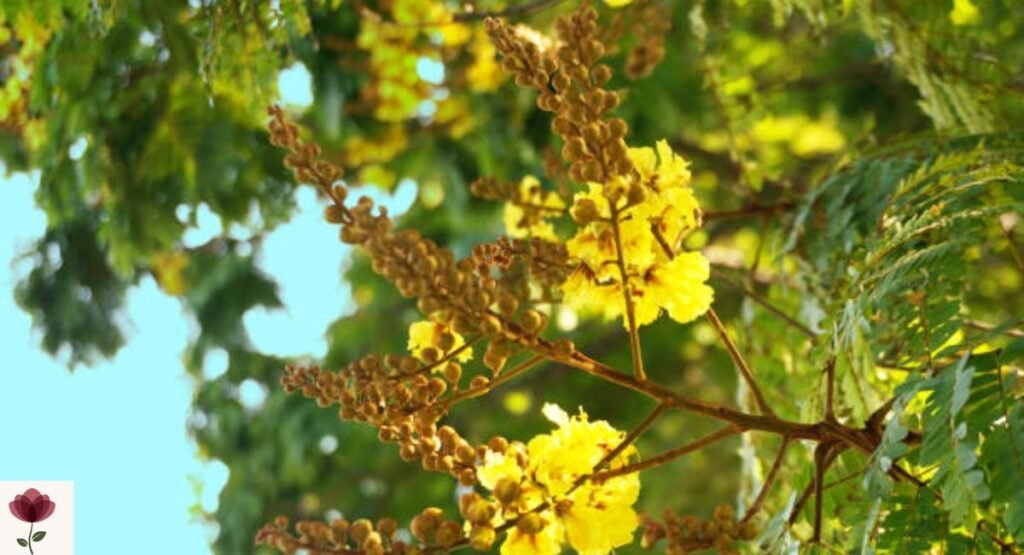
Copperpod, Peltophorum pterocarpum, is a large tropical tree known for yellow flower clusters and a broad spreading crown. It can become an impressive shade and specimen tree in warm climates. Its scale makes it better suited to large properties, streetscapes, parks, and spacious landscapes than compact residential yards.
This species needs strong sunlight and room for its canopy. Its golden flowers can create a dramatic seasonal display above the foliage. Because tropical trees may suffer from cold injury, copperpod is better suited to warmer parts of Florida. Always consider mature height and spread before planting near buildings or overhead utilities.
10. Yellow Bells Tree
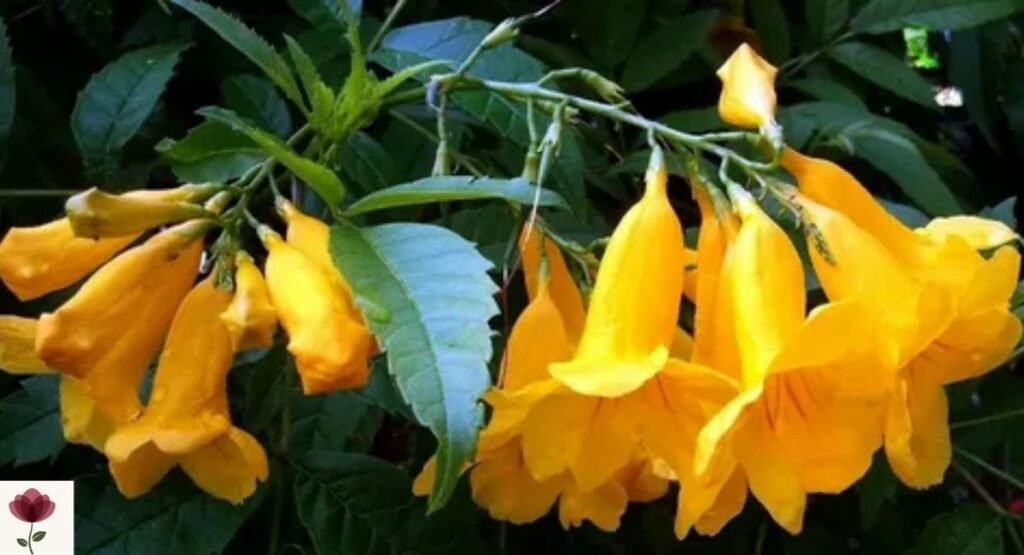
Yellow bells is commonly used as another name for Tecoma stans, the same species commonly called yellow elder. This distinction is important because these names can make two entries look like separate trees when they are actually the same plant. Its trumpet-shaped yellow flowers are attractive to pollinators and can appear repeatedly in warm weather.
Gardeners often choose it for smaller landscapes because it can remain much more manageable than large tropical canopy trees. Full sun, good drainage, and occasional pruning help maintain a productive shape. If you see both “yellow elder” and “yellow bells” at a nursery, check the botanical name before buying both.
11. Golden Rain Tree
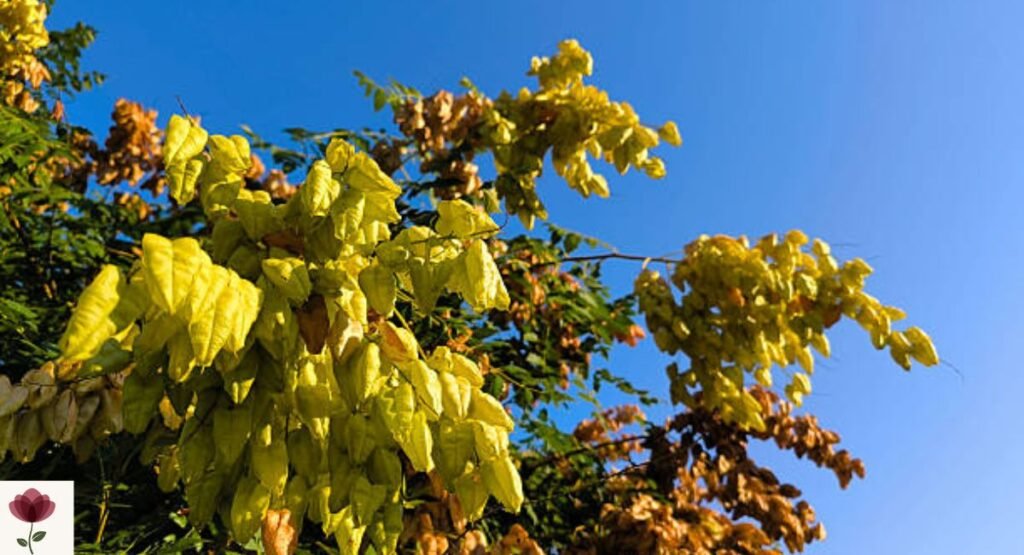
Golden rain tree, Koelreuteria paniculata, is a deciduous ornamental tree known for its loose clusters of bright yellow flowers. The blooms appear above the foliage and can create a soft golden effect during the flowering season. Its compound leaves also add attractive texture to the landscape. Unlike many tropical trees in this guide, golden rain tree is better suited to the cooler parts of Florida.
This tree works well as a specimen tree in sunny yards, lawns, and larger garden spaces. It prefers full sun and well-drained soil and can tolerate heat once established. Its moderate size makes it easier to manage than some large tropical flowering trees. Gardeners in North and parts of Central Florida should still check the cultivar and local growing conditions before planting.
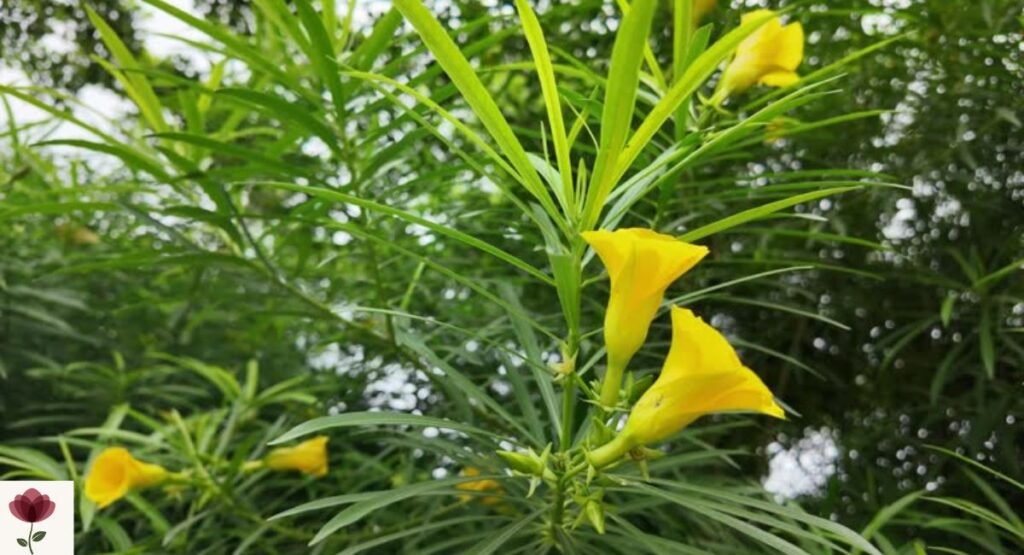
Yellow oleander is a tropical ornamental that can be trained into a small tree. Its yellow flowers contrast strongly with narrow evergreen foliage. It tolerates heat and periods of dry weather, which can make it attractive for low-water landscapes in warmer Florida regions.
However, this is not a carefree choice around every household. Yellow oleander is highly toxic if eaten. Its location should therefore be carefully considered around children, pets, and areas where plant material could be handled. The tree’s ornamental value never outweighs the need for sensible placement and maintenance.
13. Golden Chain Tree
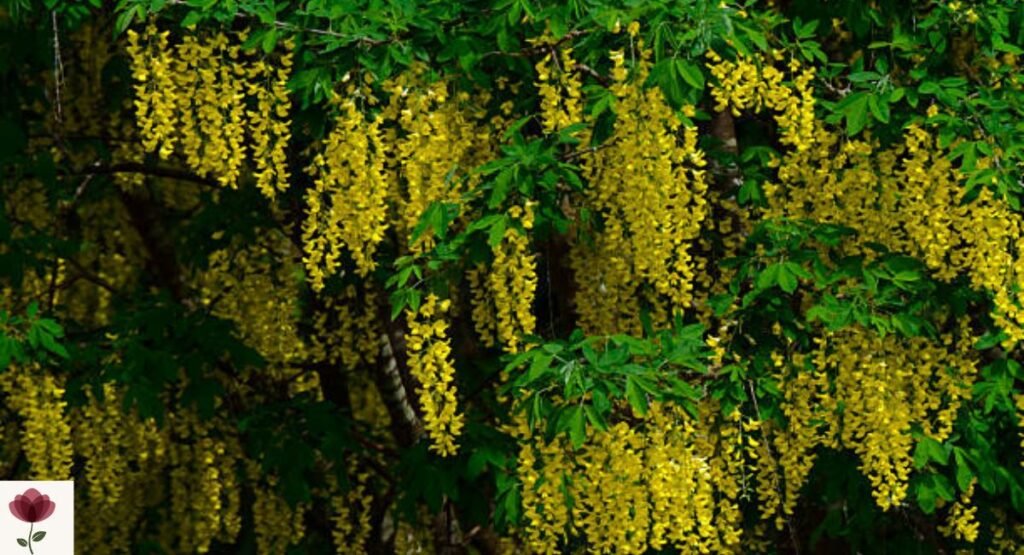
Golden chain tree is known for its pendulous yellow flower clusters, which can create a spectacular spring display. However, this tree deserves a more cautious recommendation for Florida than tropical species such as yellow tabebuia or golden shower. Hot, humid conditions can limit its performance, especially in southern parts of the state.
For that reason, gardeners should verify the cultivar and local suitability before purchasing one. A plant that performs beautifully in a cooler climate may not behave the same way in Florida. This is an excellent reminder that a common name alone is not enough when choosing a flowering tree.
14. Yellow Flowering Magnolia
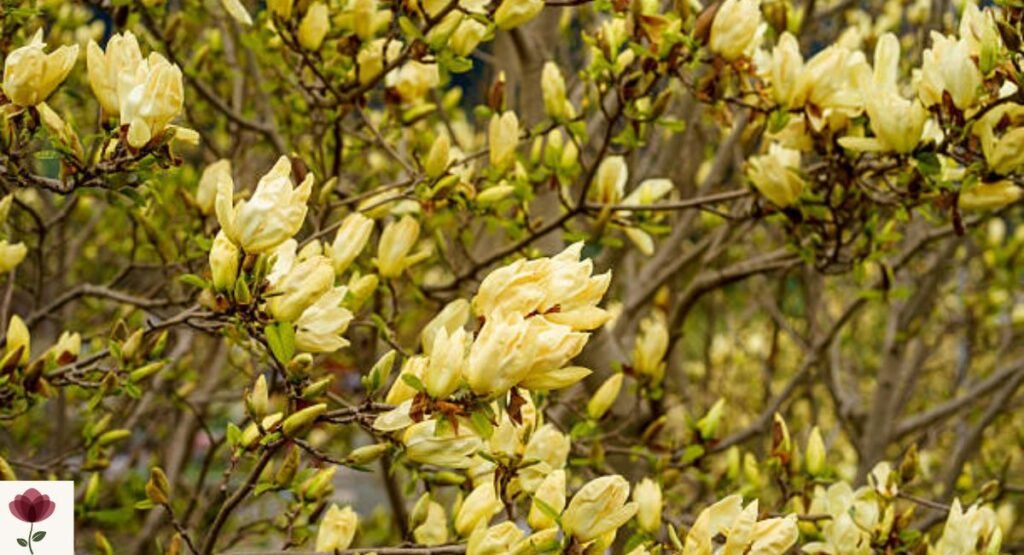
Yellow-flowering magnolias are generally cultivar-specific rather than one single Florida tree. Several magnolia cultivars produce creamy yellow to yellow flowers and may work in suitable parts of North or Central Florida. Their performance depends heavily on the selected cultivar, winter tolerance, soil conditions, and local climate.
Magnolias also offer value beyond their flowers. Their foliage and mature structure can provide lasting landscape interest. If yellow blooms are your main goal, check the actual flower color at maturity rather than relying only on a nursery photograph. Some cultivars appear more cream or pale yellow than intensely golden.
15. Yellow Jacaranda
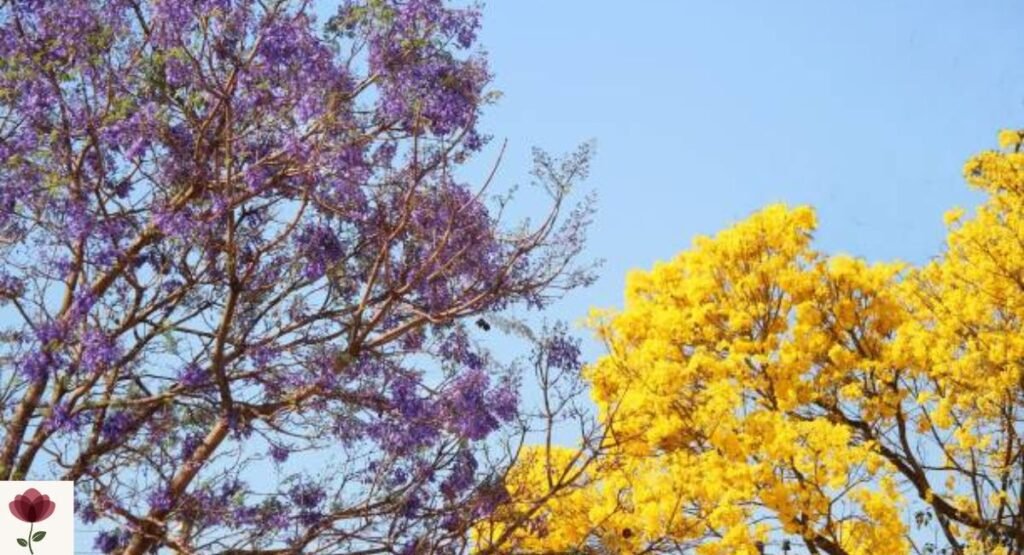
“Yellow jacaranda” can be a confusing common name because true jacarandas are more famously associated with purple or blue-purple flowers. Several unrelated trees may receive yellow jacaranda as a regional or nursery name. Always check the botanical name before treating it as a distinct species.
This naming issue matters when searching for trees that bloom yellow flowers in Florida. A nursery label can tell you much more than the common name. Check the scientific name, expected mature size, USDA zone, bloom season, and Florida region before making your final choice.
When Do Yellow Flowering Trees Bloom in Florida?
Florida does not have one universal flowering calendar. A yellow-flowering tree may bloom in winter in South Florida while producing its main display later in Central or North Florida. Cold fronts, warm spells, rainfall, drought, and the tree’s natural dormancy cycle can all influence flowering.
Some species create a brief burst of color, while others flower repeatedly. Golden shower, for example, can flower from spring into early summer and may flower again in early fall. Yellow elder can produce flowers through much of the year in suitable South Florida conditions.
Florida Trees With Yellow Flowers in Spring
Spring is one of the most impressive seasons for Florida trees with yellow flowers. Trumpet trees can shed much of their foliage before producing flowers, leaving the branches covered with yellow blooms. This creates a dramatic contrast that makes the trees easy to notice from roads and neighborhoods.
Temperature plays a major role in the exact timing. A warm winter can encourage earlier flowering, while cooler weather may delay the display. This is why two Florida cities can experience noticeably different bloom dates even during the same calendar month.
Florida Trees With Yellow Flowers in March
March is an important month for yellow flowering trees in Florida, particularly in Central and South Florida. Yellow trumpet trees and related tabebuia species can produce spectacular displays around late winter or early spring. Their flowering period may be relatively short, but the visual impact can be enormous.
Late-March flowering is especially associated with warm South Florida landscapes. Local weather can still shift the timing from one year to another. A cold spell may delay development, while sustained warmth can bring flowers forward. Watching buds rather than following a fixed date is often more reliable.
Florida Trees With Yellow Flowers in Summer
Summer brings a different style of yellow display. Instead of bare branches covered with spring trumpets, some summer species produce flowers against green foliage. Golden shower is an excellent example because its long yellow racemes can hang from branches during the warmer months. UF/IFAS reports spring-to-early-summer flowering with potential additional flowering in early fall.
Summer also brings abundant rainfall across much of Florida. Healthy trees can use that moisture to support new growth and flowering. Still, excessive water around poorly drained roots can cause problems. Good drainage remains important even in a state famous for summer rain.
Florida Trees With Yellow Flowers in Fall
Fall flowering is less predictable than spring flowering because species differ greatly in their response to temperature and rainfall. Some tropical trees can continue flowering into autumn, particularly in South Florida where warm conditions last much longer.
Golden shower is one useful example because UF/IFAS records flowering in early fall in addition to its main spring-to-summer period. Yellow elder can also provide yellow blooms for much of the year under suitable conditions.
What Makes a Tree Produce a Bright Yellow Floral Display?
A bright yellow floral display depends on more than flower color. Sunlight influences flower production, while temperature controls many seasonal processes. Some deciduous trees also drop their leaves before flowering. This removes visual competition and makes the blossoms appear even more intense.
Rainfall can also influence plant growth and flowering. However, weather does not act alone. Tree age, health, nutrient availability, pruning, soil drainage, and genetics all affect the final display. A mature healthy tree planted in the right location usually has a much better chance of producing the show gardeners expect.
Yellow Flowering Trees in North, Central & South Florida
Florida’s geography creates three broad gardening environments. North Florida has colder winters and can experience occasional freezes. Central Florida sits between temperate and subtropical conditions. South Florida offers the longest period of tropical warmth.
That difference changes which yellow flowering trees in Florida make sense for each location. A tree rated for USDA 10B or 11 may be perfectly comfortable in Miami but risky in a colder North Florida yard. Matching the tree to the site is therefore more important than choosing a flower color alone.
Yellow Flowering Trees in North Florida
North Florida presents the biggest cold challenge. Gardeners should focus on trees and cultivars that tolerate local winter temperatures rather than automatically selecting tropical species. Some warmer-climate yellow-flowering trees may survive in protected microclimates, but a hard freeze can damage tender growth.
Golden chain and suitable yellow-flowering magnolias may be more relevant to the northern portion of the state than highly tropical species. Always check the USDA hardiness zone for the exact plant you are buying. Local extension guidance can also help because microclimates around buildings can differ considerably.
Yellow Flowering Trees in Central Florida
Central Florida supports a useful middle ground for yellow flowering trees in Central Florida. Golden trumpet tree is one notable option. UF/IFAS lists it as suitable for Central and South Florida, with typical cultivated growth reaching around 30 to 40 feet.
Yellow elder and several cassia species can also suit warm Central Florida landscapes. The main question is not simply whether a tree can survive. Consider how quickly it grows, how large the canopy becomes, how it handles local soil, and whether its flowering season matches your landscaping goals.
Yellow Flowering Trees in South Florida
South Florida provides the broadest selection of tropical and subtropical species. Warm winters allow trees such as yellow tabebuia, golden trumpet, Caribbean trumpet, golden shower, yellow elder, and copperpod to perform well in appropriate sites.
The region also has unique challenges. High heat, tropical storms, salt exposure, intense rainfall, and sandy soils can all influence tree performance. Choosing a species with suitable wind resistance, drainage needs, and mature structure is just as important as selecting an attractive bloom.
Yellow Flowering Trees for the Florida Keys
The Florida Keys require a different approach because coastal exposure can be intense. Heat, salt-laden air, thin soils, strong sunlight, and limited freshwater can challenge plants that perform easily inland.
When choosing a flowering tree for the Keys, prioritize proven tropical plants and check salt tolerance carefully. Give roots excellent drainage while providing enough irrigation during establishment. A tree that tolerates coastal conditions is usually a safer choice than simply selecting the most colorful species.
How to Identify a Tree With Yellow Flowers in Florida
Flower color alone rarely provides enough information for reliable identification. Several unrelated trees can produce similar golden blossoms. Instead, look at the flowers together with the leaves, bark, branching pattern, mature size, and flowering season.
This approach becomes especially useful with trumpet trees. UF/IFAS notes that common names can cause confusion because several species have been called yellow, golden, or silver trumpet trees. Botanical names provide a much more dependable identification method.
Flower Shape and Color
Start with the flowers. Trumpet-shaped blooms point toward groups such as Handroanthus and Tecoma. Long hanging racemes suggest trees such as golden shower. Small individual yellow flowers may indicate a completely different plant.
Color also matters, but use it as one clue rather than the final answer. Bright lemon yellow, golden yellow, pale cream, and yellow-orange flowers can look very different in direct sunlight. Photographs taken at different stages can also make the same flower appear to have different shades.
Leaves and Bark
Leaves often provide stronger identification clues than flowers. Look at whether they are simple or compound, evergreen or deciduous, fine or broad. Bark texture and branch color can also separate similar-looking trees.
Yellow tabebuia and related trumpet trees are particularly interesting because flowers may appear when the tree has very few leaves. Parkinsonia species can also stand out through their unusual green stems and fine foliage. These structural details remain useful even after the flowers disappear.
Blooming Season
Flowering time can narrow your choices dramatically. A tree covered in yellow flowers during late March belongs to a different seasonal group than one producing long golden clusters in June.
Keep a simple garden calendar if you are trying to identify a tree. Record the first buds, peak flowering date, leaf drop, and return of new foliage. Over several seasons, these observations can reveal the tree’s natural flowering pattern more accurately than a generic online description.
Tree Size and Growth Habit
Mature size is another valuable clue. A small upright tree looks very different from a broad canopy that eventually reaches 30 or 40 feet. Branch angle, crown density, trunk structure, and growth speed can help narrow identification.
Size also matters before planting. A tree that looks tiny at the nursery may eventually become a major landscape feature. Check mature height and spread rather than choosing a plant based on its current container size.
How to Choose Yellow Flowering Trees for Your Florida Yard
The best tree for your yard depends on the site rather than flower color alone. Start by checking your USDA zone, sunlight, drainage, available canopy space, and desired bloom period. Then compare species that naturally fit those conditions.
Think about the tree ten years from now. A spectacular specimen can become a headache if its branches crowd a roof, block a driveway, or interfere with utility lines. Good landscape planning gives the tree enough room to become beautiful without becoming inconvenient.
Best Trees for Small Yards
Small yards benefit from trees with manageable mature dimensions or naturally upright forms. Yellow elder can work better in a compact landscape than a large canopy species. Caribbean trumpet tree can also offer a tropical yellow display while remaining smaller than many large flowering trees.
Do not judge a tree by its young appearance. A 5-foot nursery plant may eventually become several times taller and much wider. Check the mature spread before planting near walls, fences, sidewalks, or driveways.
Best Trees for Large Landscapes
Large properties can accommodate broader trees such as golden shower and copperpod. These species can create strong visual anchors when given enough room. Golden shower can reach roughly 30 to 40 feet in both height and spread under suitable conditions.
Large landscapes also make it easier to appreciate a tree’s natural canopy. Instead of forcing branches into a restricted shape, allow enough room for the crown to develop. This often produces a healthier and more attractive specimen.
Best Trees for Full Sun
Most strongly flowering tropical trees perform best with abundant sunlight. Full sun helps support photosynthesis and can encourage heavier flowering. Golden trumpet, golden shower, yellow elder, and many cassia species prefer sunny locations.
A site with only a few hours of weak morning light may produce fewer flowers than an open lawn. Watch nearby buildings and mature trees as well. Shade can increase over time even when a planting area starts out sunny.
Best Trees for a Specimen Planting
A specimen tree should attract attention from a distance. Yellow tabebuia is particularly effective because its intense flowers can appear against a sparse or leafless canopy. Golden shower offers a different effect with long cascading flower clusters.
The goal is not simply to plant the biggest tree. A good specimen has enough visual space around it. Place it where the mature shape can be seen from a window, patio, entrance, or garden path.
Best Trees for Long-Lasting Seasonal Color
If you want flowers for many months, choose repeat-flowering species rather than relying entirely on a short spring display. Yellow elder is particularly useful because it can flower repeatedly through much of the year in warm Florida conditions.
Golden shower can also provide more than one flowering period under suitable conditions. By combining trees with different bloom schedules, you can create a landscape that changes throughout the year instead of producing one brief burst of color.
How to Grow Yellow Flowering Trees in Florida
Successful growing begins with the right location. Florida’s heat can benefit tropical trees, but poor drainage, incorrect spacing, cold exposure, or insufficient sunlight can still cause problems.
Newly planted trees require more attention than established specimens. Water the root zone deeply during establishment, maintain suitable soil moisture, and avoid constantly saturated soil. Once roots become established, many Florida-friendly trees become considerably more drought tolerant.
Sunlight Requirements
Full sun is usually the safest choice when heavy flowering is your main goal. Golden trumpet tree, for example, performs best in sunny locations. UF/IFAS also notes that it grows well in Florida’s sandy soils and becomes drought tolerant after establishment.
Before planting, observe the site throughout the day. A yard may look sunny at noon but receive significant shade in the morning or afternoon. Buildings, palms, fences, and neighboring trees can change the light pattern considerably.
Soil and Drainage
Good drainage is essential for many tropical flowering trees. Florida soils can range from deep sand to clay and compacted urban soil. A tree that tolerates sandy conditions may still struggle if water remains trapped around its roots.
Golden shower is a useful example because UF/IFAS lists tolerance for clay, sand, loam, acidic, and alkaline soils when drainage is suitable. The goal is not always the richest soil. Healthy roots need oxygen as well as moisture.
Watering Needs
New trees need consistent watering while their root systems expand. During establishment, deep watering is generally more useful than frequent shallow sprinkling because it encourages roots to explore the surrounding soil.
Once established, many tropical trees can tolerate periods of reduced rainfall. Golden trumpet and golden shower both have useful drought tolerance. However, drought tolerance does not mean zero water. Extended drought can still reduce growth and flowering.
Fertilizing
Fertilizer should support healthy growth rather than force excessive foliage. Too much nitrogen can encourage leaves and shoots when your main goal is flowers. Soil testing can help determine whether nutrients are actually limiting the plant.
Apply fertilizer according to the needs of the particular species and local soil conditions. Avoid treating every yellow-flowering tree as though it has identical nutritional requirements. A balanced landscape program usually works better than repeated heavy applications.
Pruning and Spacing
Pruning should focus on structure, clearance, and long-term form. Remove weak, crossing, damaged, or poorly positioned branches when appropriate. Young trees can benefit from structural training before large branches become difficult to manage.
Golden shower is a good example of a species that benefits from attention to structure. UF/IFAS notes its drooping branches and recommends pruning to develop strong structure. Always prune with the tree’s natural growth habit in mind.
USDA Hardiness Zones
USDA hardiness zones help you understand winter temperature risk. Florida ranges from cooler northern zones to tropical South Florida zones. A tree rated for 10B–11 should not automatically be treated as a safe choice for every Florida yard.
Golden shower, for example, is listed by UF/IFAS for zones 10B through 11. Golden trumpet is generally associated with zones 9B through 11. Check the exact cultivar and your local zone before planting.
How Far Should You Plant a Flowering Tree From a House or Driveway?
Spacing should be based on the tree’s mature canopy rather than its nursery size. A small young tree can look harmless beside a driveway, yet its future branches may extend over vehicles, pavement, windows, or the roof.
As a practical rule, larger spreading trees need substantially more clearance than compact upright trees. Golden shower can reach roughly 30 to 40 feet in spread, so it needs considerably more room than a small trumpet tree. When in doubt, use the mature spread as your starting point and allow additional room for pruning access and future growth.
Conclusion
Yellow flowering trees in Florida can bring color to almost every season when you choose species according to your climate and landscape. Yellow tabebuia and golden trumpet create memorable spring displays, while golden shower and yellow elder can extend the color into warmer months. Other trees offer different shapes, sizes, and flowering habits.
The smartest choice starts with the site. Check your USDA zone, sunlight, drainage, mature canopy, and available planting space before buying. With the right tree in the right place, those golden blooms can become one of the most eye-catching features in your Florida landscape.
FAQs
What tree has bright yellow flowers in Florida?
Yellow tabebuia and golden trumpet tree are two recognizable choices. Both can produce vivid yellow trumpet-shaped flowers, especially during the cooler-to-warmer transition into spring.
What is the most common tree with yellow flowers in Florida?
Yellow tabebuia is a familiar ornamental choice, particularly across Central and South Florida. Golden shower and yellow elder are also commonly used in warm Florida landscapes.
What tree with yellow flowers blooms in spring in Florida?
Yellow tabebuia and golden trumpet tree are notable spring bloomers. Their flowering can become especially dramatic when foliage drops before the flowers appear.
What Florida tree has yellow flowers in fall?
Golden shower can produce another flowering period in early fall under suitable conditions. Yellow elder may also continue flowering during warm autumn weather.
What yellow flowering tree blooms in March in Florida?
Yellow tabebuia is strongly associated with late-winter and early-spring displays. In warm areas, its peak flowering can occur around late March, although weather can shift the timing.
Which yellow flowering trees grow in Central Florida?
Golden trumpet tree, yellow elder, and suitable cassia species can perform well in Central Florida. Golden trumpet is specifically listed by UF/IFAS as a Central and South Florida tree.
Which yellow flowering trees grow in South Florida?
South Florida supports many tropical and subtropical choices. Yellow tabebuia, golden shower, yellow elder, Caribbean trumpet tree, and copperpod are examples suited to warm conditions.
What trees bloom yellow flowers in Florida?
Florida has several choices, including trumpet trees, cassias, golden shower, yellow elder, Parkinsonia, and other tropical ornamentals. Their bloom seasons and cold tolerance differ.
Which tree has yellow flowers and loses its leaves before blooming?
Several trumpet trees show this behavior. Golden trumpet tree can produce its yellow flowers after foliage drops, creating a particularly strong floral display.
Which yellow flowering tree is good for a small Florida yard?
A compact yellow elder or Caribbean trumpet tree can be more practical than a large canopy species. Always check the mature height and spread before planting.

Welcome to PetalNexa! I’m Anam Sattar, an AI-powered SEO Specialist and Content Writer with over 4 years of experience in creating high-quality, search-optimized content. I help businesses improve their search engine rankings, increase organic traffic, and build beautiful, user-friendly websites. My mission is to make SEO, content creation, and web design simple, effective, and accessible for everyone. Let’s grow your online presence and achieve success together!
1 thought on “15 Yellow Flowering Trees in Florida: Spring, Fall & Regional Varieties”