

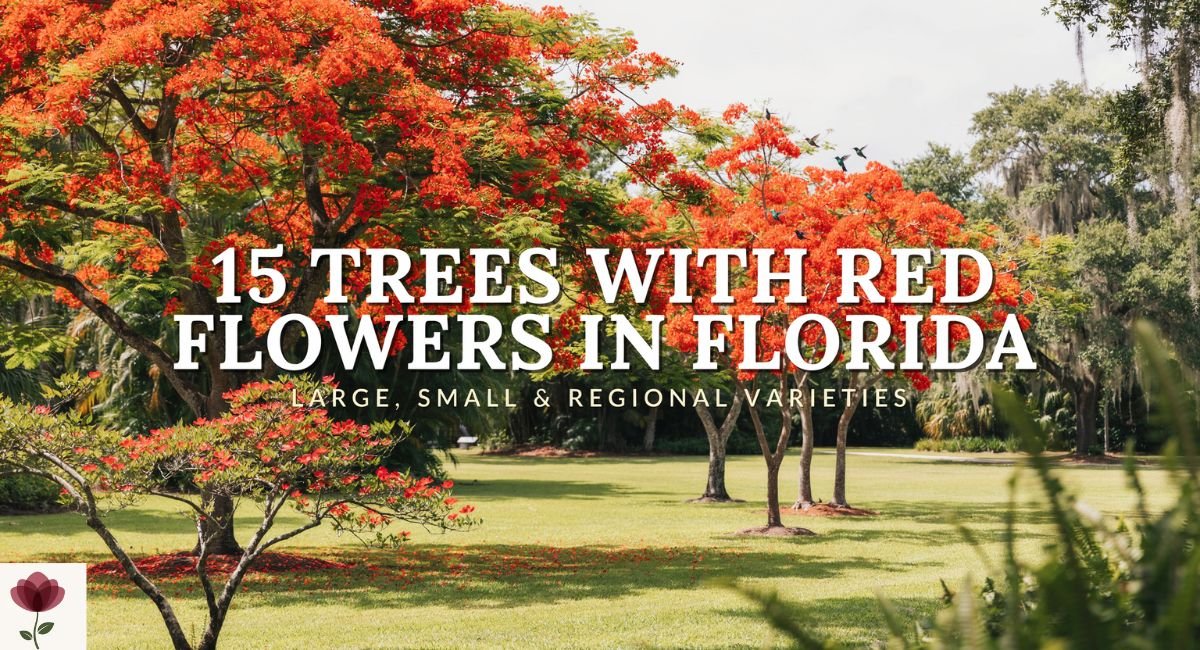
Florida landscapes come alive when trees burst into vivid red blooms. From towering tropical specimens to compact choices for smaller yards, Trees With Red Flowers in Florida can add striking color and seasonal interest. The state’s warm climate supports a fascinating mix of native, subtropical, and ornamental trees across different regions. However, not every red-blooming tree suits every location. North Florida faces cooler winters, while South Florida offers warmer conditions for tropical species.
Soil drainage, sunlight, mature size, and watering needs also matter. Some trees produce scarlet flowers in spring, while others bloom through summer or return with repeated flushes. This guide explores beautiful flowering trees in Florida, their growing needs, regional suitability, and landscape uses.
How to Choose Trees With Red Flowers in Florida
When choosing Trees With Red Flowers in Florida, start by matching the species to your region, available space, and growing conditions. North Florida needs more cold-tolerant choices, while South Florida supports many tropical varieties. Check the tree’s mature height and canopy spread before planting. Full sun, well-drained soil, and suitable watering also affect flowering. Consider the bloom season if you want color during a particular time of year. Finally, think about your landscape purpose, whether you need a large shade tree, a compact ornamental, or a pollinator-friendly choice.
15 Trees With Red Flowers in Florida
1. Royal Poinciana
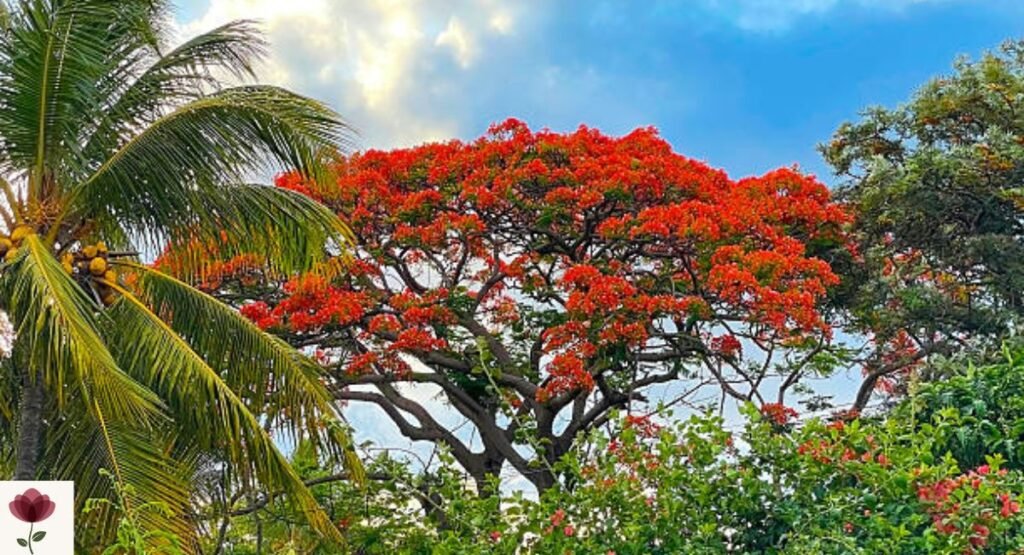
Royal poinciana (Delonix regia) is among Florida’s most spectacular tropical trees. Its broad crown can become covered with large scarlet and orange-red flower clusters. The fern-like foliage adds a delicate texture that contrasts beautifully with the bold blossoms.
Give this tree full sun, good drainage, and plenty of room to spread. UF/IFAS notes that royal poinciana can flower from spring into early fall. Its broad branches also require thoughtful pruning and placement because mature trees can develop substantial crowns.
2. African Tulip Tree
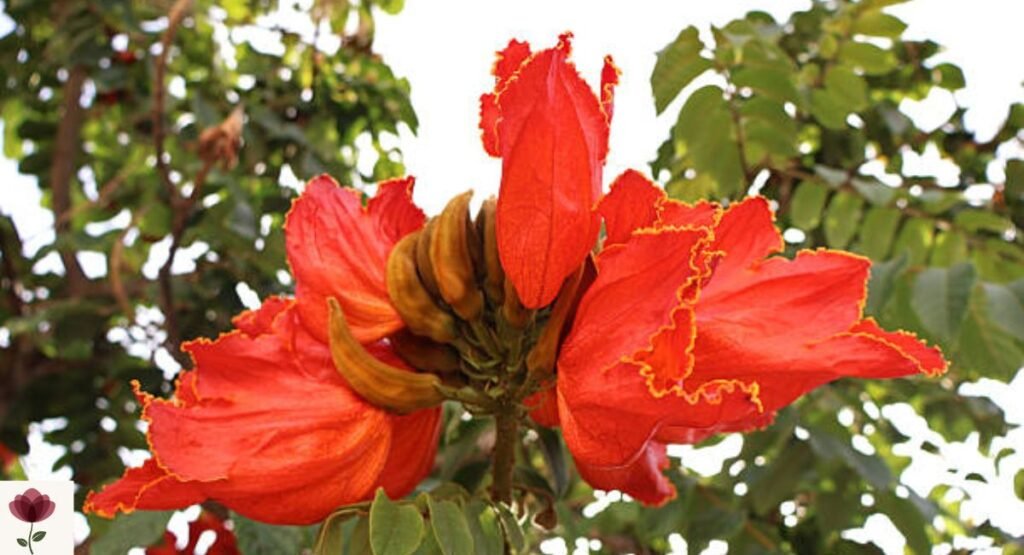
African tulip tree (Spathodea campanulata) produces large, cup-shaped flowers in vivid orange-red shades. Its rounded canopy and lush foliage give tropical landscapes a dramatic appearance. The flowers often stand out strongly against the tree’s dark green leaves.
This fast-growing species needs warmth, sunlight, moisture, and plenty of space. It suits frost-free parts of Florida much better than colder northern locations. Because it can become a substantial landscape tree, consider its mature size before planting near structures or narrow spaces.
3. Red Flowering Gum
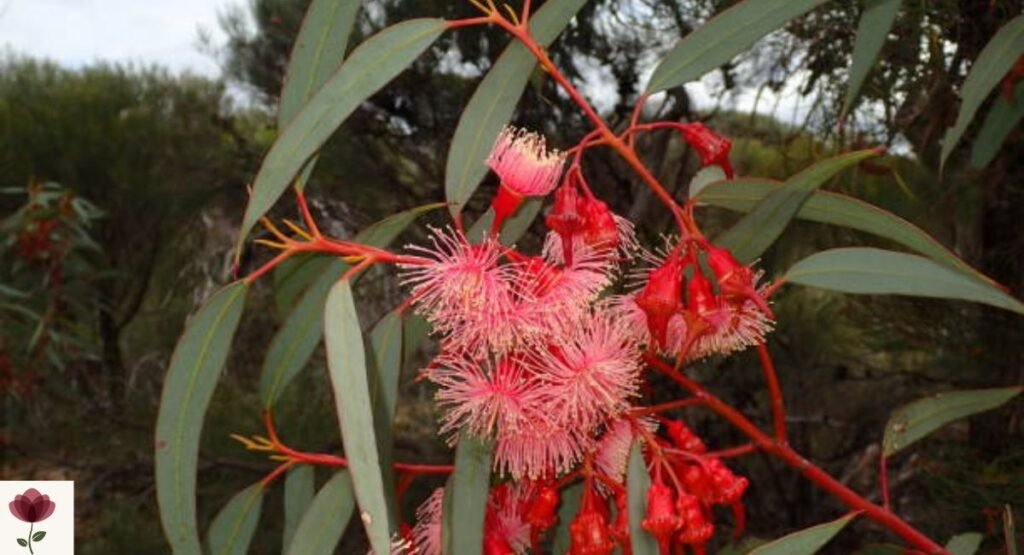
Red flowering gum (Corymbia ficifolia, formerly Eucalyptus ficifolia) is valued for its clusters of vivid red flowers and attractive evergreen foliage. The blossoms can create a striking display against the tree’s gray-green leaves, making it an eye-catching ornamental specimen.
Choose a sunny site with well-drained soil and adequate room for the canopy. This Australian native performs particularly well in warmer Florida landscapes. Its mature size also makes it more suitable for open yards than cramped planting beds or locations beneath utility lines.
4. Coral Tree
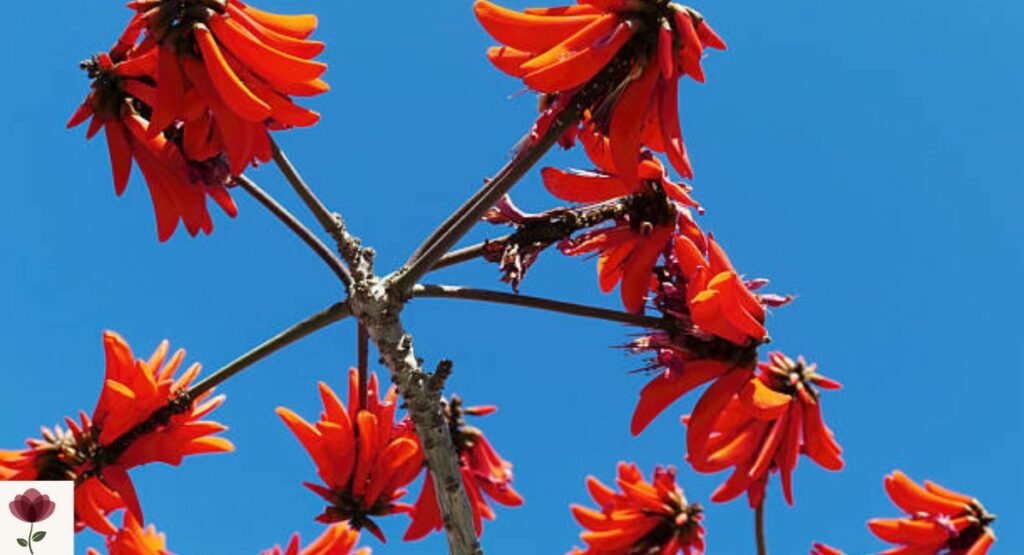
Coral trees belong to the genus Erythrina and are known for their strong tropical appearance and bright red blooms. Their flowers often appear on mostly bare or lightly foliated branches, creating a dramatic seasonal effect. Several coral tree species are grown as ornamentals in warm regions.
They prefer full sun, free-draining soil, and enough space for their mature structure. Coral trees can work well as specimen plants in tropical landscapes, particularly in warmer parts of the state. Choose the species carefully because size, growth habit, and cold tolerance vary among coral trees.
5. Silk Floss Tree
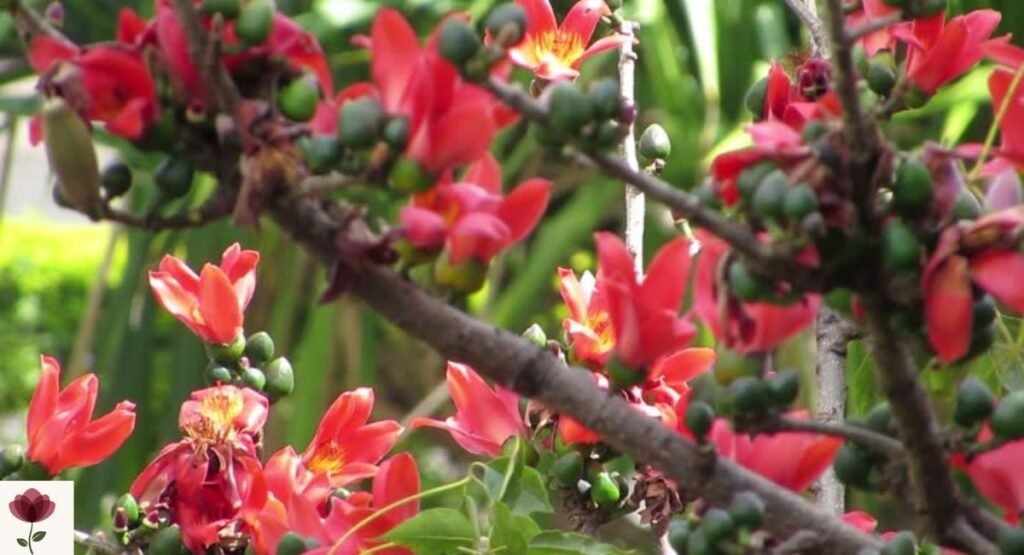
Silk floss tree (Ceiba speciosa) combines unusual bark, attractive foliage, and pink to reddish flowers. Its trunk may develop prominent spines and a swollen appearance with age, giving the tree interest even outside its flowering period.
This large ornamental needs sunlight and generous growing room. It works best where roots, branches, and the mature trunk can develop without crowding. A spacious lawn or open landscape is generally more appropriate than a narrow planting strip beside buildings or walkways.
6. Red Bottlebrush
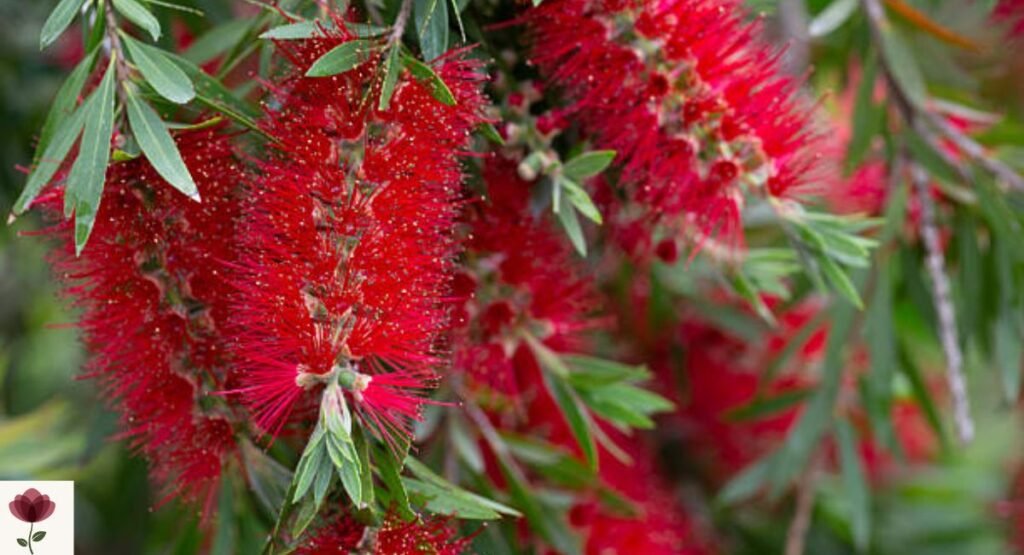
Red bottlebrush trees and shrubs are associated with the genus Callistemon and are especially useful when you want vivid red flower spikes with evergreen foliage. Their brush-like blossoms provide a distinctive appearance and can attract hummingbirds and other nectar-seeking wildlife.
Several bottlebrush types perform well in Florida, including forms suited to smaller landscapes. They generally appreciate full sun, drainage, and regular water while establishing. UF/IFAS lists bottlebrush among plants useful to hummingbirds, with some types flowering from spring into fall.
7. Red Crape Myrtle
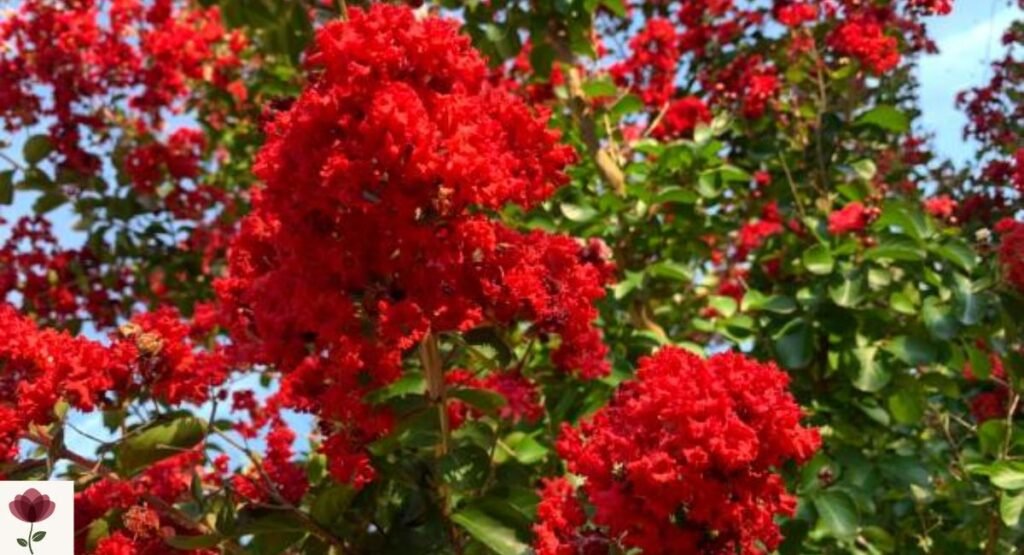
Red crape myrtle (Lagerstroemia indica) is a popular small flowering tree that can provide vivid red blooms during the warmer months. Its branching structure, colorful flowers, and attractive bark make it useful for residential landscapes where a large tropical canopy would be excessive.
Plant it in a sunny location with well-drained soil for strong flowering. Crape myrtles can work along driveways, lawns, borders, and other spaces where a smaller canopy is desirable. Avoid severe topping because Florida-Friendly Landscaping guidance recommends proper structural pruning instead.
8. Pomegranate Tree
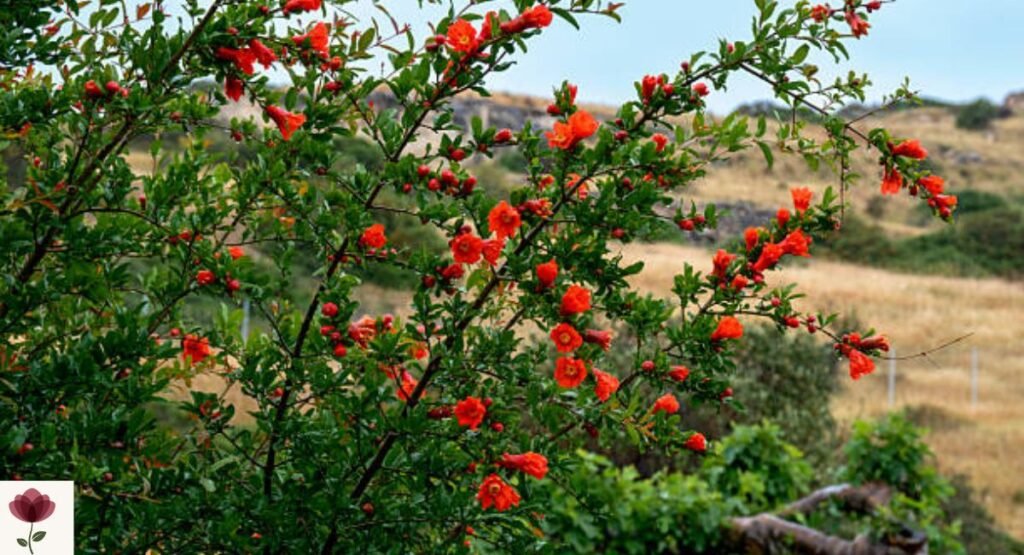
Pomegranate (Punica granatum) is a fascinating choice because its bright red-orange flowers can eventually develop into edible fruit. The tree has a naturally shrubby form and can be trained into a small tree, making it useful where you want both ornamental interest and a harvest.
Pomegranates generally appreciate full sun, good drainage, and relatively dry conditions once established. They are better suited to the northern part of Florida than some highly tropical species. Give them adequate air circulation and avoid poorly drained planting sites where persistent moisture can cause root problems.
9. Red Buckeye
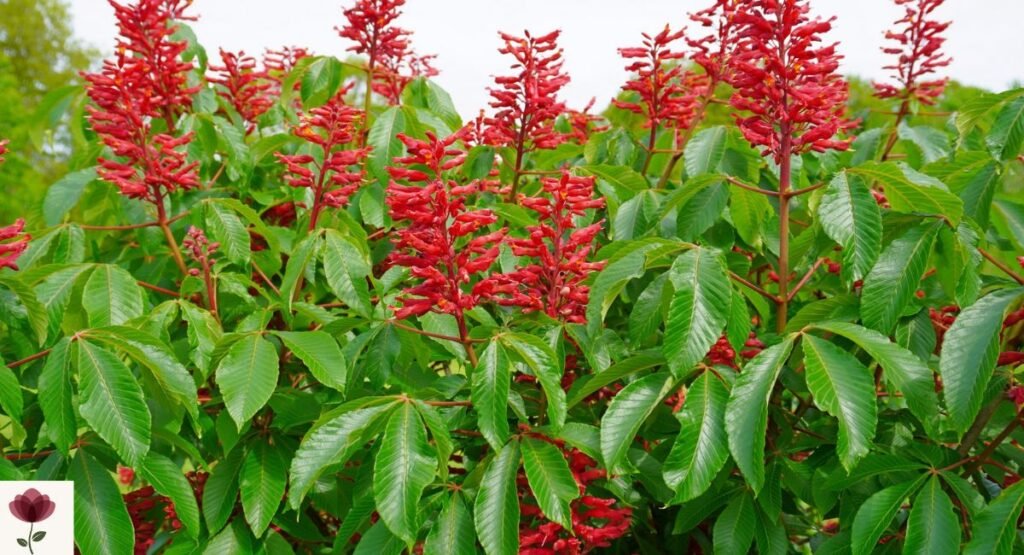
Red buckeye (Aesculus pavia) is a native southeastern tree recognized for its upright clusters of red tubular flowers. The blooms appear in spring and are particularly attractive to hummingbirds. Its native status also makes it an interesting choice for wildlife-oriented Florida landscapes.
Red buckeye generally performs better in North Florida than in the state’s hottest southern regions. It prefers moist, well-drained soil and can tolerate some shade, although flowering is usually stronger with suitable sunlight. UF/IFAS specifically notes that red buckeye is native and not recommended for South Florida.
10. Peregrina Tree
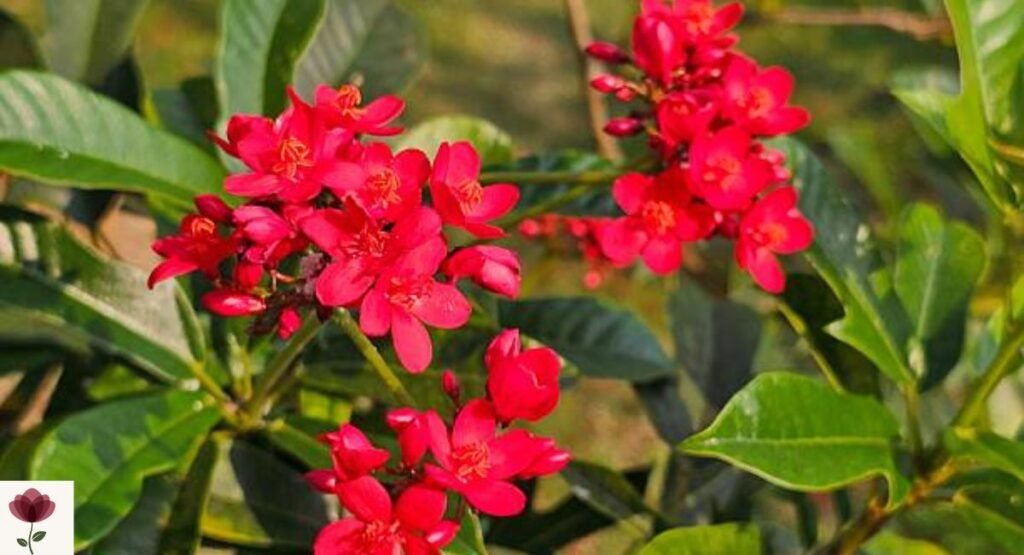
Peregrina (Jatropha integerrima) is a compact tropical ornamental that produces clusters of bright red or pinkish-red flowers. Its glossy foliage and rounded growth make it useful when you want strong color without planting a huge canopy tree.
This warm-climate species is particularly suitable for South Florida and other frost-protected areas. Give it full sun, fertile well-drained soil, and regular moisture during establishment. In suitable tropical conditions, it can flower repeatedly, helping maintain color through much of the year.
11. Red Hummingbird Tree
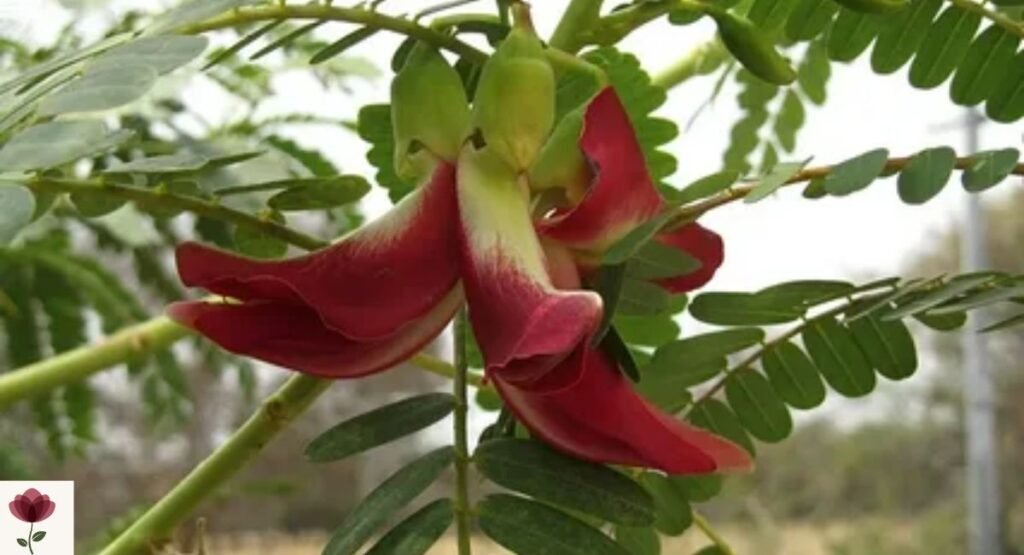
The red hummingbird tree (Sesbania grandiflora) is an unusual tropical species with large, pendulous flowers that can appear in red or other shades. Its blossoms have a distinctive shape and provide nectar that can attract hummingbirds.
Warmth and moisture encourage vigorous growth, making this species more suitable for southern Florida than areas exposed to hard freezes. Plant it in a sunny location with well-drained soil and enough space for its rapid growth. Protect young plants from cold weather when necessary.
12. Red Oleander
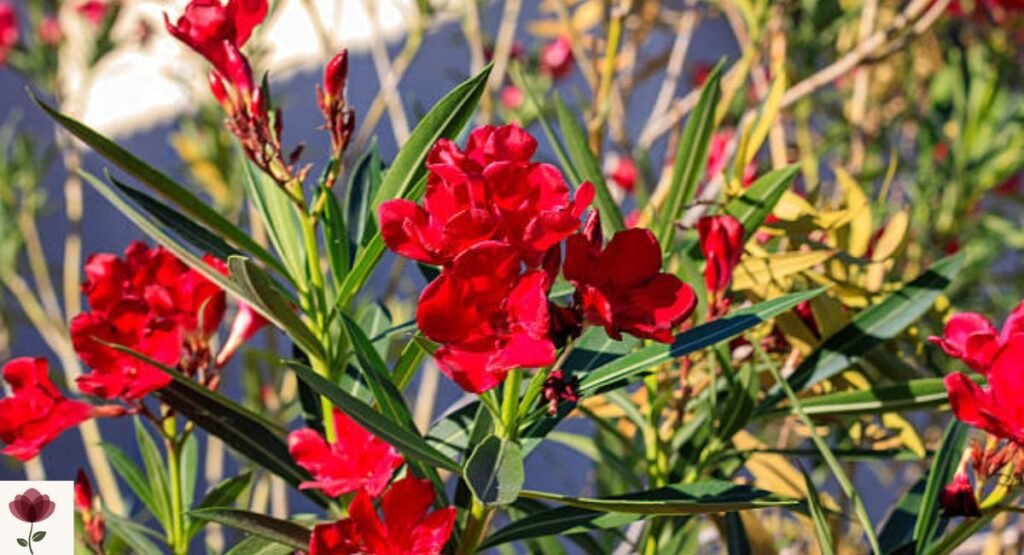
Red oleander (Nerium oleander) can be trained into a small tree and produces showy clusters of red flowers against narrow evergreen leaves. Its tolerance of heat, drought, and challenging conditions makes it familiar in many warm-climate landscapes.
It works well where you need a compact ornamental screen, border specimen, or trained tree. However, oleander is highly toxic if eaten, so placement deserves extra care around children and pets. Regular pruning can maintain its shape, but avoid excessive cutting that creates weak regrowth.
13. Red Powder Puff Tree
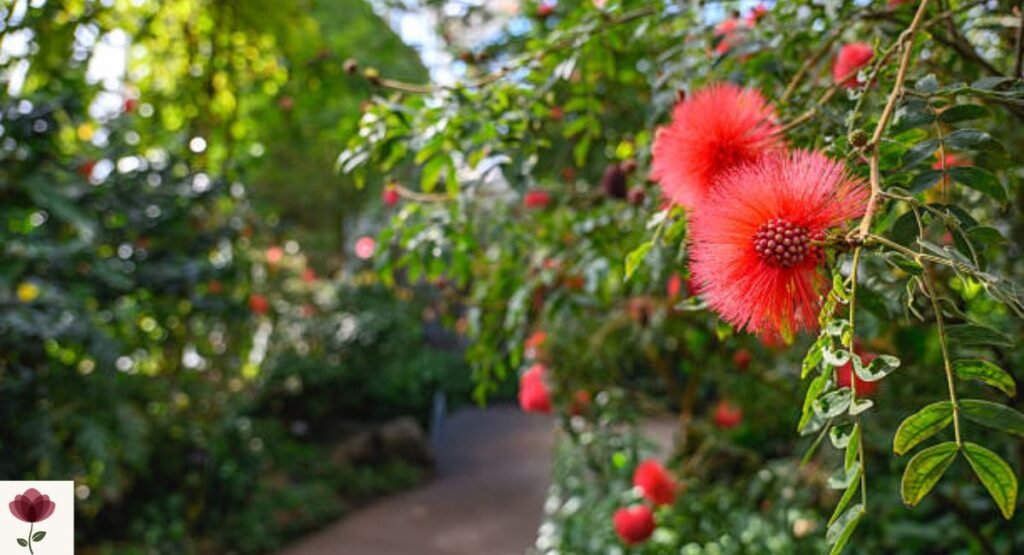
Red powder puff trees are tropical ornamentals recognized for soft, brush-like flower heads that can create an almost fluffy appearance. Depending on the species or cultivar, these plants may grow as shrubs or small trees, giving you flexibility in warmer Florida gardens.
They generally prefer full sun, warm temperatures, and well-drained soil. Their unusual flowers can bring a tropical character to patios, entry gardens, and mixed borders. In colder parts of Florida, frost protection may be necessary because many tropical powder puff types dislike freezing temperatures.
14. Red Jatropha

Red jatropha (Jatropha integerrima) is commonly grown as a shrub or trained small tree in tropical and subtropical landscapes. Its clusters of red flowers contrast nicely with its green foliage, creating long-lasting ornamental interest in warm conditions.
This heat-loving plant performs best with sunlight, drainage, and adequate room for its mature shape. It is particularly useful in South Florida landscapes where winter temperatures remain mild. Pruning can help maintain a tree-like form when you want to use it as a compact landscape specimen.
15. Red Tabebuia
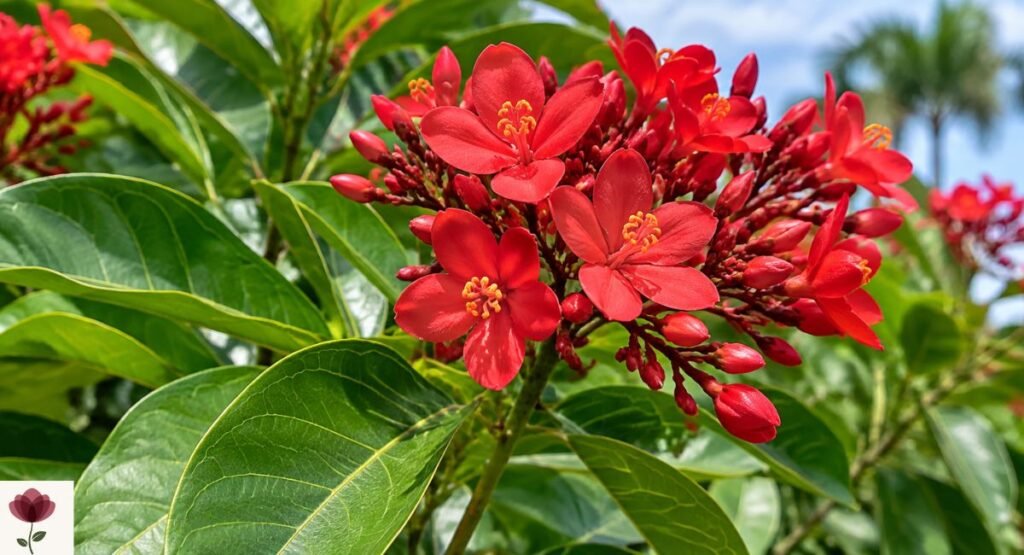
Red tabebuia is a name used for several tropical trumpet-tree selections and related species with colorful red, pink, or reddish flowers. These trees can create a dramatic seasonal display, particularly when flowers appear before or alongside new foliage.
They are generally better suited to warm areas of Florida, especially South Florida and protected Central Florida locations. Choose the exact species or cultivar carefully because mature size and cold tolerance vary. A sunny, well-drained planting site gives these ornamental trees the best opportunity to flower well.
Best Red Flowering Trees in North Florida
Trees That Handle Cooler Winters
North Florida has colder winter conditions than the southern part of the state. Trees such as red buckeye and pomegranate can be more practical choices here because they tolerate conditions that may challenge highly tropical species. Site protection can also make a difference.
Best Choices for North Florida Yards
For a North Florida yard, consider species that combine ornamental flowers with better tolerance of seasonal temperature changes. Red buckeye offers native wildlife value, while pomegranate provides both attractive flowers and fruit. Red crape myrtle can also work well where a smaller ornamental tree is needed.
Best Red Flowering Trees in Central Florida
Trees That Perform in Central Florida’s Growing Conditions
Central Florida occupies a useful middle ground between northern winters and southern tropical conditions. Many ornamental species can perform well here when planted in sunny, well-drained locations. Cold-sensitive trees may still need protection during unusual freezes.
Trees With Red Flowers in Central Florida
Red crape myrtle, bottlebrush, royal poinciana, and some tabebuia selections can suit Central Florida landscapes. Your exact location matters, especially around inland areas that experience colder nights. Always check mature size before placing a tree close to buildings or overhead utilities.
Best Red Flowering Trees in South Florida
Tropical Trees for Hotter Conditions
South Florida provides the warmth needed by many tropical flowering species. Royal poinciana, peregrina, red jatropha, powder puff trees, and other tropical ornamentals can thrive where winter freezes are less common. Coastal exposure can add another factor because salt and wind affect plant performance.
Small and Large Choices for South Florida
South Florida gives you plenty of options for both spacious yards and compact gardens. Royal poinciana can create a dramatic canopy, while peregrina and red jatropha offer smaller alternatives. Bottlebrush varieties can also provide colorful flowers without requiring the space of a giant tropical tree.
Red Flowering Trees in the Florida Keys
Heat-Loving Trees for the Keys
The Florida Keys provide exceptionally warm conditions compared with much of the state. Tropical flowering trees can therefore be particularly useful, provided the planting site offers suitable drainage and enough rooting space. Wind exposure remains an important consideration for trees in this region.
What to Consider Before Planting
Before planting in the Keys, consider salt exposure, soil conditions, wind, mature canopy size, and available rooting space. Trees need adequate underground room as well as space above ground. UF/IFAS notes that greater rooting space can improve tree performance and survival during strong winds.
Large Red Flowering Trees for Spacious Landscapes
Trees With Wide Canopies
Royal poinciana, African tulip tree, and other large tropical species can create impressive focal points in spacious landscapes. Their broad crowns provide shade and visual impact, but they also need careful placement. Don’t squeeze a large tree into a planting area designed for a small specimen.
Trees That Can Reach 30 Feet or More
Several red-flowering choices can eventually exceed 30 feet under favorable conditions. Mature height varies by species, climate, soil, and cultivation. When planning a large tree, consider both the final canopy and root zone instead of judging its space requirements by its nursery size.
Small Red Flowering Trees for Compact Yards
Trees for Patios, Borders, and Smaller Gardens
Compact choices can bring red flowers to smaller Florida yards without overwhelming the landscape. Red crape myrtle, peregrina, bottlebrush, and red jatropha can provide color where a huge canopy would be impractical. Their smaller stature also makes maintenance and placement easier.
Compact Trees That Still Produce Bright Red Flowers
A small tree doesn’t have to deliver a small visual impact. Bottlebrush creates striking brush-like flowers, while peregrina produces colorful clusters against glossy foliage. Choosing a compact species allows you to enjoy vivid blooms while leaving room for pathways, patios, and other garden features.
Best Trees for Small Yards
Small yards benefit from trees with manageable mature dimensions and predictable growth habits. Bottlebrush, red crape myrtle, peregrina, and red jatropha can provide ornamental color without demanding the footprint of a giant canopy tree. Always check the mature spread before planting.
Best Trees for Large Yards
Large properties give you more freedom to use broad-canopy species such as royal poinciana and African tulip tree. These trees can become major landscape features and provide substantial shade. Their ultimate dimensions make careful spacing essential, especially near buildings, driveways, and utility lines.
Best Trees for Coastal Florida
Coastal landscapes require more than attractive flowers. Salt exposure, wind, sandy soil, and drainage can all influence tree selection. Some bottlebrush types and other adaptable ornamentals can work in coastal settings, but exposure varies considerably. Choose species according to the specific conditions of your property.
Best Trees for Pollinator-Friendly Gardens
Red-flowering trees can contribute nectar and visual interest to wildlife gardens. Bottlebrush and red buckeye are particularly notable because their flowers can attract hummingbirds and other pollinators. Combining flowering trees with additional nectar plants can create a more useful habitat than relying on one species alone.
When Do Red Flowering Trees Bloom in Florida?
Florida’s long growing season allows different trees to flower at different times. Some begin blooming during spring, while tropical species may produce flowers during summer or repeat flowering when conditions remain favorable. Weather, sunlight, rainfall, and tree maturity can all influence the exact timing.
Spring-Blooming Red Trees
Red buckeye produces its red flower clusters during spring, while bottlebrush can also begin flowering during this period. Other species may start their seasonal display as temperatures rise. Spring is therefore an important period for red blooms across several parts of Florida.
Summer-Blooming Red Trees
Royal poinciana is one of the better-known summer-color trees, with flowering that can continue beyond spring. Red crape myrtle also brings strong summer interest. Tropical species may continue flowering when warm temperatures, sunlight, and moisture remain favorable.
Trees With Long or Repeated Blooming
Some tropical ornamentals can produce flowers repeatedly rather than following one short bloom period. Peregrina and jatropha are examples of warm-climate plants that may flower repeatedly under suitable conditions. In cooler areas, however, flowering can become more seasonal.
How to Grow and Care for Red Flowering Trees in Florida
Sunlight Requirements
Most red-flowering trees produce better displays when they receive adequate direct sunlight. Before planting, observe how much sun the location receives throughout the day. Trees shaded by buildings or dense canopies may produce fewer flowers and weaker growth.
Soil and Drainage
Well-drained soil is important for many ornamental trees. Florida properties can have very different soil conditions, including sandy soils, compacted areas, and locations with poor drainage. UF/IFAS recommends evaluating drainage, soil pH, rooting depth, salinity, and available rooting space before selecting a tree.
Watering New and Established Trees
Newly planted trees need consistent moisture while their roots become established. Once established, watering needs depend on the species, soil, rainfall, and season. Avoid keeping the root zone constantly saturated because prolonged waterlogging can create serious root problems.
Pruning and Maintaining Tree Shape
Pruning should support a strong structure rather than simply reduce the tree’s height. Remove damaged, crossing, or poorly positioned branches when appropriate. Florida-Friendly Landscaping guidance discourages topping and other severe pruning methods that can create weak growth and long-term structural problems.
Cold and Frost Protection
Cold sensitivity becomes especially important when growing tropical trees in North or Central Florida. Young trees are generally more vulnerable than established specimens. During unusual cold events, protecting sensitive plants and choosing sheltered planting locations can reduce frost damage.
Red Flowering Trees at a Glance
| Tree | Approx. Size | Best Florida Region | Bloom Type/Color | Landscape Use |
| Royal Poinciana | Large | Central & South | Scarlet, orange-red clusters | Shade tree, specimen |
| African Tulip Tree | Large | South & warm Central | Orange-red, cup-shaped | Tropical specimen |
| Red Flowering Gum | Large | Central & South | Red flower clusters | Ornamental specimen |
| Coral Tree | Medium–Large | Central & South | Bright red flowers | Tropical landscape |
| Silk Floss Tree | Large | Central & South | Pink-red flowers | Specimen tree |
| Red Bottlebrush | Small–Medium | Most warm areas | Bright red brush-like spikes | Small yard, wildlife garden |
| Red Crape Myrtle | Small–Medium | North, Central & South | Red flower clusters | Residential landscape |
| Pomegranate | Small | North & Central | Red-orange flowers | Fruit and ornamental tree |
| Red Buckeye | Small–Medium | North Florida | Red tubular clusters | Native wildlife garden |
| Peregrina | Small | South Florida | Red flower clusters | Borders, specimen |
| Red Hummingbird Tree | Small–Medium | South Florida | Red pendulous flowers | Tropical garden |
| Red Oleander | Small–Medium | Central & South | Red flower clusters | Screen, specimen |
| Red Powder Puff | Small–Medium | South Florida | Soft red flower heads | Tropical garden |
| Red Jatropha | Small | South Florida | Bright red clusters | Small landscape |
| Red Tabebuia | Medium | South & warm Central | Red or reddish trumpet flowers | Seasonal specimen |
Conclusion
Choosing Trees With Red Flowers in Florida starts with your location, available space, and growing conditions. Large trees such as royal poinciana can create dramatic canopies, while bottlebrush, peregrina, and red crape myrtle suit more compact landscapes. North Florida favors more cold-tolerant choices, while South Florida opens the door to many tropical species.
Before planting, check mature height, canopy spread, sunlight, soil drainage, and frost tolerance. A beautiful tree also needs the right location to thrive. When you match the species to your Florida region and landscape, those vibrant red blooms can become a lasting feature rather than a short-lived garden experiment.
FAQs
What is the most common red flowering tree in Florida?
Royal poinciana is one of Florida’s most recognizable tropical trees, especially in Central and South Florida. Its broad canopy and vivid red-orange flowers make it highly noticeable.
What trees in Florida have bright red flowers?
Florida has several options, including royal poinciana, red bottlebrush, red buckeye, peregrina, red jatropha, coral trees, and some tabebuia selections.
What is the best large red flowering tree in Florida?
Large choices include royal poinciana, African tulip tree, red flowering gum, and silk floss tree. The right selection depends on region, mature size, soil, and available space.
What is a good small tree with red flowers in Florida?
Red bottlebrush, red crape myrtle, peregrina, and red jatropha can work well for smaller landscapes. Their mature size is easier to manage than large tropical canopy trees.
Which red flowering trees grow best in South Florida?
South Florida’s warm conditions support many tropical choices, including royal poinciana, peregrina, red jatropha, powder puff trees, bottlebrush, and several other warm-climate ornamentals.

Welcome to PetalNexa! I’m Anam Sattar, an AI-powered SEO Specialist and Content Writer with over 4 years of experience in creating high-quality, search-optimized content. I help businesses improve their search engine rankings, increase organic traffic, and build beautiful, user-friendly websites. My mission is to make SEO, content creation, and web design simple, effective, and accessible for everyone. Let’s grow your online presence and achieve success together!
1 thought on “15 Trees With Red Flowers in Florida: Large, Small & Regional Varieties”