

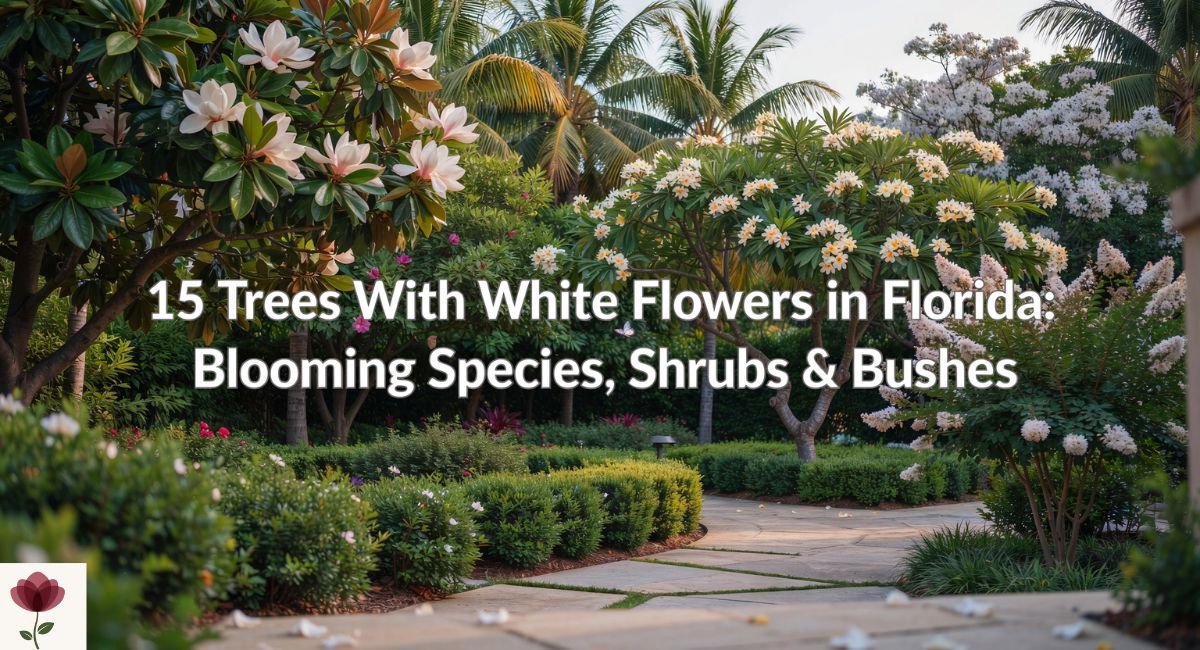
Looking for Trees With White Flowers in Florida can turn a plain yard into a bright, inviting landscape. Florida’s warm weather supports many beautiful species, from fragrant magnolias to compact gardenias and native trees. Some thrive in full sun, while others prefer partial shade or filtered light. Blooming times also vary across North, Central, and South Florida because temperatures and growing conditions differ. You’ll find choices for large lawns, small gardens, coastal properties, and wildlife-friendly spaces.
Many white flowering trees also offer fragrance, evergreen foliage, or seasonal interest. Before planting, consider mature size, soil drainage, sunlight, and cold tolerance. With the right selection, Florida flowering trees can provide striking blooms and lasting beauty.
15 Trees With White Flowers in Florida
Choosing among trees with white flowers in Florida becomes easier when you know how each species behaves. Mature size, bloom timing, fragrance, drought tolerance, and sunlight needs can vary widely.
The following selections include ornamental trees, native species, small landscape plants, and warm-climate options. Some can also grow as shrubs or multi-stemmed plants.
1. Frangipani
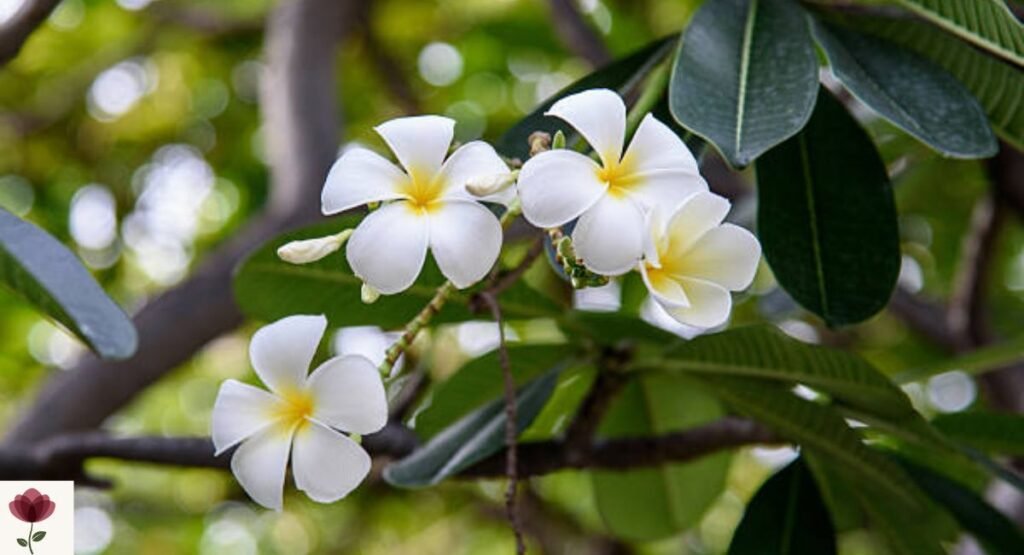
Frangipani, also called plumeria, brings a distinctly tropical look to Florida landscapes. Its waxy white blooms often carry a sweet fragrance. It prefers full sun, warm temperatures, and sharply drained soil.
This tree works especially well in Central and South Florida. Cold weather can damage its tender growth, so colder areas need extra care. Its sculptural branches also make it attractive even outside bloom time.
2. Southern Magnolia
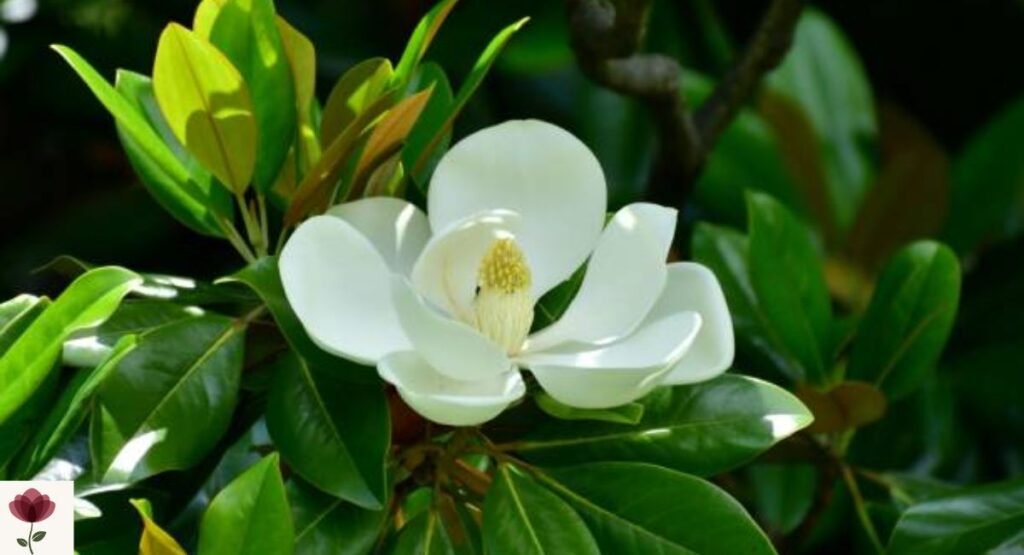
Southern magnolia is one of Florida’s most recognizable native flowering trees. Its huge creamy-white flowers can measure several inches across and release a rich fragrance. The glossy evergreen leaves provide year-round structure.
It can become a large tree, so give it plenty of room. Southern magnolia suits sunny landscapes, parks, broad lawns, and spacious residential properties. UF/IFAS also lists it as a native tree with showy, fragrant flowers.
3. Gardenia Tree
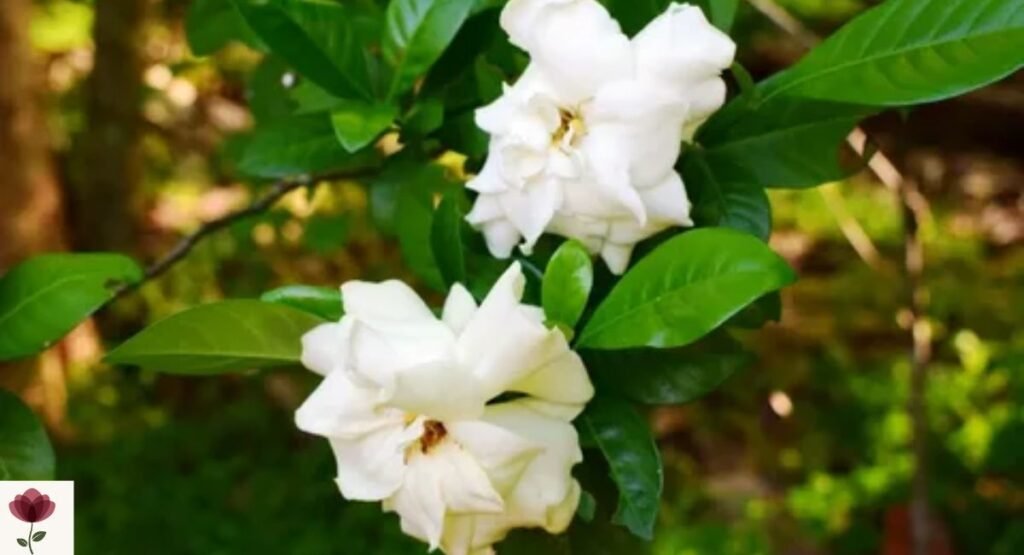
A gardenia tree offers a smaller alternative when you want fragrant white flowers near your home. Its dark glossy leaves create a striking contrast with the blooms. Several cultivars vary in size, flowering time, and flower form.
Gardenias prefer acidic, well-drained soil and good light. Place one near a patio, doorway, or window where you can enjoy its perfume. UF/IFAS notes that Florida cultivars can flower at different times and some compact forms remain quite small.
4. White Bottlebrush
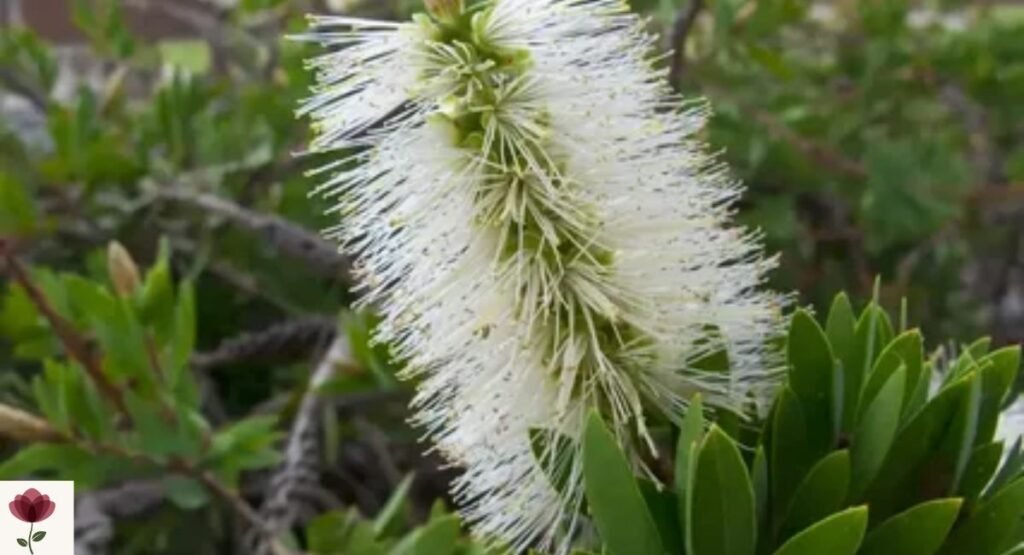
White bottlebrush produces unusual flowers that resemble soft brushes. The blooms stand out against narrow foliage and can add a distinctive texture to a warm-climate garden. The plant also provides useful nectar for visiting wildlife.
Give it plenty of sunlight and avoid constantly wet soil. It works well as a specimen, informal screen, or accent planting. Its unusual bloom shape makes it a conversation starter rather than another ordinary landscape tree.
5. Tabebuia Tree
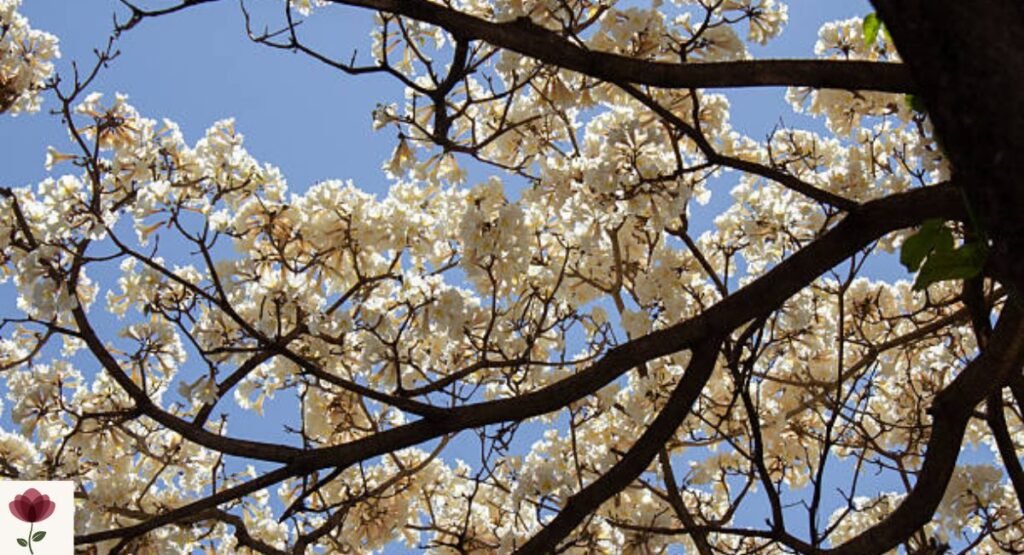
Tabebuia trees are famous for dramatic seasonal displays. White-flowering selections can cover their branches with pale blossoms before or around new foliage. The effect can make the tree look almost snow-covered.
These ornamental trees prefer strong sunlight and good drainage. They work nicely along streets, lawns, entrances, and larger garden beds. Always check the specific cultivar because mature size and cold tolerance can differ considerably.
6. Bridalveil Tree
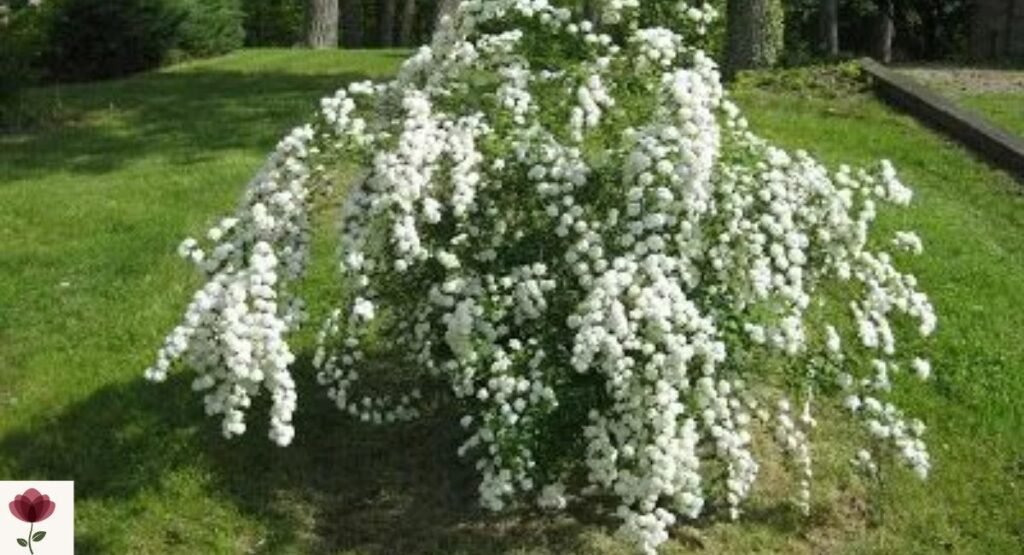
The bridalveil tree earns its name from its graceful appearance. Its branches can create a cascading silhouette while small white flowers brighten the canopy. The effect is especially attractive when the plant has enough room to spread naturally.
Choose a location where the drooping branches won’t obstruct paths. A sunny or lightly shaded position with good drainage can help maintain healthy growth. It works best as a decorative focal point rather than a tightly packed foundation plant.
7. Crape Myrtle ‘Natchez’
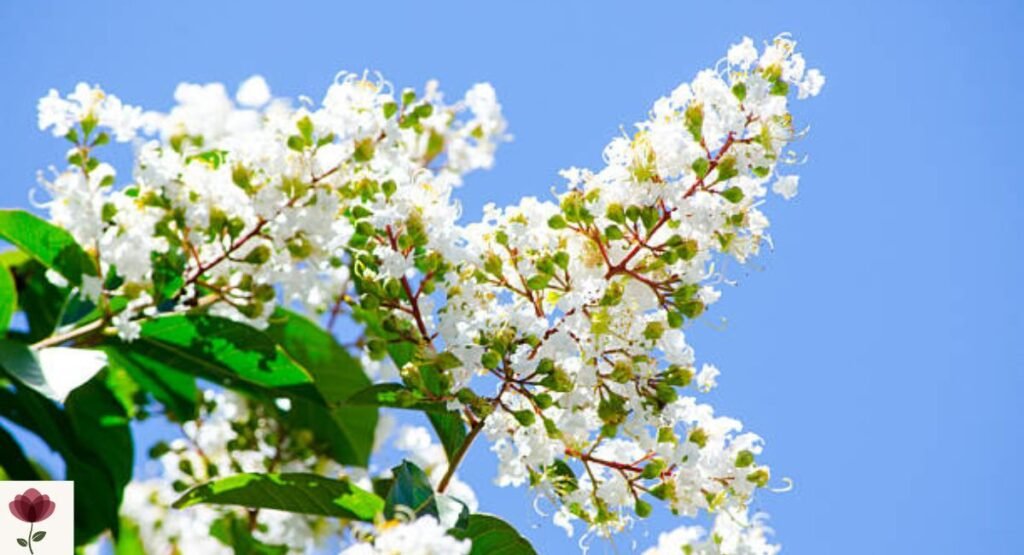
‘Natchez’ crape myrtle is an excellent choice for a sunny Florida landscape. It produces pure white flower clusters during the warm growing season and can tolerate heat and drought once established.
The cultivar can become a sizeable tree, so plan for its mature dimensions. UF/IFAS describes ‘Natchez’ as a white-flowering hybrid with strong performance and notes that crape myrtles generally prefer sunny, well-drained locations.
8. Sweet Acacia
Sweet acacia produces small, pale, highly fragrant flowers that can fill the surrounding air with a pleasant scent. Its fine foliage gives the plant a light, airy appearance, although its branches can carry thorns.
This species handles sunny, warm conditions well. It can suit dry areas where other plants struggle. Because of its thorny growth, however, keep it away from busy walkways and play areas.
9. White Orchid Tree
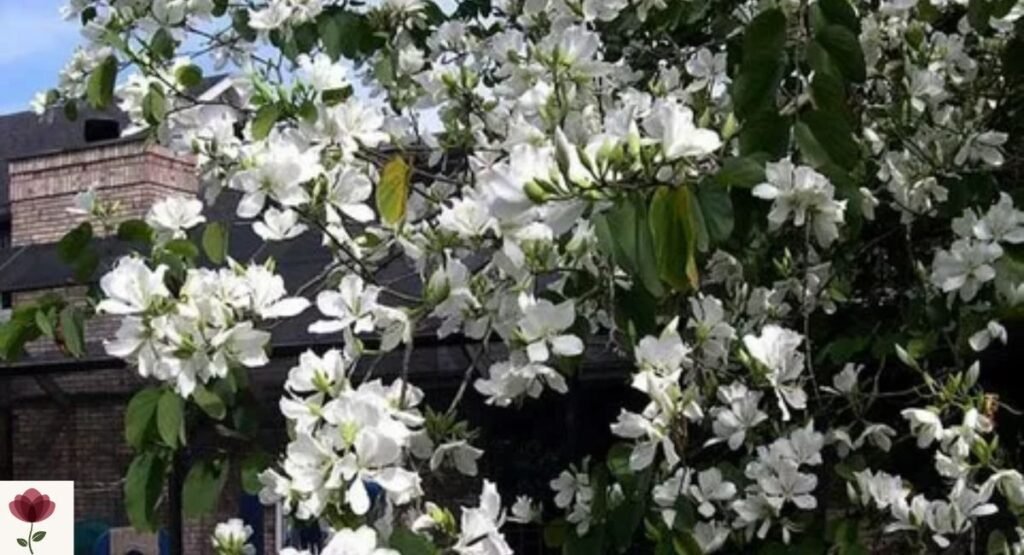
White orchid tree produces flowers that resemble delicate orchids. Its broad canopy gives it a tropical character that fits beautifully into warmer Florida gardens. The blooms can become a major seasonal attraction.
Provide plenty of sunlight and well-drained soil. It needs adequate room for its canopy to develop. This choice works especially well in South Florida and other areas where freezing temperatures are uncommon.
10. Japanese Privet Tree
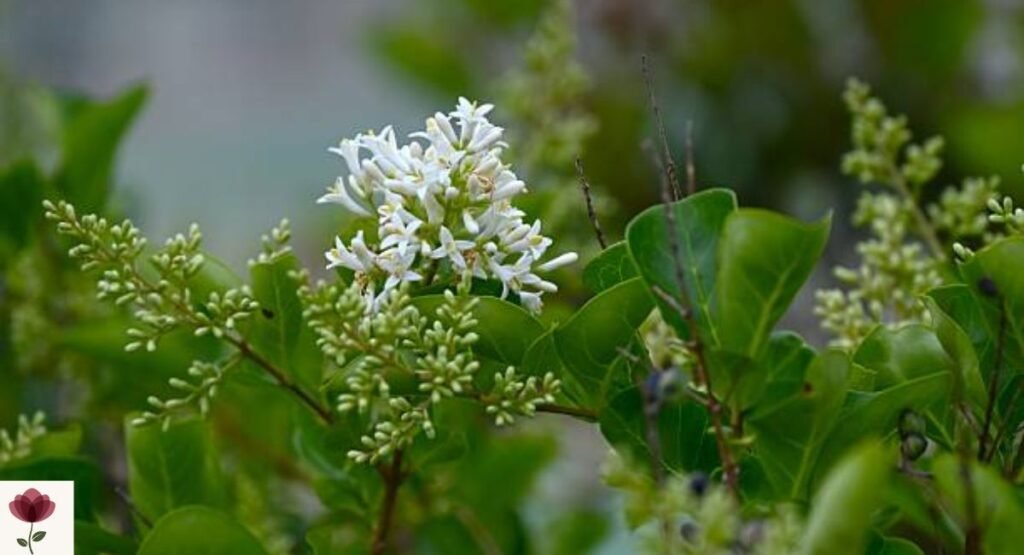
Japanese privet can develop into a small tree or large, dense shrub. Its clusters of small white flowers appear against evergreen foliage, creating a useful combination of bloom and year-round greenery.
It can work well where you need screening or a compact landscape specimen. Regular shaping may be needed if you want a neat form. Good drainage and adequate sunlight help maintain vigorous growth.
11. Powderpuff Tree
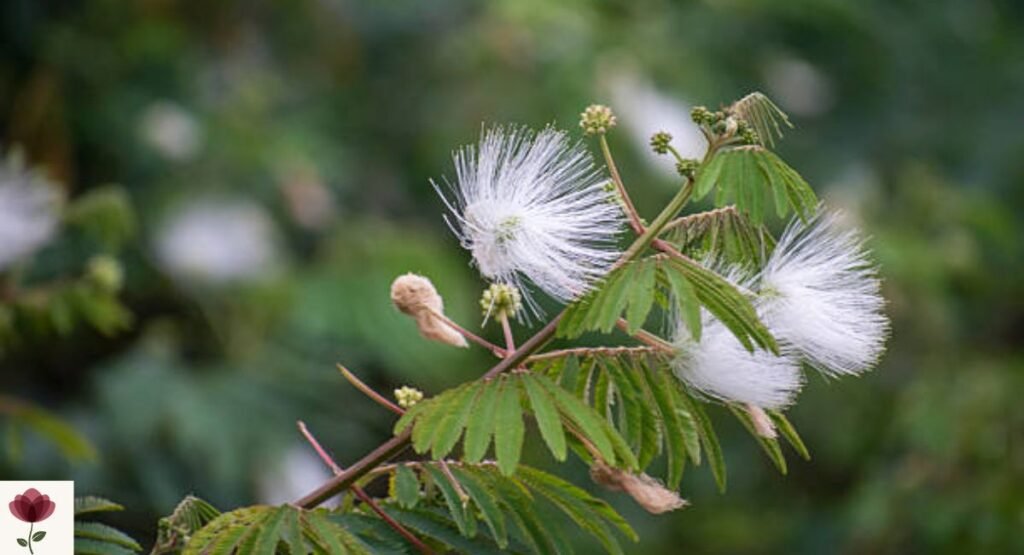
Powderpuff trees bring a soft, tropical appearance to Florida gardens. Their rounded white flower clusters look like tiny cotton puffs. These blooms can attract pollinating insects while adding strong visual interest.
Plant this species where it has room to develop. It prefers warm conditions, sunlight, and well-drained soil. In a pollinator garden, its flowers can become an attractive food source while its foliage adds useful structure.
12. Wild Coffee
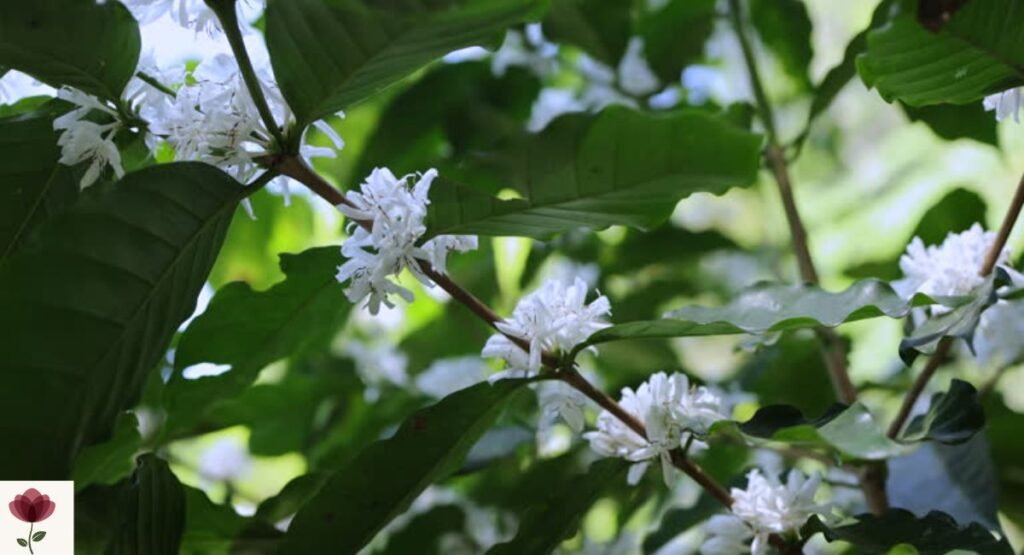
Wild coffee is a valuable Florida native that works especially well in naturalistic landscapes. Its small white flowers are followed by colorful berries that can provide food for wildlife.
Unlike many sun-loving ornamentals, wild coffee handles shade well. It can grow beneath taller trees and works nicely in native plant gardens. Its evergreen foliage also provides year-round texture and habitat value.
13. Walter’s Viburnum
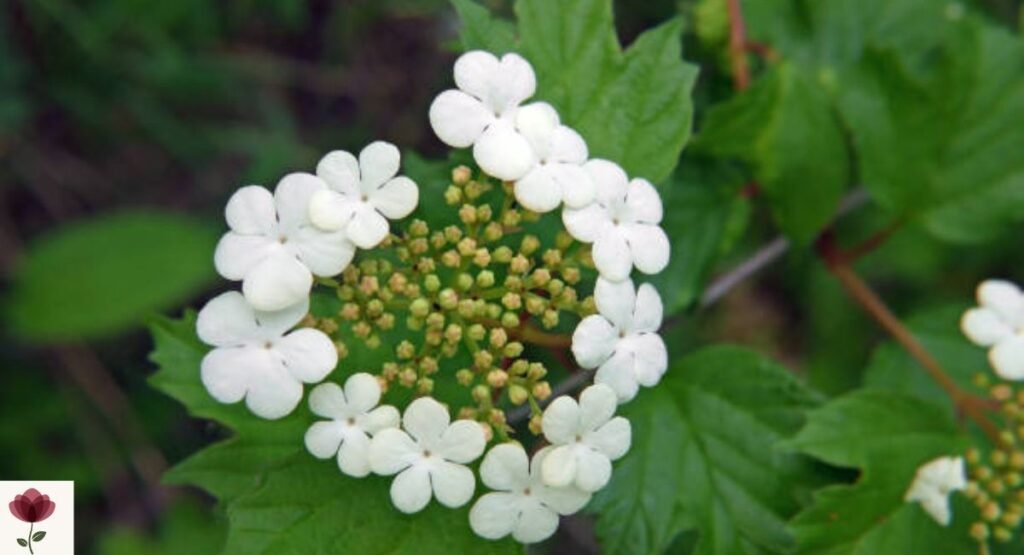
Walter’s viburnum is a Florida native that can grow as either a small tree or a large shrub. Spring brings clusters of tiny white flowers that attract butterflies and other pollinators.
Later, its fruit can attract birds and other wildlife. It also responds well to pruning, making it useful for hedges and screens. UF/IFAS describes it as a versatile Florida landscape plant with strong wildlife value.
14. Simpson’s Stopper
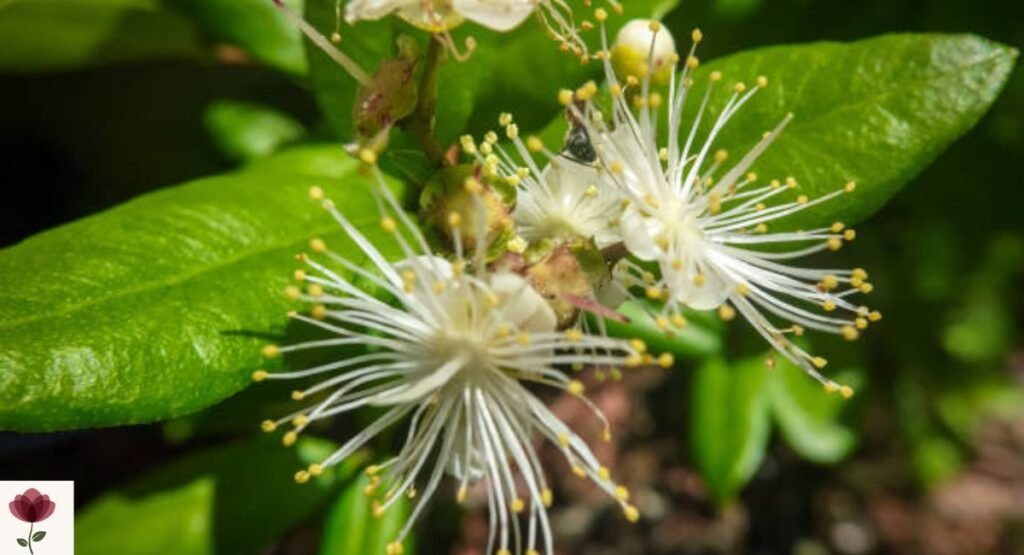
Simpson’s stopper is another excellent native choice for Florida. Its small, puffy white flowers contrast beautifully with dense green foliage. After flowering, bright orange berries can attract birds.
The plant can grow as a large shrub or small tree. It tolerates full sun to partial shade and has good salt tolerance. UF/IFAS lists it among attractive native plants for South Florida landscapes.
15. Yaupon Holly
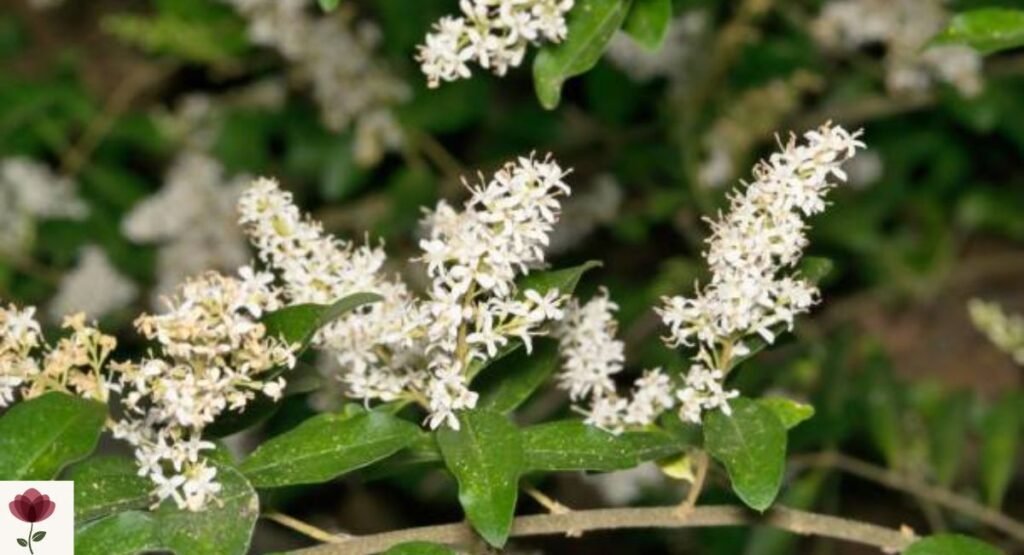
Yaupon holly offers evergreen foliage, small spring flowers, and valuable wildlife benefits. It can adapt to several landscape situations, making it useful when you want a dependable native plant rather than a delicate ornamental.
Its mature form can vary with pruning and cultivar. Use it as a specimen, screen, or foundation planting. It can also work in coastal landscapes where exposure and changing conditions make plant selection more challenging.
Best White-Flowering Trees for Florida by Growing Conditions
Your yard’s growing conditions should guide the decision. A beautiful species can struggle if you place it in the wrong soil or sunlight.
For example, a sunny property may suit crape myrtle, while a partly shaded garden can favor Walter’s viburnum. Coastal sites need tougher selections that tolerate wind and salt exposure.
| Growing Condition | Recommended Choice | Main Benefit |
| Full Sun | Crape Myrtle | Summer blooms |
| Partial Shade | Walter’s Viburnum | Shade tolerance |
| Coastal Areas | Yaupon Holly | Salt tolerance |
| Small Yard | Gardenia Tree | Compact growth |
| Large Landscape | Southern Magnolia | Broad canopy |
| Pollinator Garden | Powderpuff Tree | Wildlife attraction |
White Flowering Trees vs Shrubs in Florida
The difference often comes down to structure and mature form. A true tree usually develops a stronger trunk and taller canopy. A shrub generally stays shorter and produces several stems from the base.
However, nature doesn’t always follow neat labels. Walter’s viburnum, Simpson’s stopper, and gardenia can take tree-like or shrub-like forms. Your pruning style can also change the final shape.
White Flowering Bushes and Shrubs in Florida
Not every yard has room for a towering magnolia. White flowering bushes in Florida can provide the same bright color while taking up much less vertical space.
Shrubs also work well beside patios, fences, walkways, and foundations. They’re especially useful when you want fragrance or privacy without creating a massive canopy.
Gardenia
Gardenia remains a favorite because its fragrant white blooms and glossy foliage work beautifully near living spaces. Some cultivars stay compact, while others become larger landscape specimens.
Florida gardeners have many choices. UF/IFAS lists cultivars with different bloom periods and sizes, including compact forms suitable for smaller spaces.
Viburnum
Viburnum offers dense growth and clusters of small white blossoms. Walter’s viburnum is particularly valuable because it’s native to Florida and supports pollinators and birds.
It can become a hedge, screen, shrub, or small tree. That flexibility makes it one of the more useful white flowering shrubs in Florida for homeowners seeking wildlife value.
Oleander
White-flowering oleander can tolerate heat and dry conditions once established. Its long flowering period makes it popular in warm landscapes, especially where a tough ornamental is needed.
However, oleander is toxic if eaten. Keep it away from areas where children or pets may chew plant material. Its toughness should never outweigh basic safety around the home.
When Do White-Blooming Trees Flower in Florida?
Florida doesn’t have one universal flowering calendar. North Florida experiences cooler winters, while South Florida remains warm for much longer. As a result, the same species can bloom at different times.
Spring brings many white blossoms, while summer favors species such as sweetbay magnolia and crape myrtle. Sweetbay magnolia, for example, can produce creamy-white, lemon-scented flowers from June through September.
| Season | Typical Blooming Activity | Examples |
| Spring | Strong flowering period | Viburnum, gardenia, native species |
| Summer | Heat-loving bloomers | Crape myrtle, sweetbay magnolia |
| Fall | Continued blooms in warm areas | Gardenia and selected tropical plants |
| Winter | Limited outdoor flowering | Warm-climate shrubs and tropical species |
Where to Plant These Trees
The planting site can make or break a flowering tree. Consider the mature canopy before putting a young plant into the ground. A small nursery tree can eventually become a major landscape feature.
Check overhead wires, buildings, driveways, septic areas, sidewalks, and underground utilities. Good spacing also improves airflow and reduces some disease problems.
Full Sun Locations
Full sun suits many white-flowering trees because strong light supports healthy foliage and flowering. Crape myrtle is a classic example. It performs best in sunny, well-drained locations and generally needs little pruning when properly planted.
Open lawns, broad garden beds, and sunny driveways can provide excellent locations. Just remember that afternoon heat can increase soil moisture loss, especially during Florida’s hottest months.
Part Shade Areas
Part shade is useful for plants that dislike intense afternoon heat or naturally grow beneath larger vegetation. Walter’s viburnum and wild coffee are good examples of plants that can handle reduced sunlight.
Filtered light can also work well beneath open tree canopies. Avoid dense shade, though, if you want abundant flowering. Too little light often means more foliage and fewer blossoms.
Coastal Florida
Coastal landscapes need plants that can tolerate heat, wind, sandy conditions, and occasional salt exposure. Yaupon holly and Simpson’s stopper are useful native choices in suitable locations.
Even salt-tolerant plants need sensible placement. Direct ocean spray can be much harsher than ordinary coastal air. A sheltered planting position can improve long-term growth and appearance.
How to Care for White-Flowering Trees in Florida
Good care begins with correct planting. Water newly planted trees thoroughly and keep the root zone evenly moist while roots establish. Avoid leaving the soil constantly saturated because poor drainage can damage roots.
Mulch can help conserve moisture and moderate soil temperature. Keep mulch away from the trunk itself. Prune with a purpose rather than cutting branches simply to make the tree smaller.
Fertilize according to the species and soil conditions. Overfeeding can create lush foliage without improving flowering. For example, crape myrtle generally needs little pruning when planted correctly, according to UF/IFAS guidance.
Common Problems With White-Flowering Trees
Yellow leaves often signal a root, watering, nutrient, or soil-pH problem. Before adding fertilizer, check drainage and moisture. A plant with damaged roots cannot use nutrients efficiently.
Poor flowering may come from excessive shade, immature growth, incorrect pruning, drought stress, or unsuitable temperatures. Fungal diseases can also appear when foliage stays wet and airflow remains poor. Crape myrtle, for example, can develop powdery mildew under favorable conditions.
| Problem | Possible Cause | First Step |
| Yellow leaves | Poor drainage or nutrient stress | Check soil moisture |
| Few flowers | Too much shade | Improve light exposure |
| Root damage | Constantly wet soil | Improve drainage |
| Powdery growth | Fungal disease | Improve airflow |
| Wilting | Drought or root problems | Check moisture and roots |
| Weak growth | Poor planting conditions | Review soil and sunlight |
Conclusion
The best Trees With White Flowers in Florida depend on your space, climate, sunlight, and soil. Southern magnolia offers grandeur, while crape myrtle delivers long summer color. Gardenia adds fragrance, and native choices such as Walter’s viburnum support local wildlife.
Before planting, think beyond the first bloom. Check mature size, drainage, cold tolerance, maintenance, and nearby structures. With the right match, white blossoms can brighten your Florida landscape and create a beautiful seasonal display for years.
FAQs
What is the best tree with white flowers for Florida?
Southern magnolia is an excellent large choice, while crape myrtle suits sunny spaces. Gardenia works better when you want fragrance and a smaller form. The best choice depends on your yard size and region.
What trees bloom white all year in Florida?
Few trees bloom continuously throughout the entire year. However, warm Florida conditions can extend flowering in some tropical plants. Gardenia and certain warm-climate ornamentals may produce flowers over long periods.
What are the best small white-flowering trees for Florida?
Gardenia, Walter’s viburnum, Simpson’s stopper, and smaller crape myrtle cultivars can work well in limited spaces. Always check the mature size before planting.
What shrubs have white flowers in Florida?
Gardenia, viburnum, oleander, and several Florida-friendly shrubs can produce white blooms. Gardenia is especially useful when fragrance is a priority.
What Florida native trees have white flowers?
Southern magnolia, sweetbay magnolia, Walter’s viburnum, and Simpson’s stopper are useful native choices. Sweetbay magnolia also handles moist, acidic sites particularly well.

Welcome to PetalNexa! I’m Anam Sattar, an AI-powered SEO Specialist and Content Writer with over 4 years of experience in creating high-quality, search-optimized content. I help businesses improve their search engine rankings, increase organic traffic, and build beautiful, user-friendly websites. My mission is to make SEO, content creation, and web design simple, effective, and accessible for everyone. Let’s grow your online presence and achieve success together!