


Florida gardens can burst with color when the right trees and shrubs are planted. Pink flowering trees in Florida bring soft, cheerful color to yards, patios, streets, and larger landscapes. From delicate spring blossoms to vivid summer displays, these plants offer something for nearly every region. Some thrive in North Florida’s cooler conditions while others prefer South Florida’s warm, tropical climate. You’ll also find compact bushes and shrubs that work beautifully in smaller spaces.
Choosing the right plant depends on sunlight, soil, drainage, mature size, and USDA hardiness zone. In this guide, you’ll discover 20 beautiful options, including pink flowering shrubs, tropical trees, tree-form plants, and colorful choices suited to different Florida landscapes.
20 Pink Flowering Trees in Florida
Florida’s climate changes considerably from north to south. That difference matters when choosing a flowering plant. Eastern redbud handles cooler conditions better while tropical selections prefer warmer areas. UF/IFAS notes that Florida’s redbud performs across varied soils and light conditions.
The plants below include true trees, shrubs, and tree-form selections. This distinction matters because a naturally growing tree usually develops a different canopy and root structure than a shrub trained onto one trunk.
1. Eastern Redbud
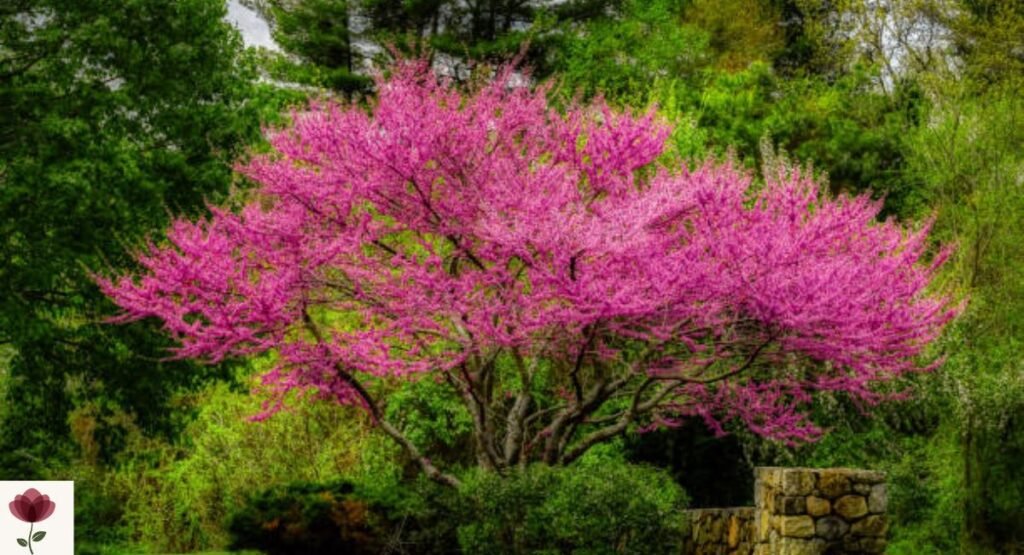
Eastern Redbud produces clusters of pink-lavender blooms before its heart-shaped leaves appear. Its main display arrives in early spring, often around March or April in Florida. It suits North Florida particularly well and can grow in full sun or partial shade. UF/IFAS lists mature heights around 20–30 feet.
The tree prefers light, rich, moist soil but adapts surprisingly well. It can tolerate sandy and alkaline conditions once established. Its bare branches make the spring display especially striking. Bees, butterflies, and birds can also benefit from this native species.
2. Jacaranda
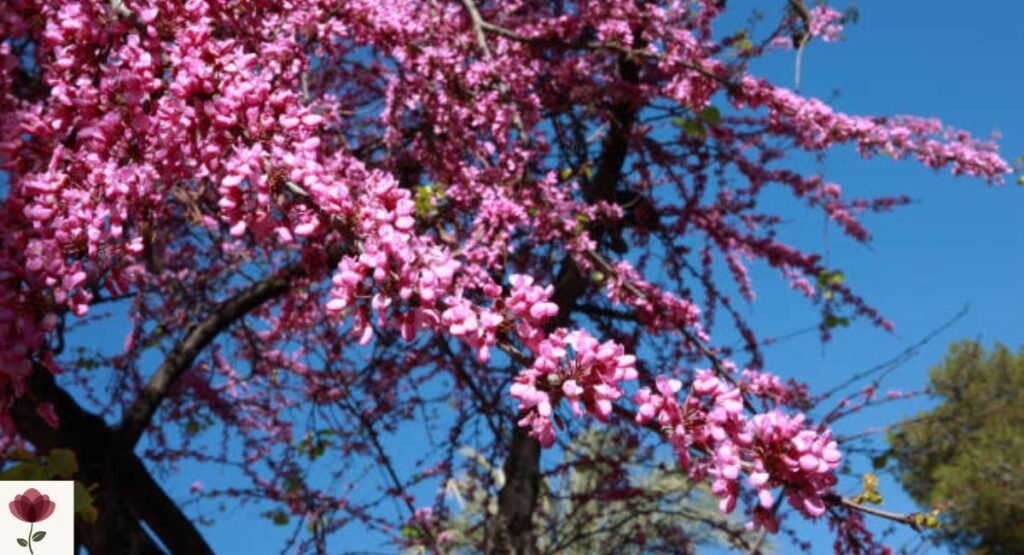
Jacaranda creates a dramatic canopy covered with violet, lavender, purple, and sometimes pinkish blooms. It performs best in warm parts of Florida and suits USDA Zones 9B–11. The tree enjoys full sun, sandy soil, and excellent drainage. Its flowering period commonly occurs during spring and summer.
Its fern-like foliage creates attractive filtered shade. However, Jacaranda is deciduous and drops leaves and flowers seasonally. Give it plenty of room because mature trees can become quite broad. Avoid planting it where falling debris would constantly land in a pool.
3. Crape Myrtle
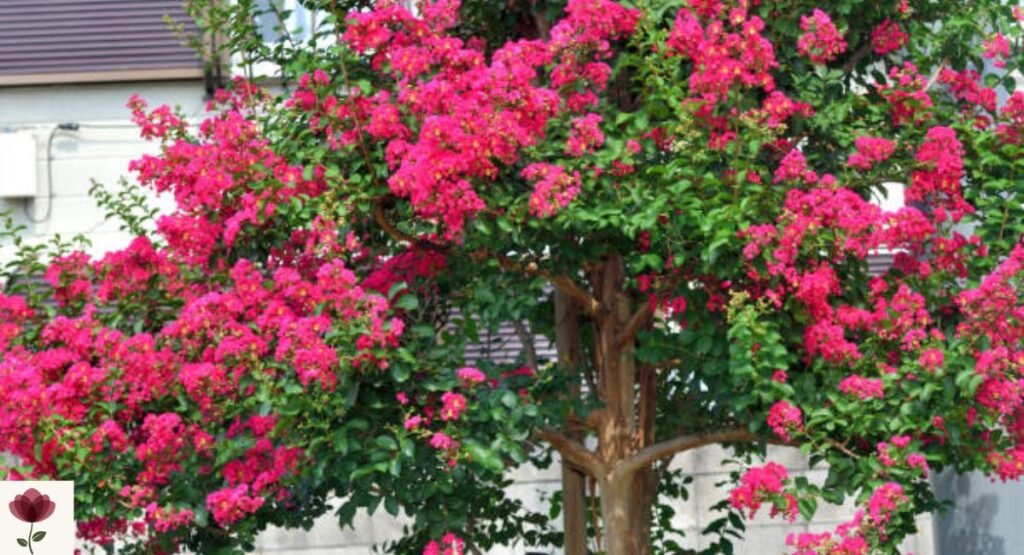
Crape Myrtle remains one of Florida’s most versatile flowering choices. Its bright pink flowers can continue for an impressively long season. The tree prefers full sun and well-draining soil. Once established, many varieties handle heat and dry periods with relatively little fuss.
You can find compact cultivars for smaller yards as well as larger forms for spacious landscapes. Its peeling bark adds winter interest after the colorful display fades. UF/IFAS also lists crape myrtle among low-maintenance South Florida landscape plants.
4. Silk Floss Tree
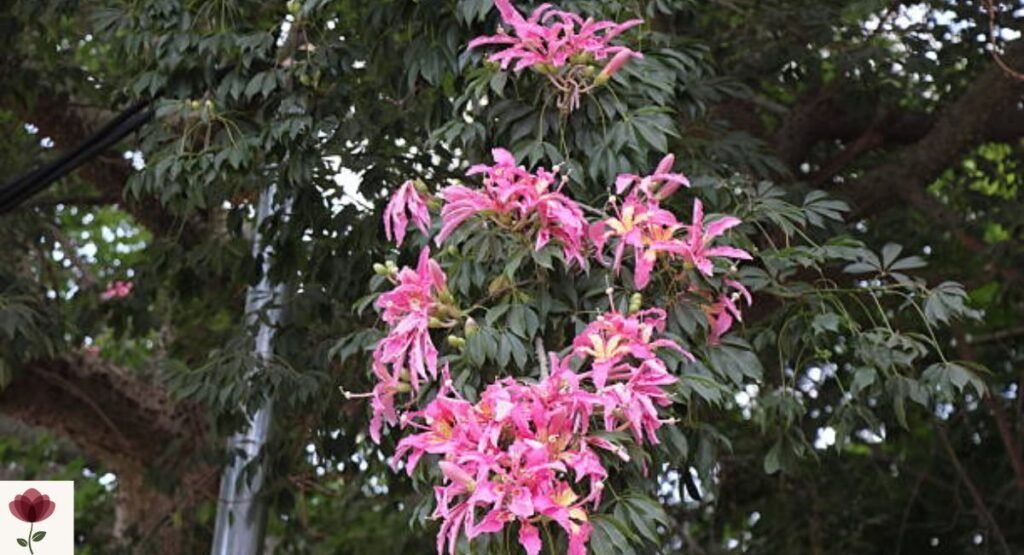
Silk Floss Tree brings a tropical personality that almost looks unreal. Large pink flowers appear against a distinctive trunk covered with stout thorns. It suits warm areas, particularly USDA Zones 9B–11. Rapid growth can eventually create a substantial canopy.
Give this tree plenty of room before planting it. Its roots and broad structure can become troublesome near pavement or crowded planting beds. A spacious lawn or large garden gives this unusual tree the breathing room it deserves.
5. Tabebuia (Pink Trumpet Tree)
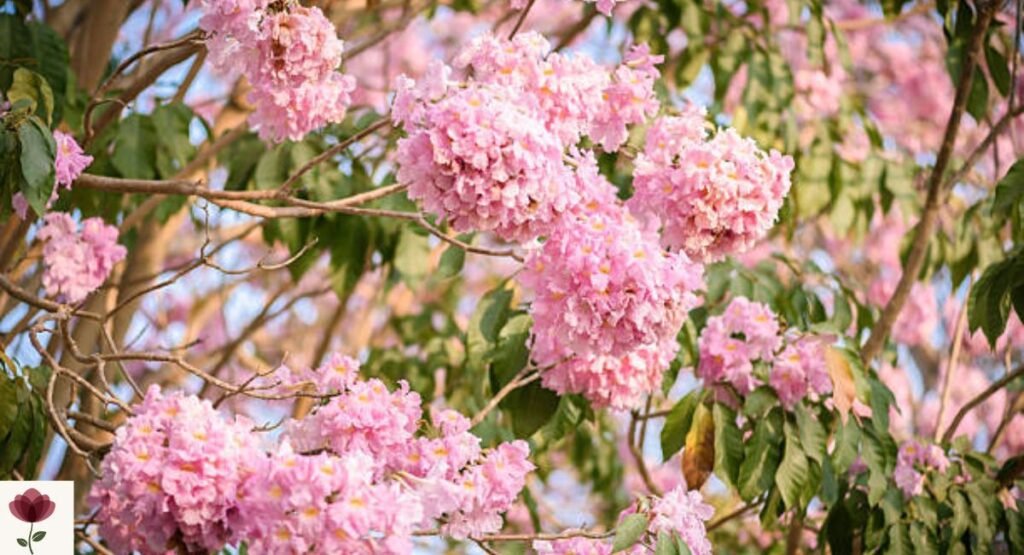
Tabebuia produces spectacular trumpet-shaped flowers that can cover branches during its flowering period. Several related trumpet trees grow in Central and South Florida. Some forms produce pink, pale pink, lavender, or nearly white displays. UF/IFAS documents pink-to-white flowering Tabebuia species for Central and South Florida.
Full sun encourages stronger flowering. Well-draining soil also matters because prolonged wetness can create root problems. In cooler areas, protect young tropical selections from severe cold. Some varieties flower dramatically while nearly leafless, creating an unforgettable spring scene.
6. Pink Flowering Dogwood
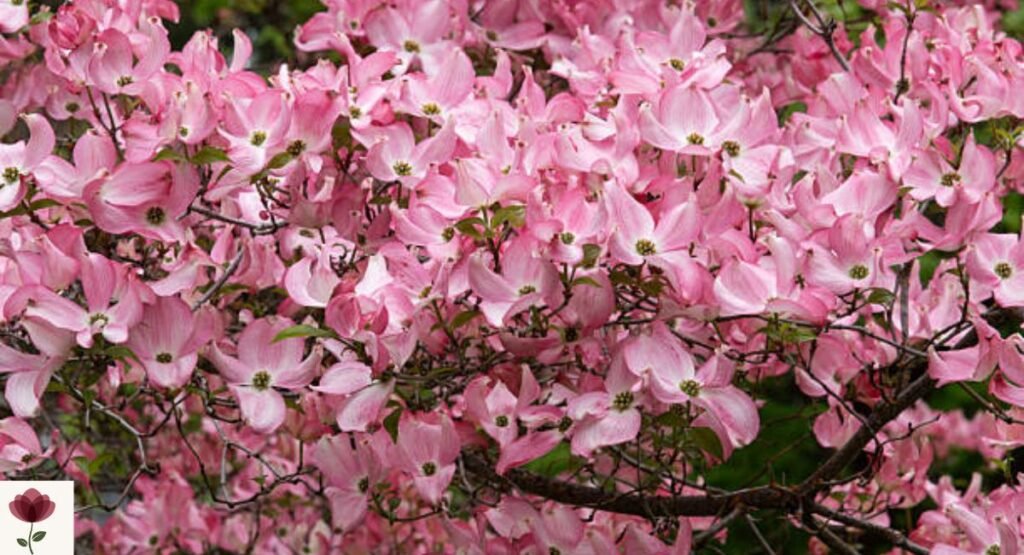
Pink Flowering Dogwood offers a softer appearance than many tropical trees. Its branches become decorated with pink and white spring bracts. The tree prefers fertile, well-drained soil and can appreciate partial shade in warmer Florida locations.
Dogwood also provides ecological value beyond its appearance. Its flowers attract pollinators while later fruits can provide food for birds. Because it remains relatively modest in size, it can work well as a specimen tree in residential gardens.
7. Knock Out Rose Tree
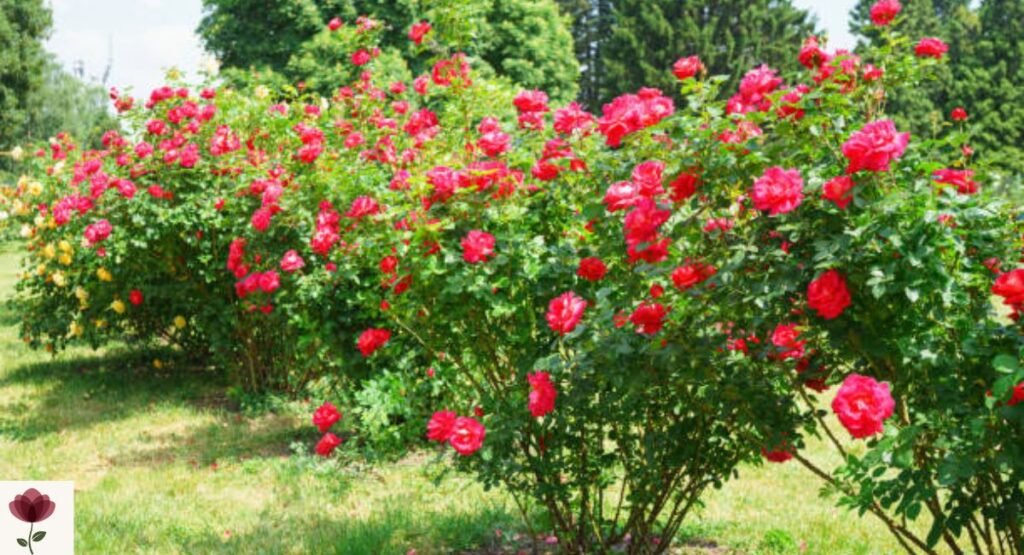
A Knock Out Rose normally grows as a shrub. However, nursery-grown specimens can be trained or grafted onto a single trunk. The result looks like a miniature flowering tree covered with pink roses.
Full sun produces the strongest flowering. Regular pruning helps maintain its rounded tree form and encourages fresh growth. Its relatively good disease resistance makes it attractive for gardeners who want colorful ornamental trees without demanding maintenance.
8. Royal Poinciana
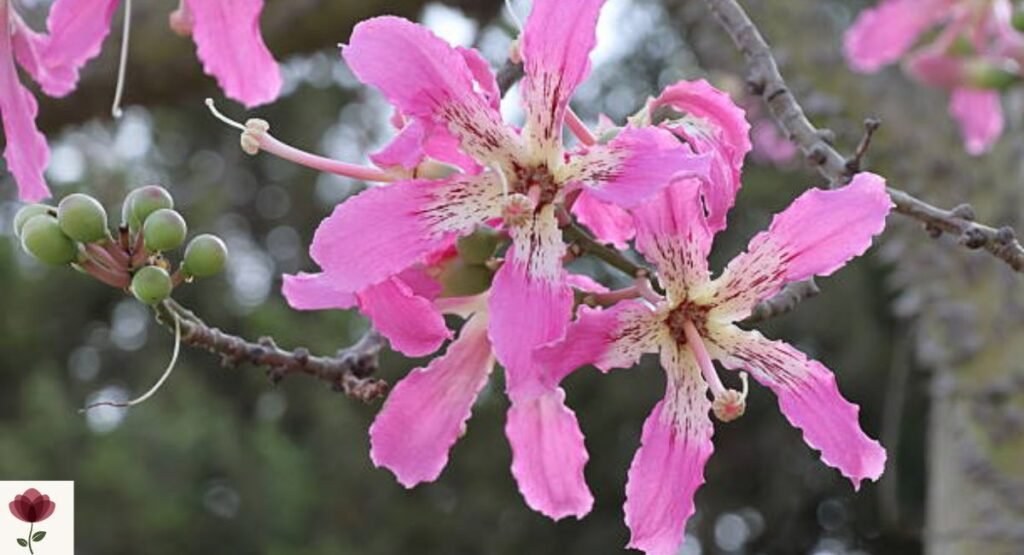
Royal Poinciana transforms summer landscapes with huge clusters of orange-pink to red-orange flowers. Its broad canopy creates an unmistakable tropical silhouette. This is a large tree that needs generous root and branch space.
It also handles drought after establishment and can tolerate coastal conditions better than many ornamental species. However, its aggressive surface roots can create problems near sidewalks and structures. Plant it where its enormous canopy can spread naturally.
9. Pink Cassia
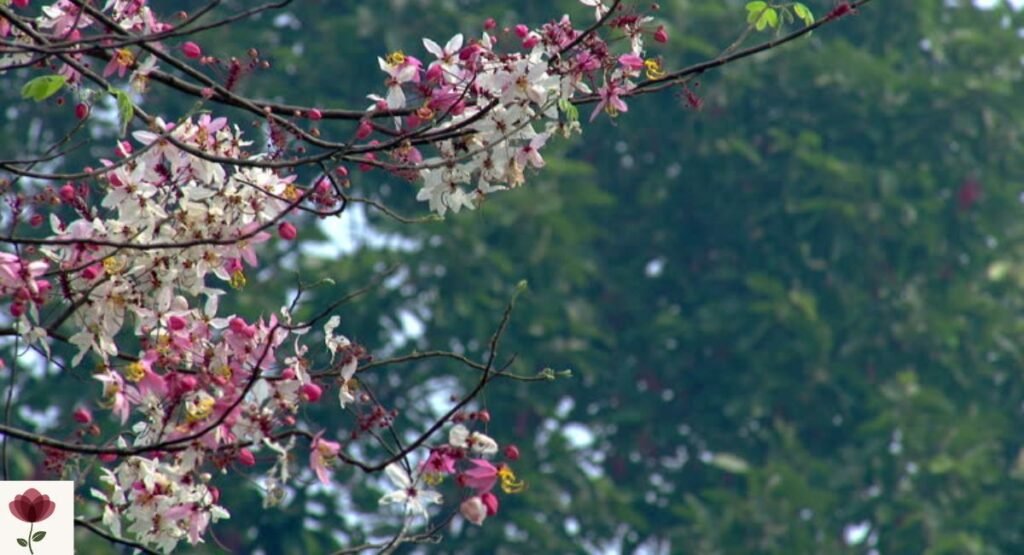
Pink Cassia produces attractive clusters that can resemble a soft pink and white shower across the canopy. Its deciduous nature means the tree may lose foliage during part of the year. That seasonal change can actually make its flowering display more noticeable.
Choose a sunny position with well-draining soil. It works particularly well in spacious Florida landscapes where its branching habit can develop freely. Give young plants consistent moisture while their root systems establish.
10. Silverbell
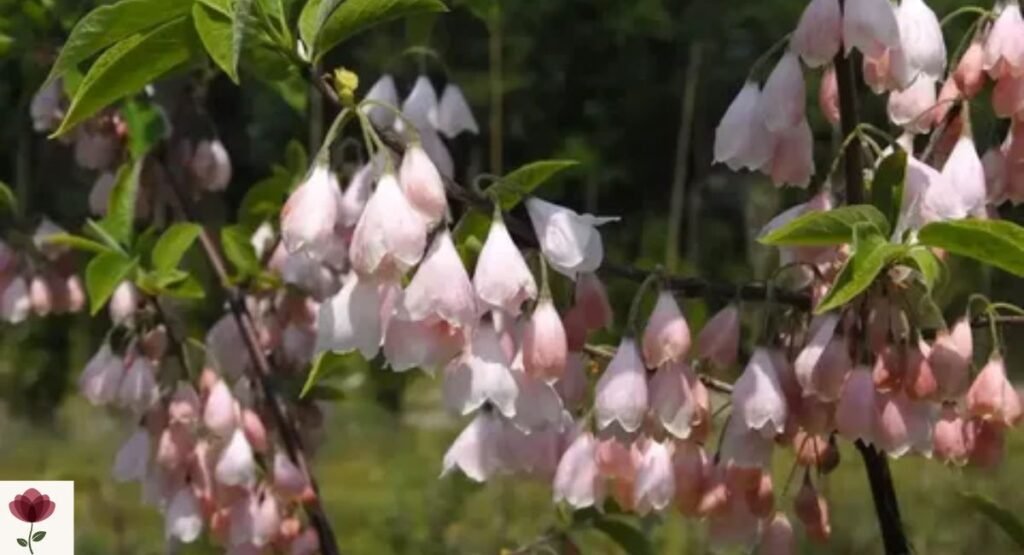
Silverbell is a quieter choice for gardeners who prefer delicate blooms. Its bell-shaped flowers can appear pinkish or pale before the foliage becomes the main attraction. It generally suits North Florida better than the state’s hottest southern regions.
Give it partial shade and soil that stays reasonably moist without becoming waterlogged. Its fall foliage adds another seasonal feature. This makes Silverbell useful when you want more than one moment of interest from a garden tree.
11. Hibiscus Tree
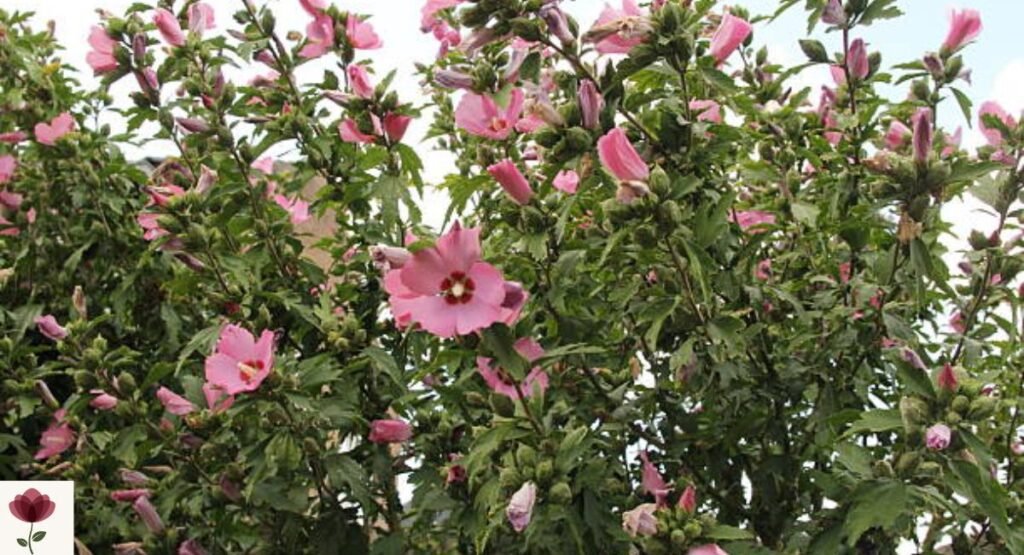
A Hibiscus Tree isn’t always a naturally occurring tree species. Gardeners can train certain hibiscus plants into a single-trunk tree form. Large pink flowers then appear above a clean stem, creating a tropical focal point.
Warm conditions, regular moisture, and strong sunlight encourage vigorous growth. However, tropical hibiscus can suffer during cold weather. In northern areas, choose protected locations or grow smaller specimens in containers that can receive winter protection.
12. Saucer Magnolia
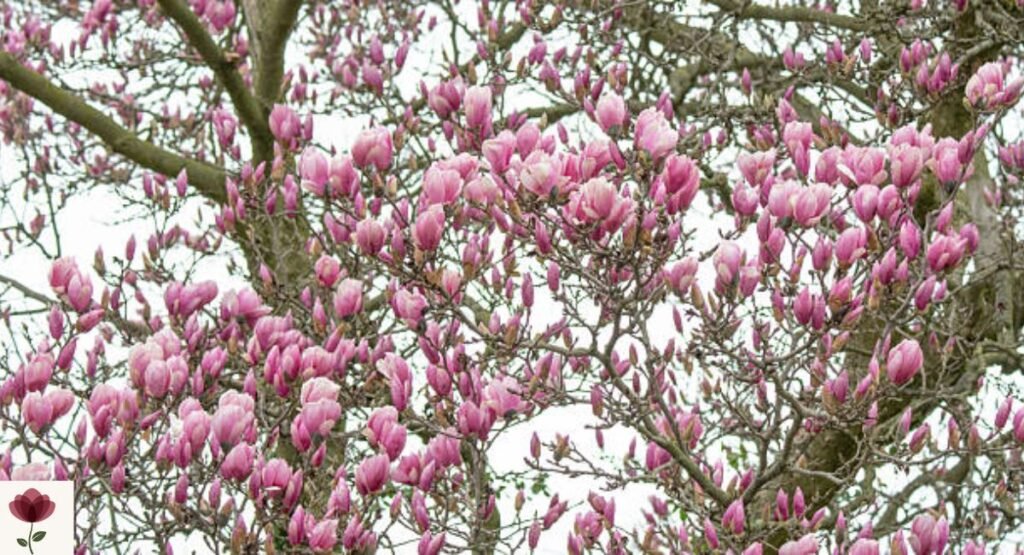
Saucer Magnolia produces huge pink flowers that appear on mostly bare branches. That timing creates a spectacular early-season display because the blossoms aren’t hidden behind dense summer foliage.
It suits North and North Central Florida better than the tropical southern end of the state. Give it fertile, well-drained soil and regular water during establishment. Its mature canopy also requires enough room away from buildings and narrow walkways.
13. Azalea Tree
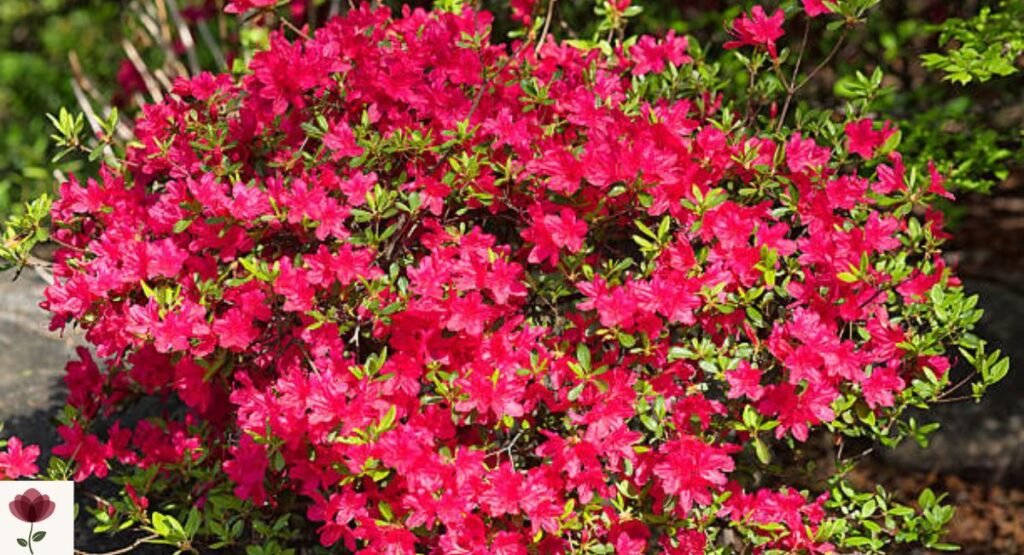
Azaleas naturally grow as shrubs. With careful pruning or nursery training, however, they can become attractive tree forms. Pink cultivars provide a strong seasonal display while their smaller stature suits residential landscapes.
Azaleas prefer acidic soil and filtered light. UF/IFAS notes that azaleas are widely used in North and Central Florida and can tolerate different light levels. Their flowers come in shades ranging from pale pink to hot pink.
14. Oleander Tree
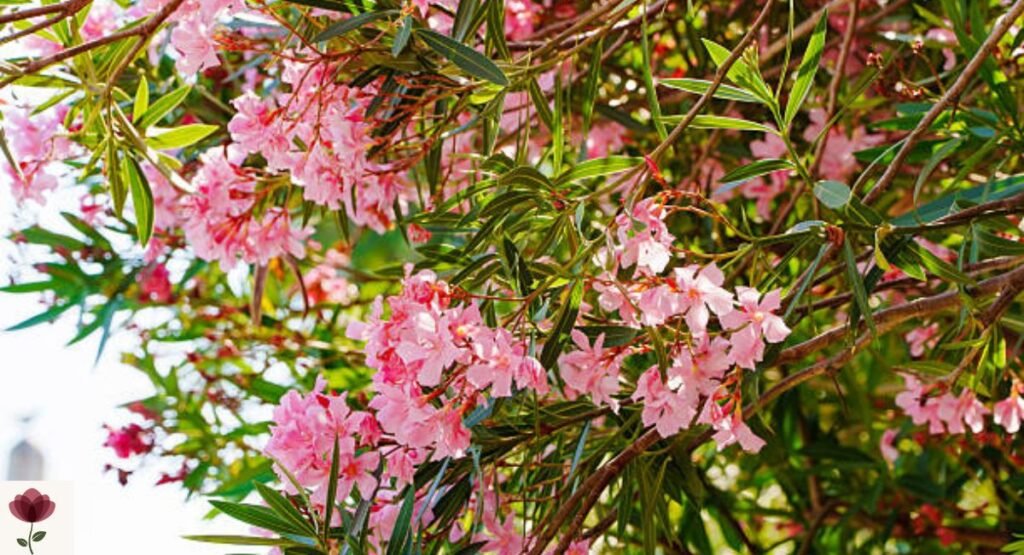
Oleander can grow naturally as a large shrub or small tree. Gardeners can also train it onto a central trunk. Pink flowers can appear for much of the year in suitable warm climates, making it useful for long-lasting landscape color.
It tolerates drought, sandy soil, and salt remarkably well. However, there’s a major safety issue. Oleander toxicity is serious because all parts of the plant are poisonous. UF/IFAS recommends care when placing it near children and notes its USDA Zone 9A–11 range.
15. Pink Flowering Bottlebrush
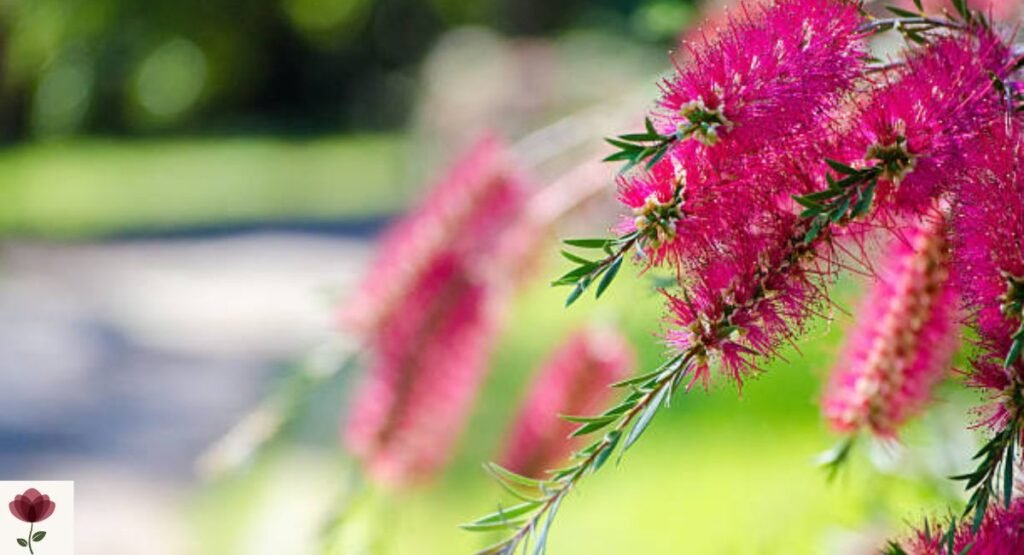
Pink flowering bottlebrush offers unusual flower spikes rather than traditional rounded blossoms. Its evergreen foliage keeps the landscape attractive even between flowering periods. The plant handles Florida heat well when grown in suitable conditions.
Full sun generally encourages stronger flowering. Use well-draining soil and avoid constantly saturated roots. Its compact habit can work along borders, entryways, and mixed beds where a large tree would be excessive.
16. Pink Bougainvillea Tree

Bougainvillea can be trained into a small tree with a strong central trunk. Its vivid pink bracts create intense tropical color. Technically, those colorful structures aren’t the true flowers. The tiny flowers sit inside the showy bracts.
Give bougainvillea full sun and excellent drainage. Once established, it handles dry conditions well. Regular pruning keeps the tree form tidy. Because some varieties have thorns, place them away from busy walkways and children’s play areas.
17. Pink Plumeria
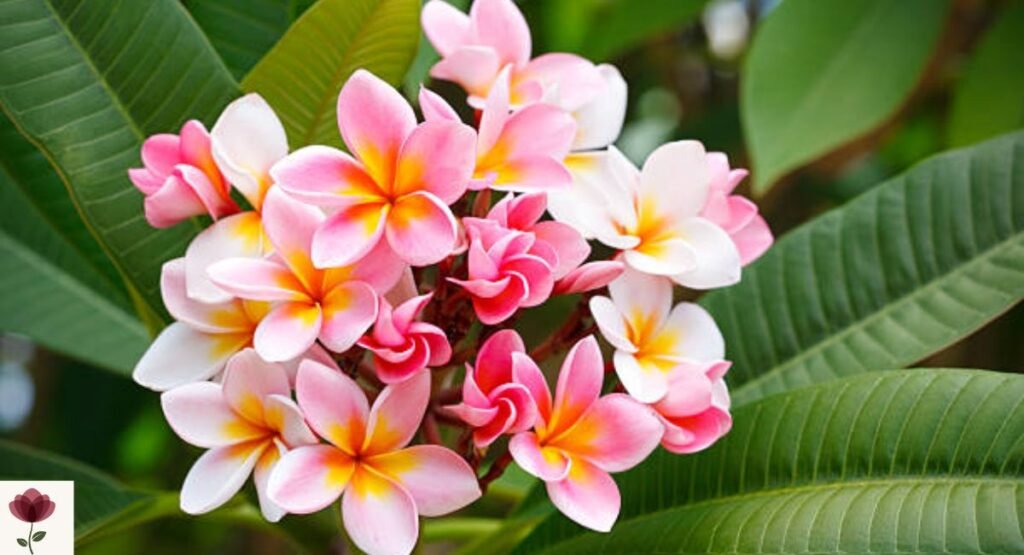
Pink Plumeria produces fragrant, colorful blooms that bring a tropical feel to Florida landscapes. It grows best in warm climates, full sun, and well-draining soil. Once established, it can handle periods of dry weather and needs relatively little maintenance. Its attractive flowers make it a beautiful choice for South Florida yards, patios, and tropical gardens.
18. Pink Ixora

Pink Ixora forms dense clusters of small flowers against glossy evergreen foliage. Its compact habit makes it especially useful for foundation planting, hedges, and garden borders. It prefers warm conditions and generally performs best in Central and South Florida.
Full sun produces stronger flowering, although some plants tolerate partial shade. Avoid planting it in poorly drained areas. With occasional pruning, Ixora can remain neat without losing its naturally rounded appearance.
19. Pink Starburst Tree
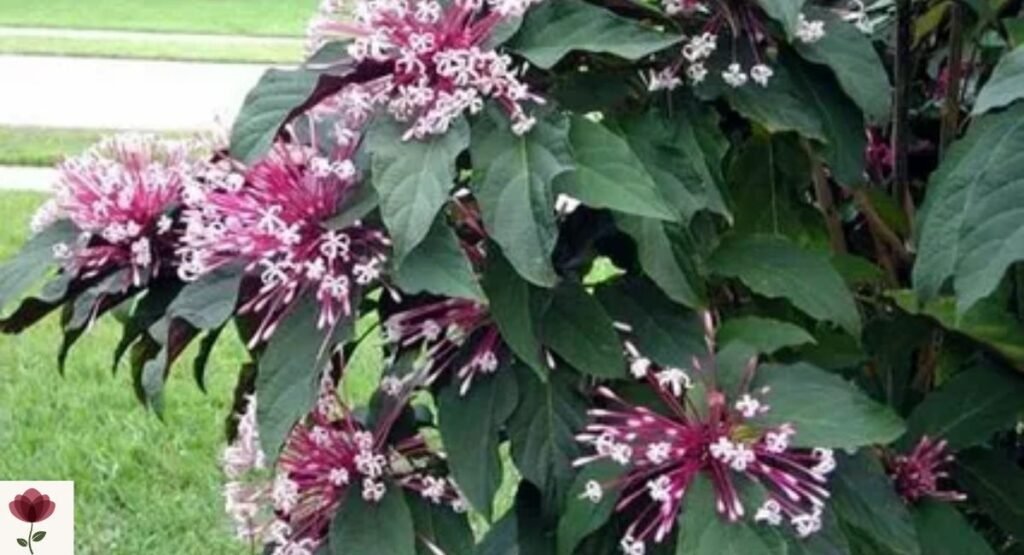
Pink Starburst Tree is a beautiful choice when you want seasonal color without taking up too much garden space. Its soft pink blooms can brighten patios, garden borders, and sunny landscape areas.
Full sun helps encourage better flowering and healthy growth. Well-draining soil is also important, especially in Florida’s rainy climate. With proper care, it can add a tropical touch to warm Florida gardens.
20. Pink Desert Rose
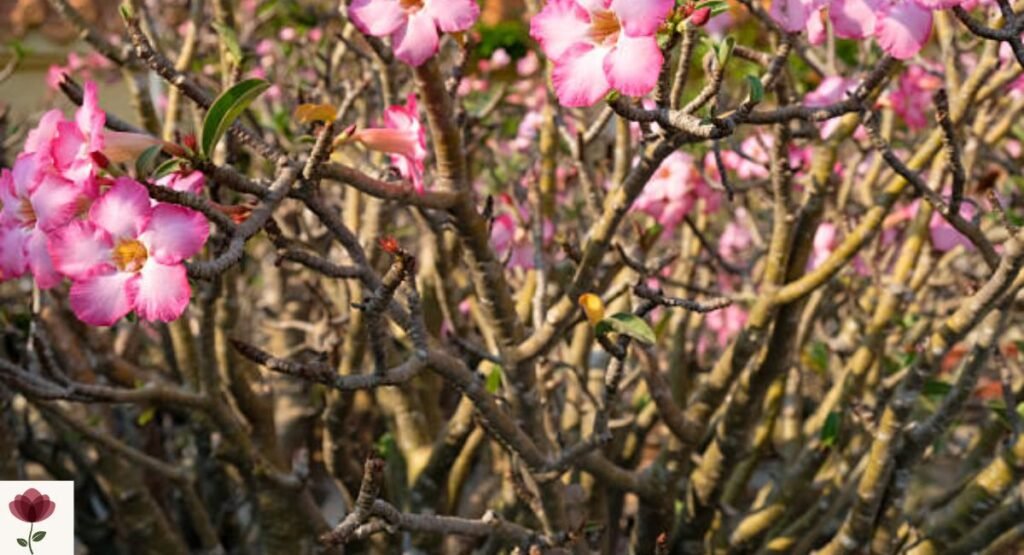
Pink Desert Rose brings bold color to Florida gardens with its trumpet-shaped blooms and thick, sculptural stems. It works well in containers, sunny borders, and warm landscape areas where drainage stays excellent.
Full sun encourages compact growth and frequent flowering. It prefers sandy or gritty soil and needs limited watering once established. Because it dislikes cold temperatures, protect it during winter in North and Central Florida.
Pink Flowering Trees vs. Bushes and Shrubs
Not every plant marketed as a flowering tree naturally grows like an oak or maple. Some are shrubs trained onto a single trunk. Others develop a naturally woody tree structure. Understanding that difference helps you predict mature size and maintenance.
For a small yard, a trained shrub can sometimes provide the look of a tree without demanding enormous space. A naturally large tree, however, needs more room for its roots and canopy. That’s where careful planning saves headaches later.
What Makes a Flowering Plant a Tree?
A true tree usually develops a woody trunk with a distinct canopy. A shrub tends to branch closer to ground level. Gardeners can alter that habit through pruning, grafting, or nursery training.
This is why azalea, hibiscus, rose, bougainvillea, and oleander can appear in tree form. Their final shape depends heavily on how they’re cultivated and maintained.
Best Pink Flowering Bushes in Florida
For colorful pink flowering bushes, azalea, hibiscus, ixora, bougainvillea, and roses offer useful choices. They fit smaller landscapes and can fill spaces where large trees would overwhelm the garden.
Bushes also make excellent foundation plants and borders. Their lower height lets you enjoy flowers at eye level rather than searching overhead.
Best Pink Flowering Shrubs for Small Yards
Small yards benefit from plants with controlled height and manageable canopy width. Pink azalea, ixora, hibiscus, and compact roses can provide strong color without consuming the entire garden.
Think about mature size rather than nursery size. A small plant can become surprisingly large when Florida’s warmth and long growing season give it ideal conditions.
Pink Flowering Trees in South Florida
South Florida opens the door to more tropical selections. Warm winters reduce cold stress while humid summers encourage vigorous growth. Plants such as jacaranda, hibiscus, bougainvillea, ixora, and some trumpet trees can thrive in suitable locations.
However, tropical doesn’t mean indestructible. Drainage, wind exposure, salt spray, and root space still matter. A plant can love heat while disliking wet roots or direct coastal exposure.
Best Tropical Choices for South Florida
Warm-climate gardens can use tropical trees, flowering shrubs, and trained tree forms for nearly year-round color. Jacaranda, hibiscus, bougainvillea, ixora, and selected trumpet trees fit this style.
UF/IFAS identifies jacaranda as a Central and South Florida landscape tree adapted to Zones 9B–11. It prefers full sun and sandy, well-drained soil.
Pink Trees for Coastal Florida Gardens
Coastal gardens require extra thought because salt and wind can damage sensitive foliage. Choose tolerant species and avoid placing vulnerable trees directly in constant salt spray.
Drainage also deserves attention. Sandy coastal soil drains quickly, yet heavy rainfall can still create temporary saturation. Give roots enough room while protecting young plants from strong winds.
Pink Flowering Trees for North and Central Florida
North Florida experiences cooler winter conditions than the southern peninsula. Central Florida sits in a warmer transition zone. Therefore, the same pink-blooming plant may perform beautifully in one region and struggle in another.
USDA hardiness zones provide a useful starting point. They don’t predict every local condition. Microclimates, wind, soil, irrigation, and exposure can still change the result.
Best Choices for North Florida
Eastern redbud, dogwood, saucer magnolia, azalea, and crape myrtle can suit cooler Florida landscapes. Eastern redbud is particularly useful because it’s native and naturally adapted to the region.
Choose frost-tender tropical plants carefully. A protected wall or sheltered courtyard can create a warmer microclimate, but it won’t completely eliminate severe cold risk.
Best Choices for Central Florida
Central Florida offers more flexibility. Crape myrtle, azalea, jacaranda, hibiscus, oleander, and several trumpet trees can work depending on the exact site.
Your planting location still matters. A sunny, well-drained yard can perform very differently from a low, wet area that stays humid and poorly ventilated.
When Do Pink Flowering Trees Bloom in Florida?
Florida doesn’t have one universal flowering calendar. Temperature, daylight, rainfall, species, and latitude all influence blooming. North Florida generally experiences more obvious seasonal changes than tropical South Florida.
Some plants bloom for only a few weeks. Others can continue producing flowers for months. That difference matters when you’re designing a garden for continuous color.
Spring-Blooming Pink Trees
Spring is prime time for several spring flowering trees. Eastern redbud can bloom before new leaves emerge. Dogwood and Tabebuia can also create dramatic seasonal displays.
Saucer Magnolia adds another striking option with oversized flowers appearing on bare branches. These early displays can make a garden feel alive after winter’s quieter months.
Summer-Blooming Pink Trees
Summer belongs to plants such as crape myrtle, Royal Poinciana, hibiscus, and other warm-climate ornamentals. Their flowers thrive when sunlight and temperatures rise.
Crape Myrtle can provide an especially long display. UF/IFAS also documents Queen’s Crape Myrtle producing large pink-lavender flower clusters mainly during June and July under suitable subtropical conditions.
Fall and Winter Pink Blooms
Fall and winter color depends heavily on Florida’s region. South Florida’s warmth allows some tropical plants to keep flowering while northern areas experience cooler conditions.
Oleander can flower year-round in Zones 9B–11, although flowering becomes less consistent during winter in Zone 9A.
Florida Tree With Pink Flowers in Fall
Finding a Florida tree with pink flowers in fall requires looking beyond traditional spring bloomers. Some tropical shrubs and tree-form plants can continue flowering well after spring.
Warm temperatures often extend flowering windows in Central and South Florida. Cultivar selection also matters. Two plants from the same broad group can behave differently under the same garden conditions.
Trees and Shrubs That Can Bloom Into Fall
Oleander, hibiscus, some azaleas, and long-blooming ornamental selections can provide late-season pink color. Their performance depends on temperature, sunlight, moisture, and cultivar.
If fall color is your priority, don’t focus only on trees. A carefully arranged mixture of shrubs and small tree forms can create a longer flowering season.
How to Grow Pink Flowering Trees in Florida
Successful planting starts before you dig the first hole. Consider your region, mature tree size, sunlight, drainage, root space, and winter exposure.
The right plant in the wrong location can still fail. Think of landscaping like matchmaking. The plant has preferences too.
Choose the Right USDA Hardiness Zone
Florida includes several growing zones. Northern areas generally face colder winters while South Florida remains much warmer. Zones 9A and 9B commonly cover much of North and Central Florida, while Zones 10 and 11 dominate warmer southern areas.
Always check the plant’s recommended hardiness range before buying. A tropical species may survive one mild winter and still suffer badly during an unusually cold event.
Sunlight Requirements
Full sun usually means roughly six or more hours of direct sunlight daily. Many flowering trees need this exposure to produce their strongest display.
Partial shade can work for plants such as azaleas and redbuds. Filtered shade is especially useful when Florida’s intense afternoon heat becomes excessive for sensitive species.
Soil and Drainage
Florida’s sandy soil drains quickly. That can benefit plants that dislike soggy roots, but it can also dry rapidly during hot periods.
Some plants prefer acidic soil while others tolerate alkaline ground. Good drainage remains a common requirement. Before planting, check whether water disappears reasonably quickly after irrigation or rainfall.
Watering and Fertilizing
Newly planted trees need regular watering while their roots establish. Mature drought-tolerant plants usually need much less supplemental irrigation.
Don’t assume extra fertilizer equals extra flowers. Excess nutrients can encourage foliage instead of balanced growth. Use a soil test when possible and follow the fertilizer requirements of the specific species.
Pruning and Tree Training
Pruning becomes especially important when converting shrubs into tree forms. Remove low shoots gradually and maintain one strong central trunk when appropriate.
Never remove huge amounts of healthy growth simply to force a shape. Good pruning should improve structure, airflow, clearance, and appearance rather than constantly fight the plant’s natural habit.
Frost and Cold Protection
Cold-sensitive tropical plants may suffer when temperatures suddenly fall. Young trees are particularly vulnerable because their tissues haven’t developed the resilience of established specimens.
Protect small plants during unusual cold events with appropriate frost coverings. Avoid plastic touching foliage and remove protective coverings when temperatures recover. Mature tropical trees may require more planning because their size makes complete protection difficult.
Pink Flowering Trees for Different Florida Landscapes
Your yard should determine the plant rather than the other way around. A huge canopy can look wonderful on acreage yet become a nuisance beside a driveway.
Consider mature height, canopy width, roots, falling leaves, flowers, and maintenance. Good landscape design anticipates what the plant will become rather than focusing only on how it looks today.
Best Pink Trees for Small Yards
Small yards need restrained growth. Tree-form roses, azaleas, hibiscus, ixora, and compact crape myrtles can provide color without overwhelming the property.
Always check mature dimensions before planting near walls. A beautiful tree becomes a headache when its branches constantly collide with roofs or power lines.
Best Trees for Large Backyards
Large yards can accommodate jacaranda, Royal Poinciana, silk floss, and other expansive species. These trees create broad canopies and stronger visual impact.
Give them plenty of root space. Large trees should never be squeezed into tiny planting islands simply because they look attractive at the nursery.
Best Pink Trees for Shade and Partial Shade
Eastern redbud and azalea can handle less intense light than many tropical species. Redbud can grow in full sun or partial shade, while its southern Florida performance improves with additional shade.
Dense shade, however, can reduce flowering. If flowers are your main goal, provide as much suitable light as the plant can safely handle.
Best Trees for Full Sun
Crape myrtle, jacaranda, Tabebuia, bougainvillea, hibiscus, and oleander generally perform strongly in sunny locations.
Full sun supports flowering and helps maintain compact growth. However, sunlight doesn’t compensate for poor drainage or unsuitable temperatures.
Best Pink Trees for Coastal Areas
Coastal landscapes need plants that can tolerate wind, salt, and sandy conditions. Oleander is notably salt tolerant, although direct salt spray can still cause problems.
Don’t place every salt-tolerant plant directly beside the ocean. Wind exposure and salt concentration vary dramatically between beachfront and inland coastal gardens.
Best Low-Maintenance Choices
Crape myrtle, oleander, established redbud, and selected tropical plants can offer relatively simple care. Their needs still include appropriate pruning, watering during establishment, and occasional pest monitoring.
“Low maintenance” doesn’t mean “plant it and forget it.” Even tough trees need the right location to thrive.
Quick Comparison of Pink Flowering Trees in Florida
The table below gives you a quick snapshot of several popular choices. Exact performance varies by cultivar and local growing conditions.
| Tree | Flower Color | Bloom Season | Sunlight | Soil | Florida Region |
| Eastern Redbud | Pink-lavender | Spring | Sun/partial shade | Moist, rich | North |
| Jacaranda | Pink-purple | Late spring–summer | Full sun | Sandy, well-drained | Central/South |
| Crape Myrtle | Pink | Summer | Full sun | Well-drained | Most Florida |
| Silk Floss | Pink | Winter–spring | Full/partial sun | Well-drained | South |
| Tabebuia | Pink | Spring | Full sun | Well-drained | Central/South |
| Dogwood | Pink-white | Spring | Partial shade | Fertile, moist | North/Central |
| Oleander | Pink | Spring–fall/year-round | Full sun | Sandy, adaptable | Central/South |
| Azalea | Pink | Spring/fall | Filtered shade | Acidic | North/Central |
| Hibiscus | Pink | Warm season | Full sun | Moist, well-drained | Central/South |
| Ixora | Pink | Warm season | Sun/partial shade | Well-drained | South/Central |
Safety Considerations for Pink Flowering Plants
Beautiful landscaping should also be responsible landscaping. Some ornamental plants contain compounds that can harm people or animals if eaten.
This is particularly important when you have curious children or pets. Plant labels matter. Never assume a pretty bloom is automatically edible or harmless.
Are Any Pink Flowering Trees Toxic?
Yes. Oleander is the clearest concern in this group. UF/IFAS states that all parts of oleander are poisonous and warns about placement near young children.
Azaleas also deserve caution because some plant parts can be toxic if consumed. Keep unfamiliar plant material away from pets and children and identify plants before allowing contact or ingestion.
Pink Plants Around Pets and Children
Use barriers or strategic placement when growing potentially toxic plants. Keep fallen plant material away from play areas and prevent pets from chewing leaves or branches.
For pet-safe landscaping, choose species with verified safety information rather than relying on appearance. If ingestion occurs, contact a veterinarian or appropriate poison-control service promptly.
Conclusion
Choosing among trees with pink flowers in Florida isn’t simply about picking the prettiest bloom. Think about your USDA zone, sunlight, soil, mature size, root space, and flowering season first. That small amount of planning can prevent major landscaping problems later.
Whether you want a spring redbud, a tropical Tabebuia, a summer Crape Myrtle, or a compact pink shrub, Florida gives you plenty of possibilities. Match the plant to your yard rather than forcing the yard to fit the plant. Your garden will reward you with healthier growth and better seasonal color.
FAQs
What is the most popular pink flowering tree in Florida?
Crape Myrtle is a widely used choice because it offers colorful blooms, sun tolerance, and several sizes. Popularity still varies by Florida region and landscape style.
What trees in Florida have pink flowers?
Eastern Redbud, Crape Myrtle, Tabebuia, Silk Floss, Pink Dogwood, and some Jacaranda cultivars can provide pink or pink-toned blooms in Florida.
What are the best pink flowering trees for South Florida?
Jacaranda, Tabebuia, hibiscus, bougainvillea, ixora, and suitable tropical selections can perform well in South Florida’s warm climate.
What Florida tree has pink flowers in fall?
Flowering timing varies, but oleander and some long-blooming hibiscus or ornamental selections can provide pink color into fall. Warm South Florida conditions often extend flowering.
What bushes have pink flowers in Florida?
Azalea, hibiscus, ixora, bougainvillea, and pink rose varieties are popular choices. Their suitability depends on sunlight, soil, temperature, and region.
What shrubs bloom pink in Florida?
Pink azalea, hibiscus, ixora, oleander, and rose shrubs can all provide attractive pink blooms. Many perform best with suitable sunlight and drainage.
Which pink flowering trees grow fastest in Florida?
Silk Floss, Jacaranda, and some tropical flowering trees can grow quickly under favorable conditions. Growth speed depends on species, soil, water, temperature, and sunlight.
Which pink flowering trees are easiest to maintain?
Crape Myrtle and established oleander are relatively resilient choices. However, even tough plants need suitable planting conditions, occasional pruning, and proper watering.

Welcome to PetalNexa! I’m Anam Sattar, an AI-powered SEO Specialist and Content Writer with over 4 years of experience in creating high-quality, search-optimized content. I help businesses improve their search engine rankings, increase organic traffic, and build beautiful, user-friendly websites. My mission is to make SEO, content creation, and web design simple, effective, and accessible for everyone. Let’s grow your online presence and achieve success together!